Cartoon
Halftime
Market Commentary
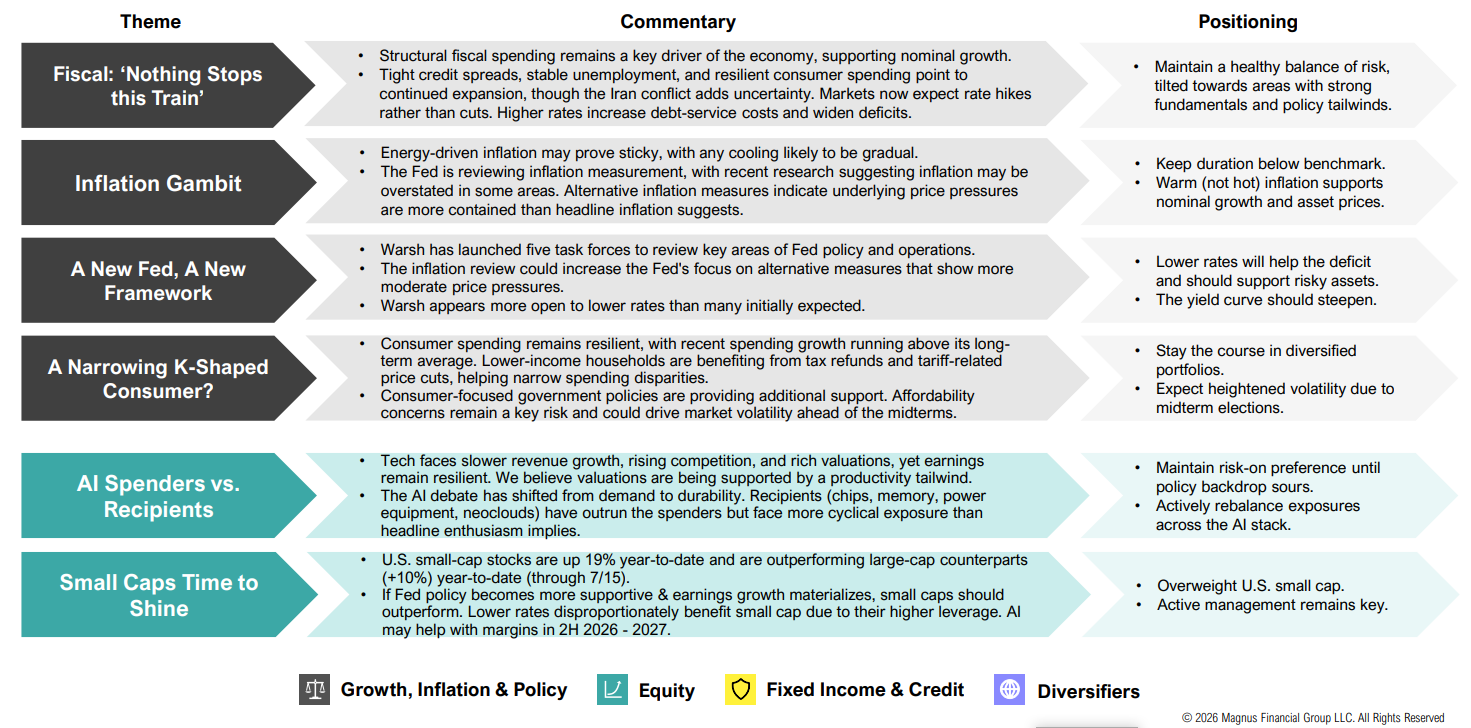
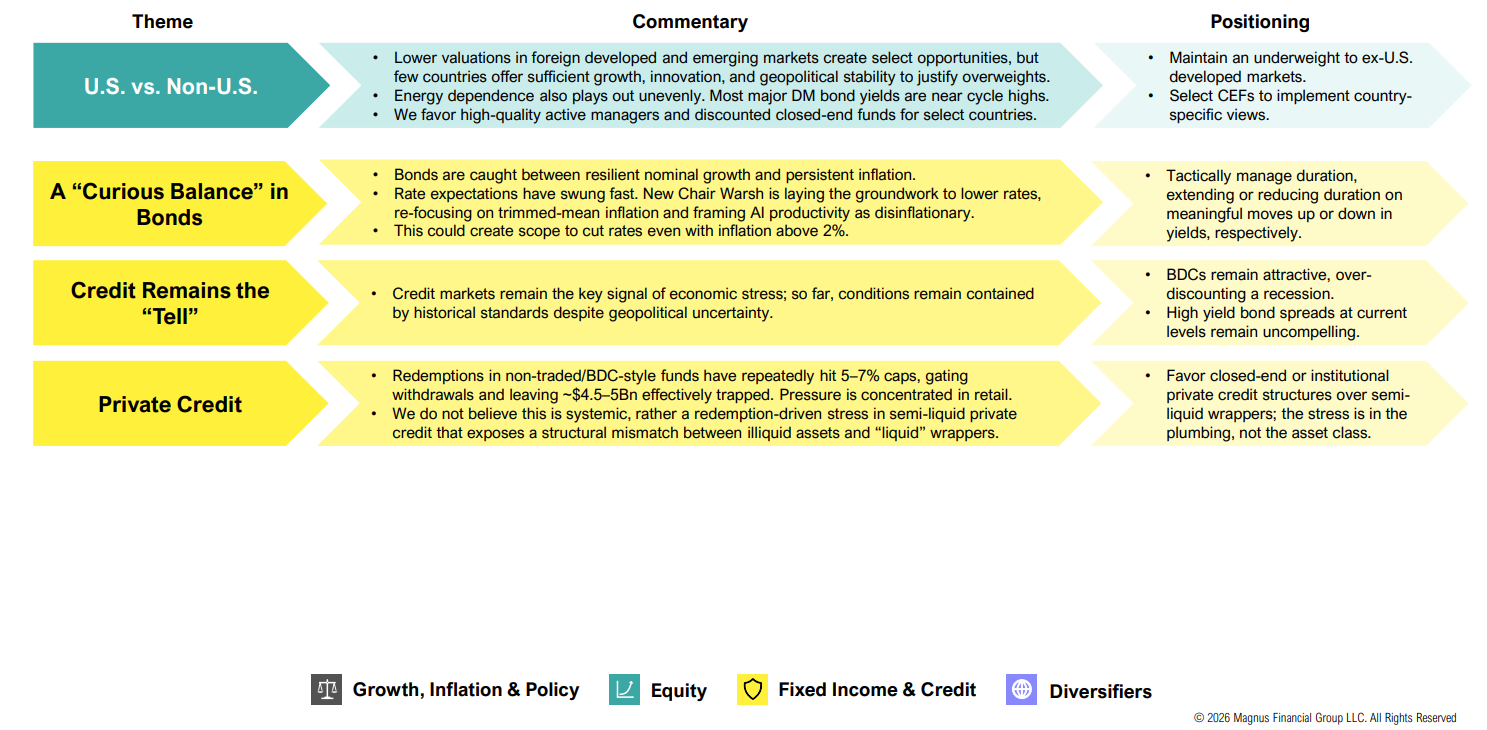
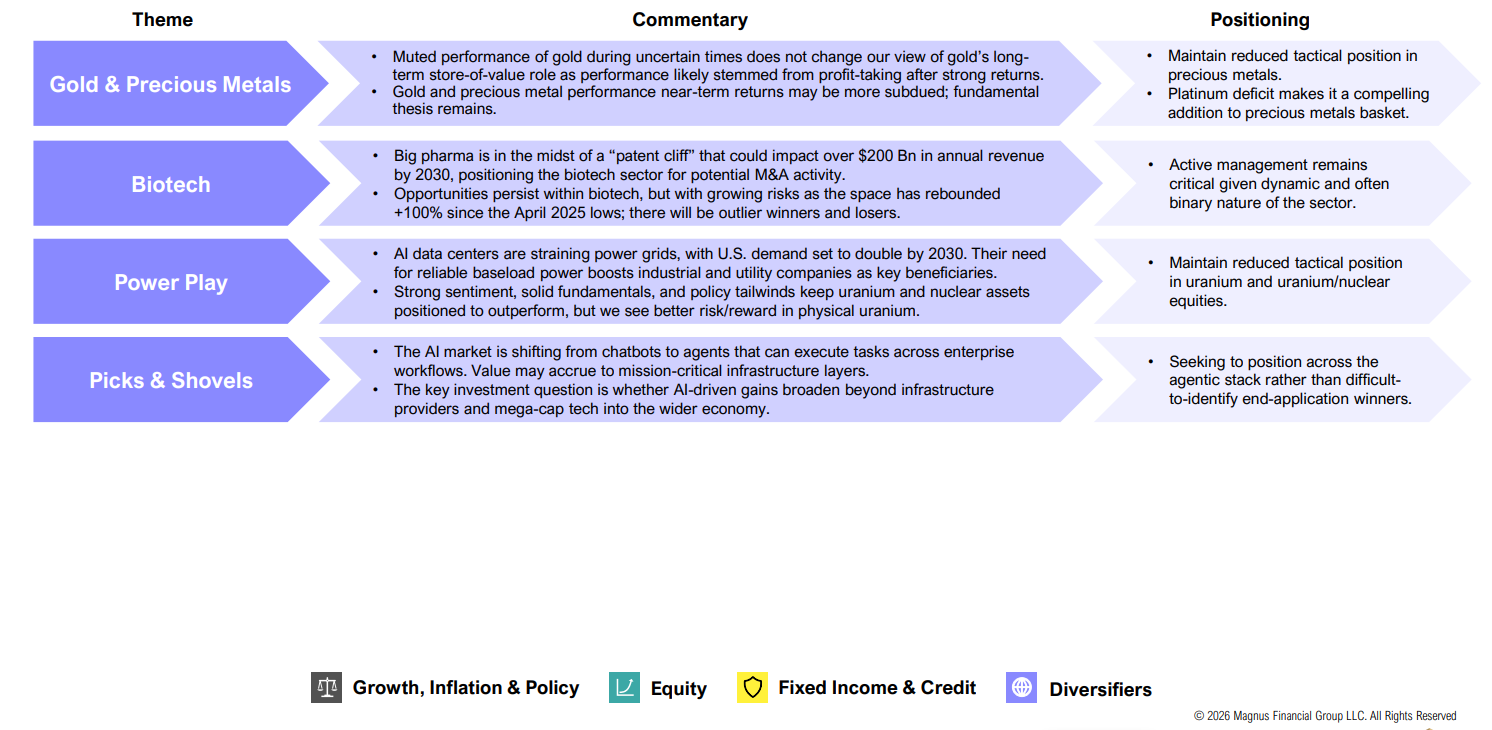
Positioning
Economic Growth
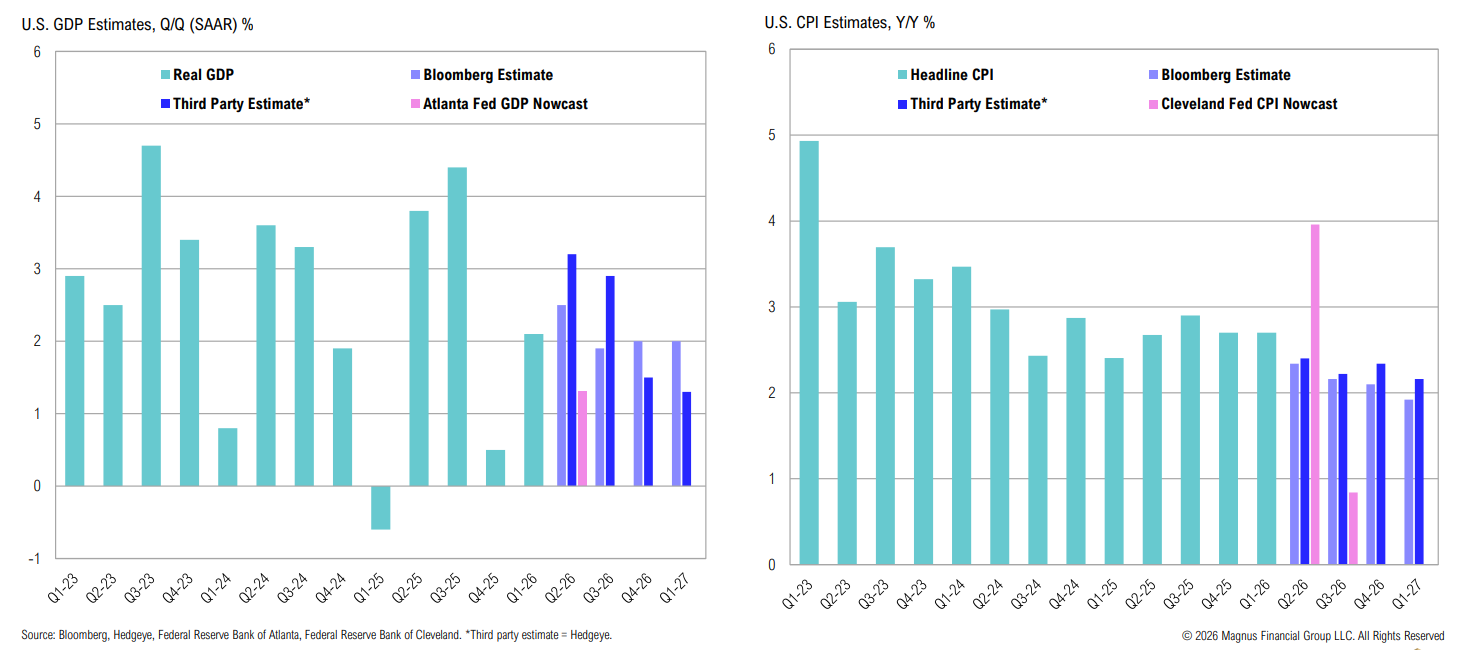
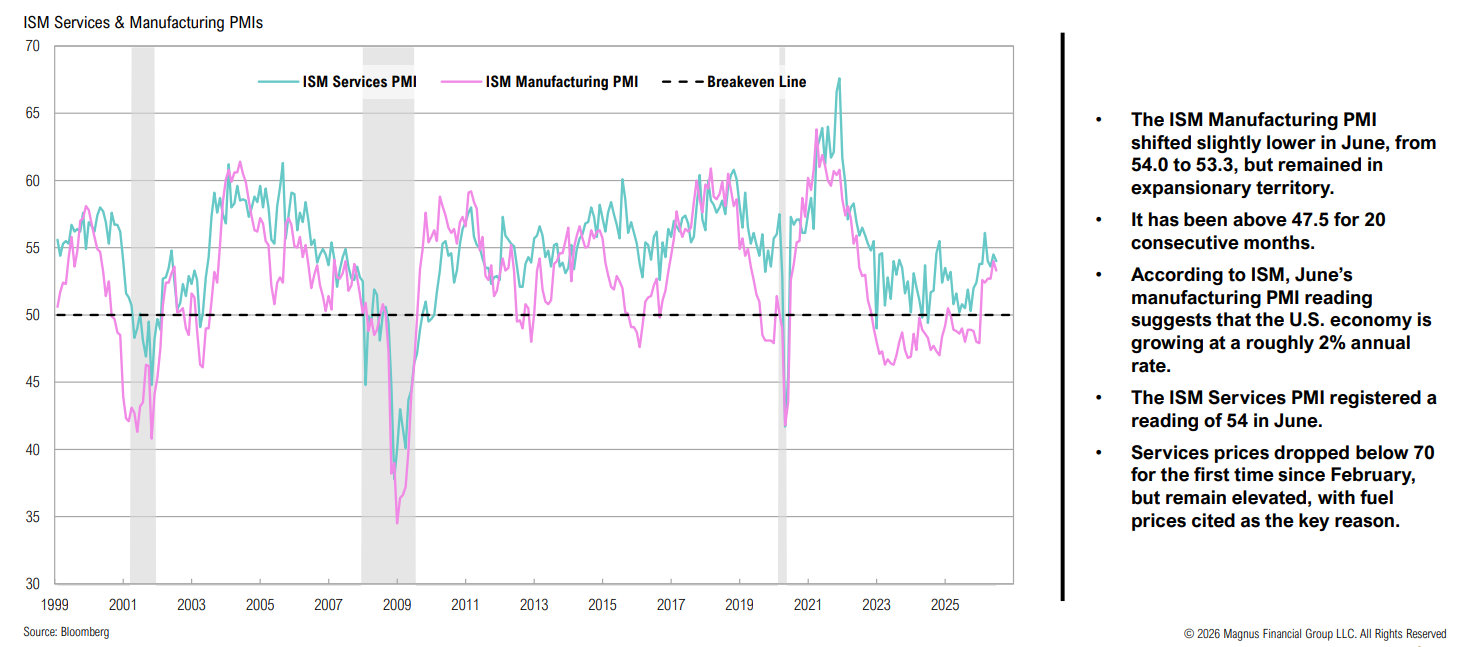
The U.S. economy is expected to grow around 2% through Q1’27 with inflation expected to roll over (but remain >2%) over the same period
ISM PMIs remain in expansionary territory
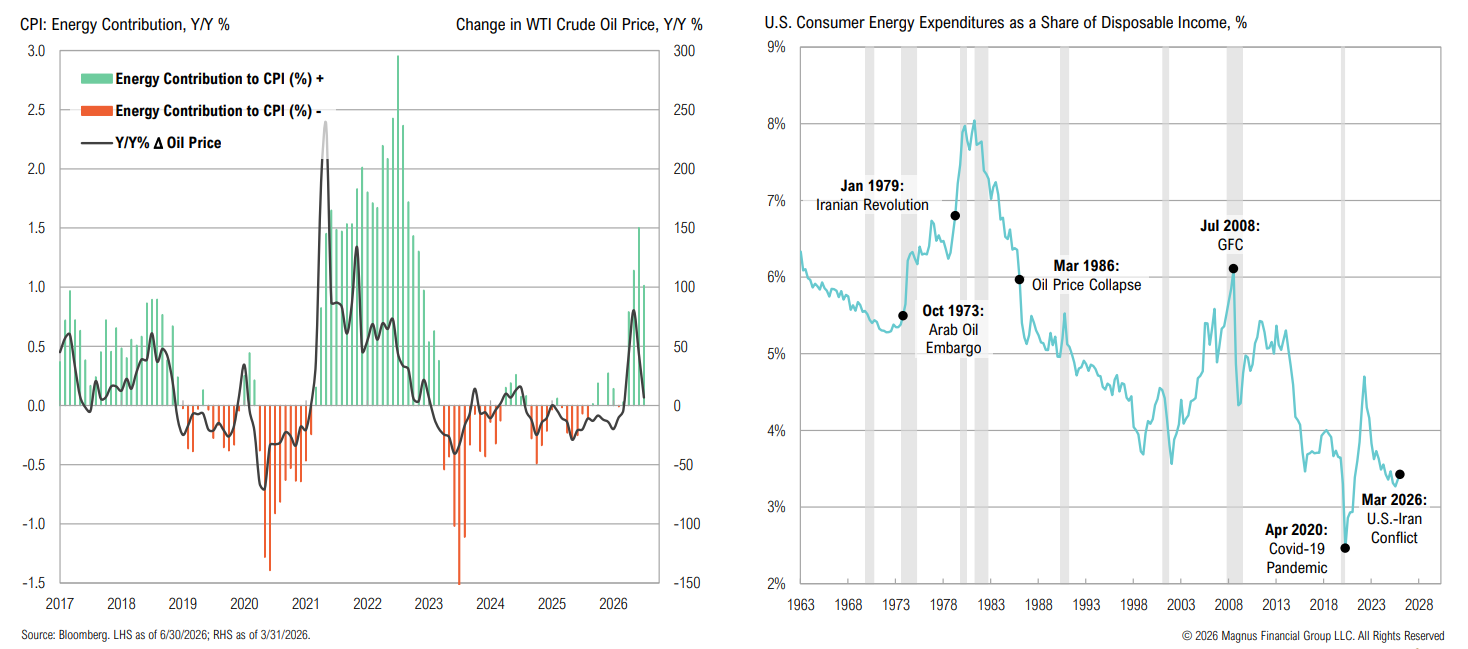
Energy & Inflation
Energy prices have jumped, driving a reacceleration in CPI; before the U.S.-Iran conflict, U.S. household energy spending was near a record low at just 3.4% of disposable income
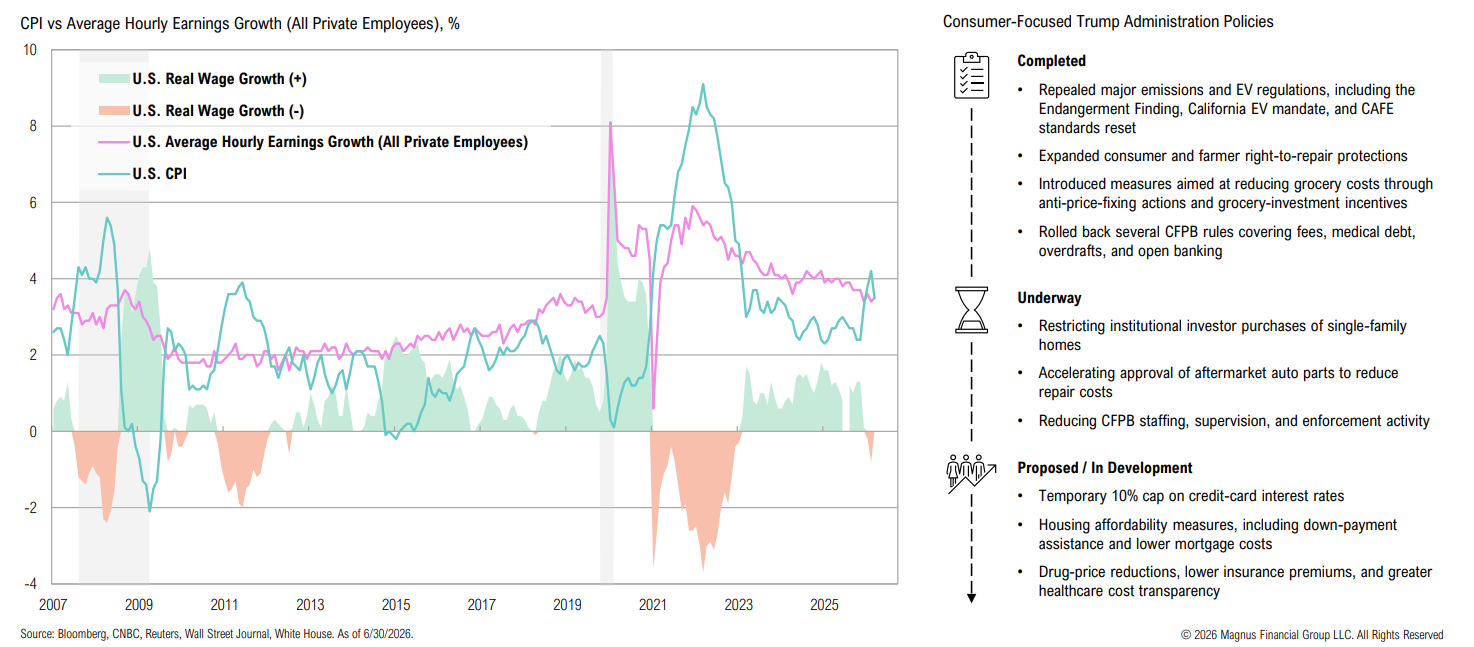
U.S Consumer
Wage growth is falling behind CPI; the Trump administration is focusing on several consumer-related policies to help alleviate pressure on lower-income HHs
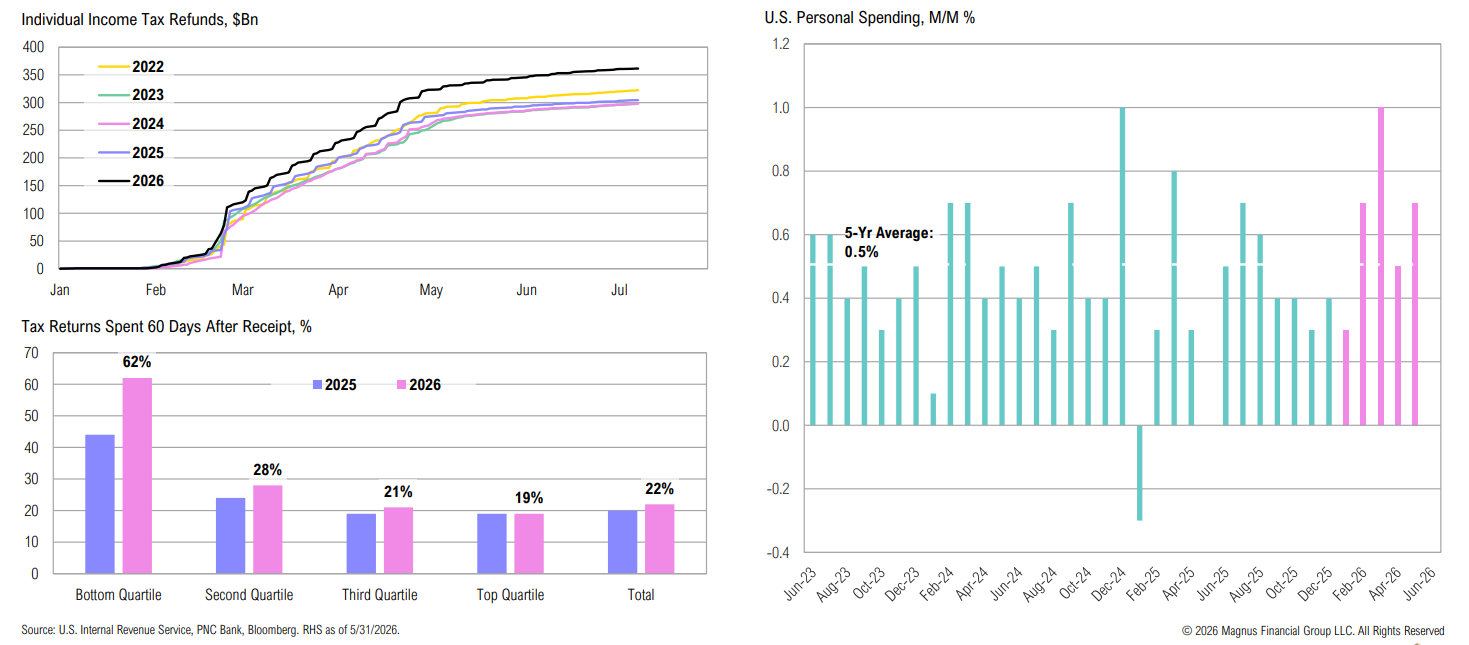
U.S. Tax Refunds
Larger and faster-spent tax refunds, especially among lower income households, may be fueling the recent pickup in personal spending
Labor Market
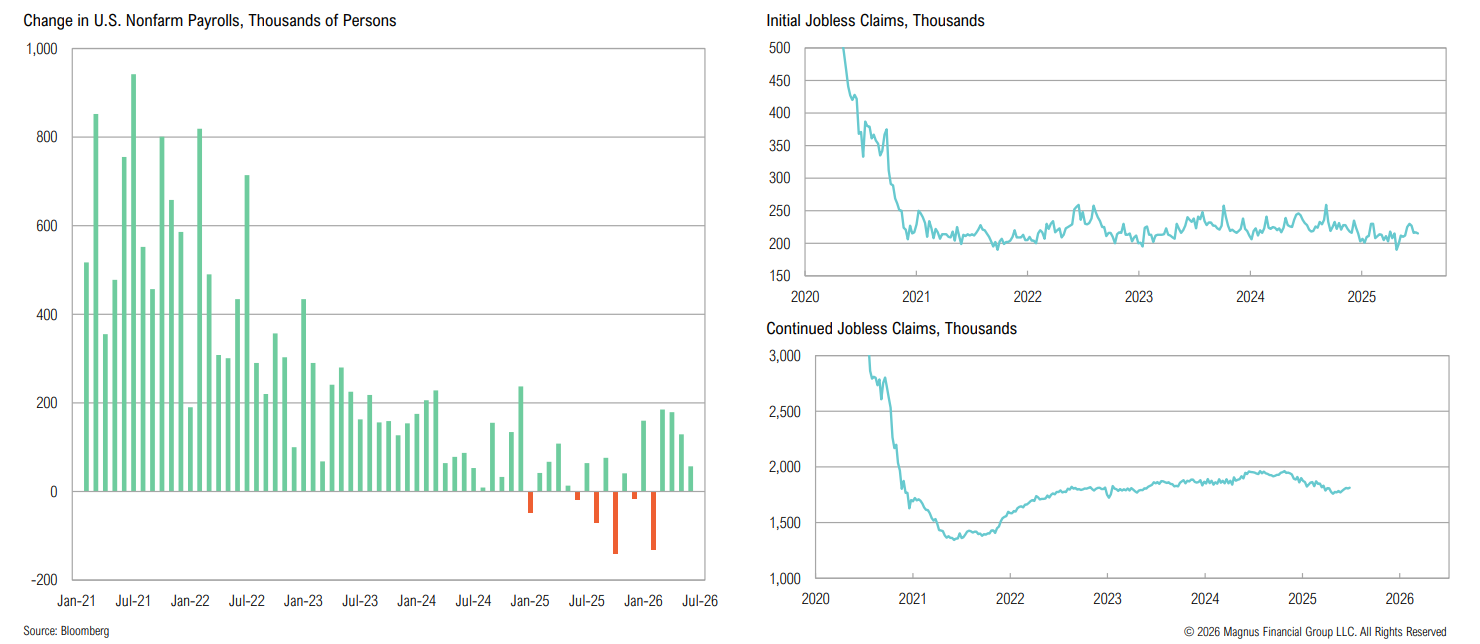
While there is little evidence yet, a rollover in job openings alongside rising jobless claims would signal the kind of labor market weakness that could enable the Fed to cut rates
Fed Policy
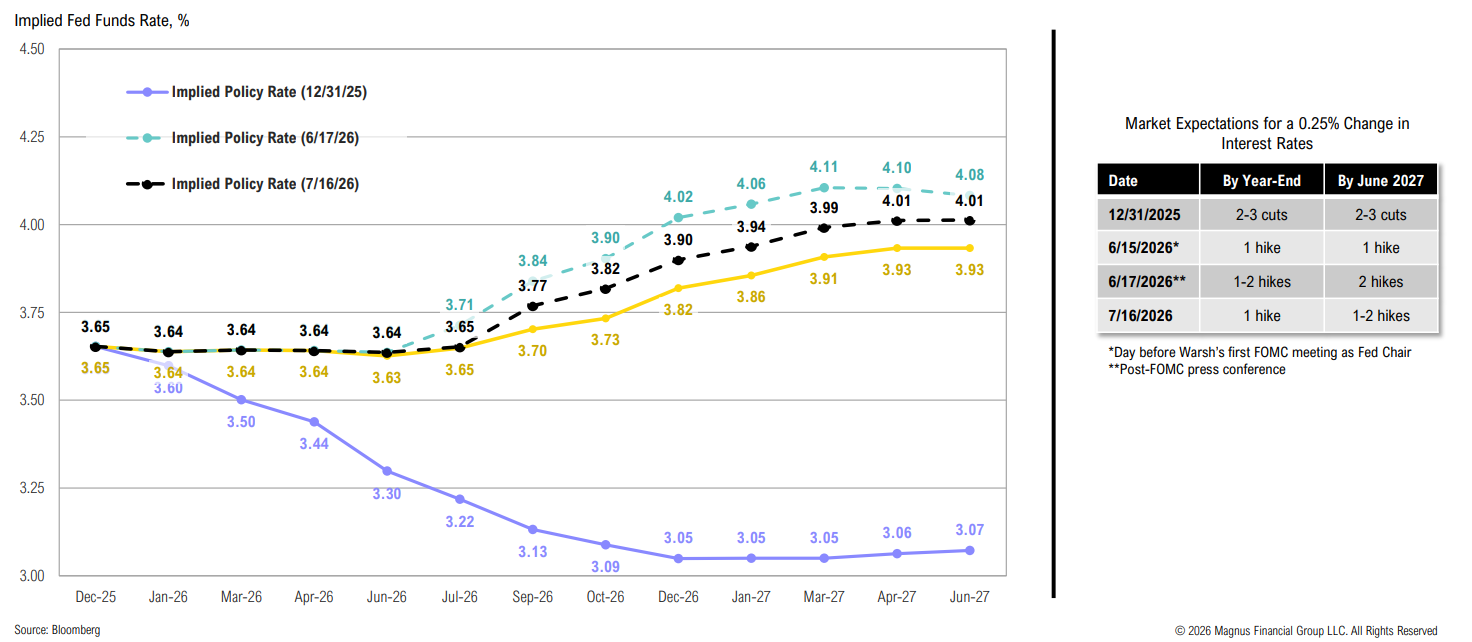
Rapid repricing of the path for interest rates reflects inflationary pressures stemming from the Iran conflict and the continued resilience of the U.S. economy
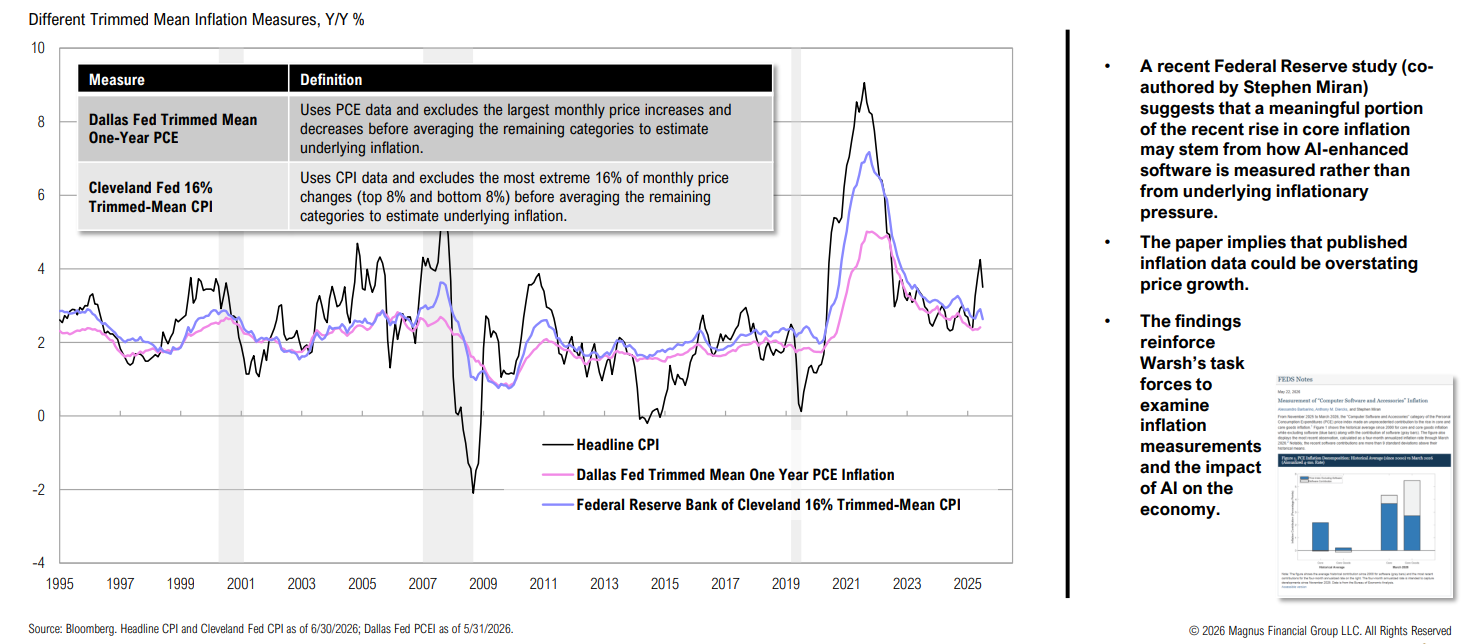
Trimmed mean inflation measures suggest underlying inflation pressures remain more contained than headline readings imply
Tariff Refunds
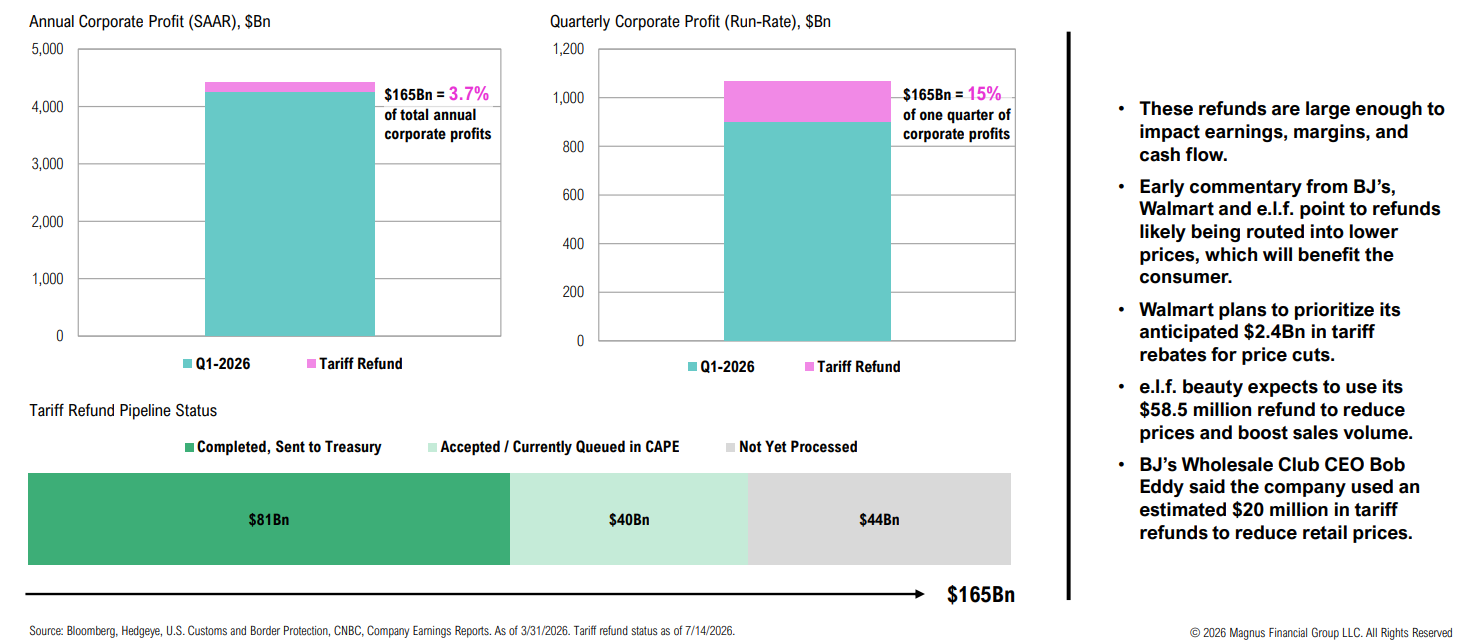
An estimated $165Bn in tariff revenue is expected to be refunded
AI Productivity
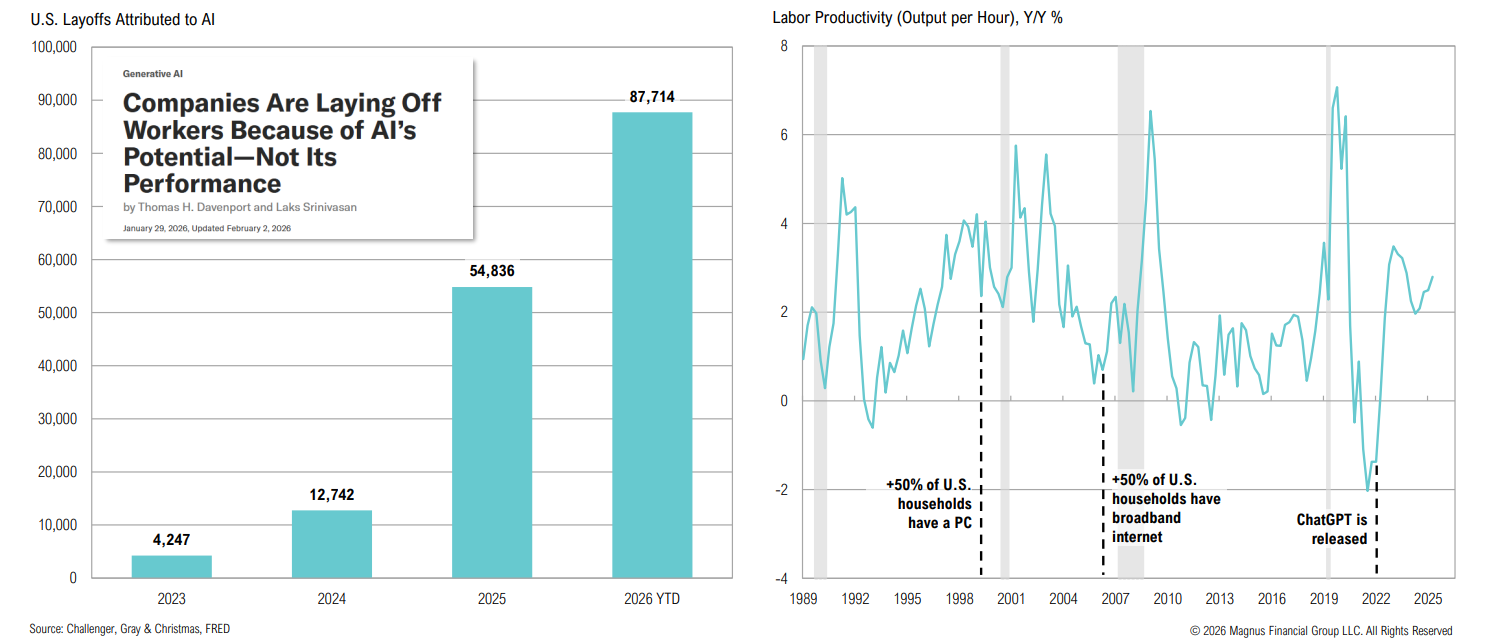
AI-attributed layoffs are accelerating, but “AI washing” is part of it; aggregate nonfarm productivity data doesn’t yet show a sustained increase
Evidence of “AI washing”? AI-efficiency messaging has not offset weak fundamentals at companies like Nike, Workday, and Accenture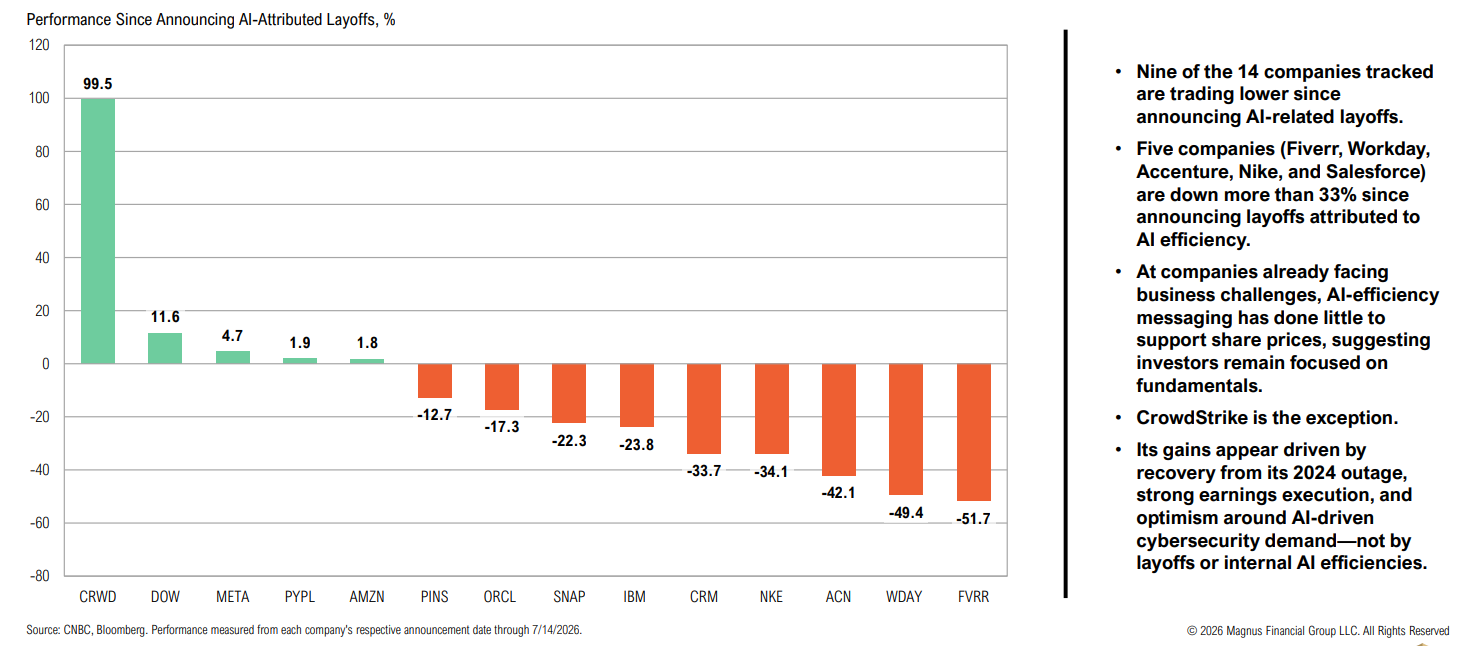
AI & GDP Growth
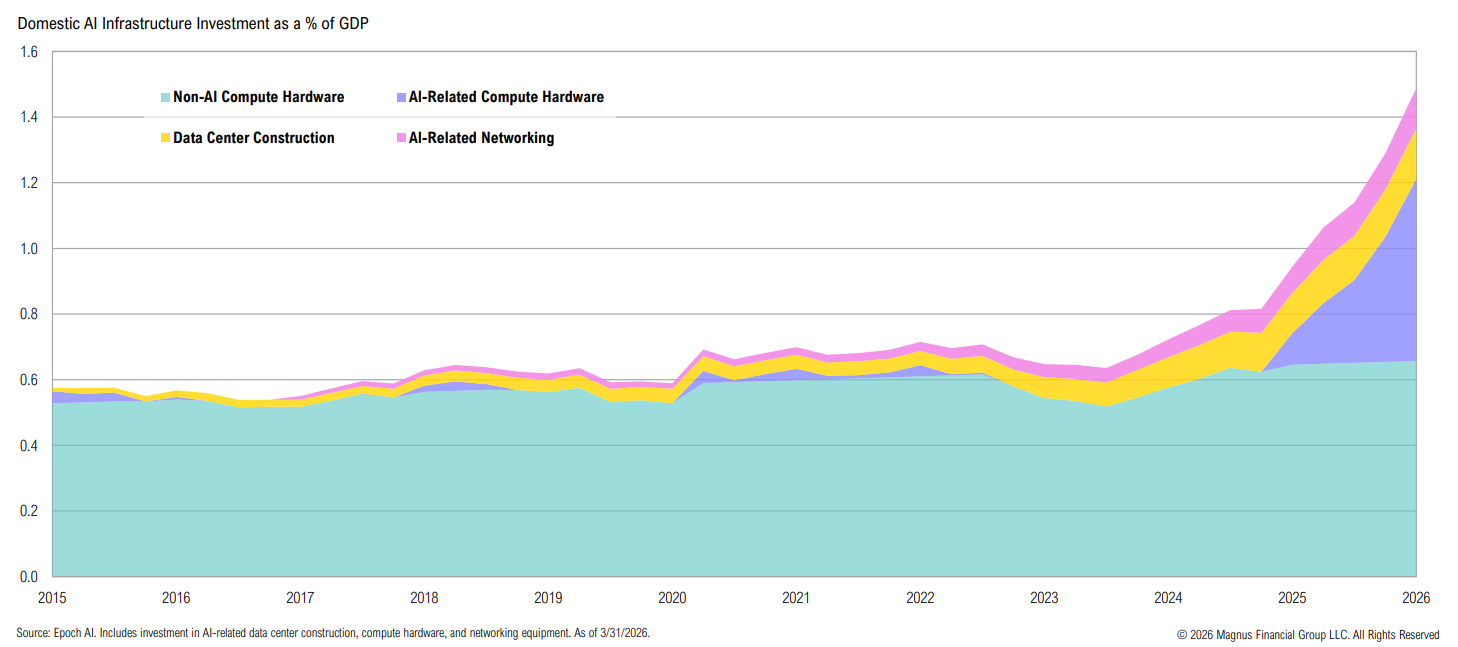
Since 2023, AI infrastructure has doubled computing’s share of U.S. GDP
AI
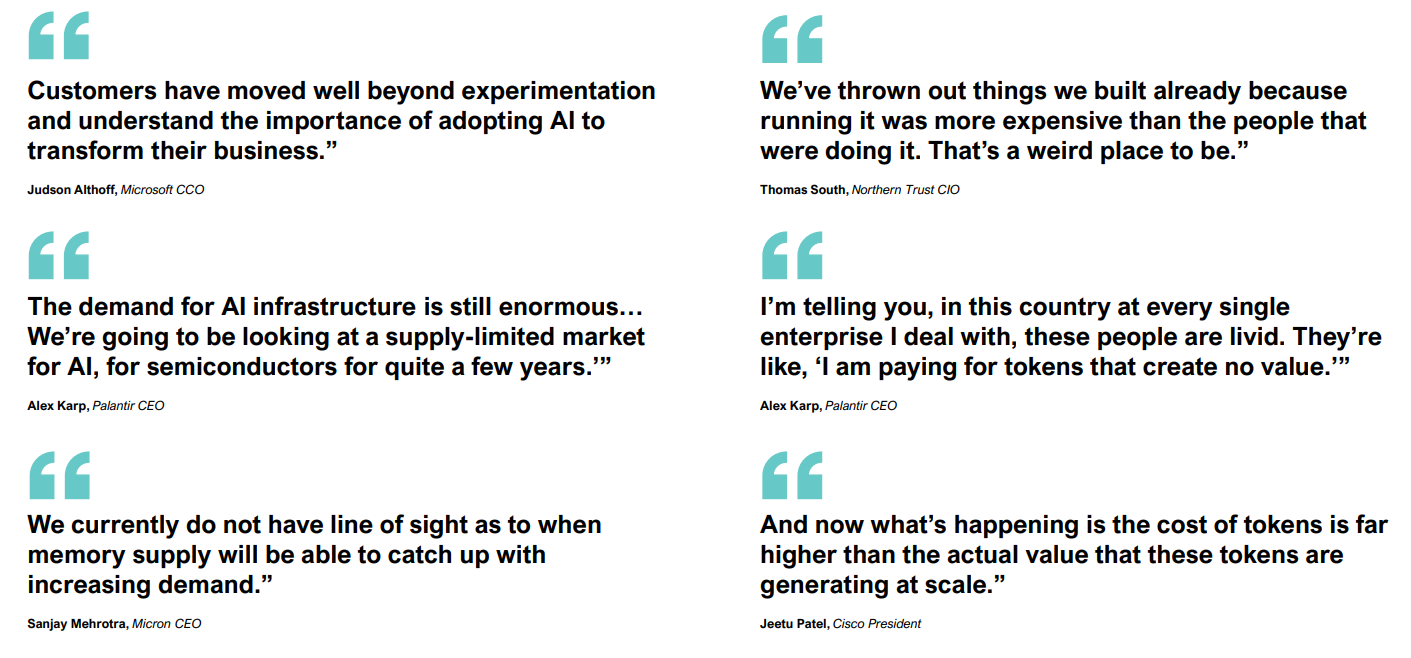
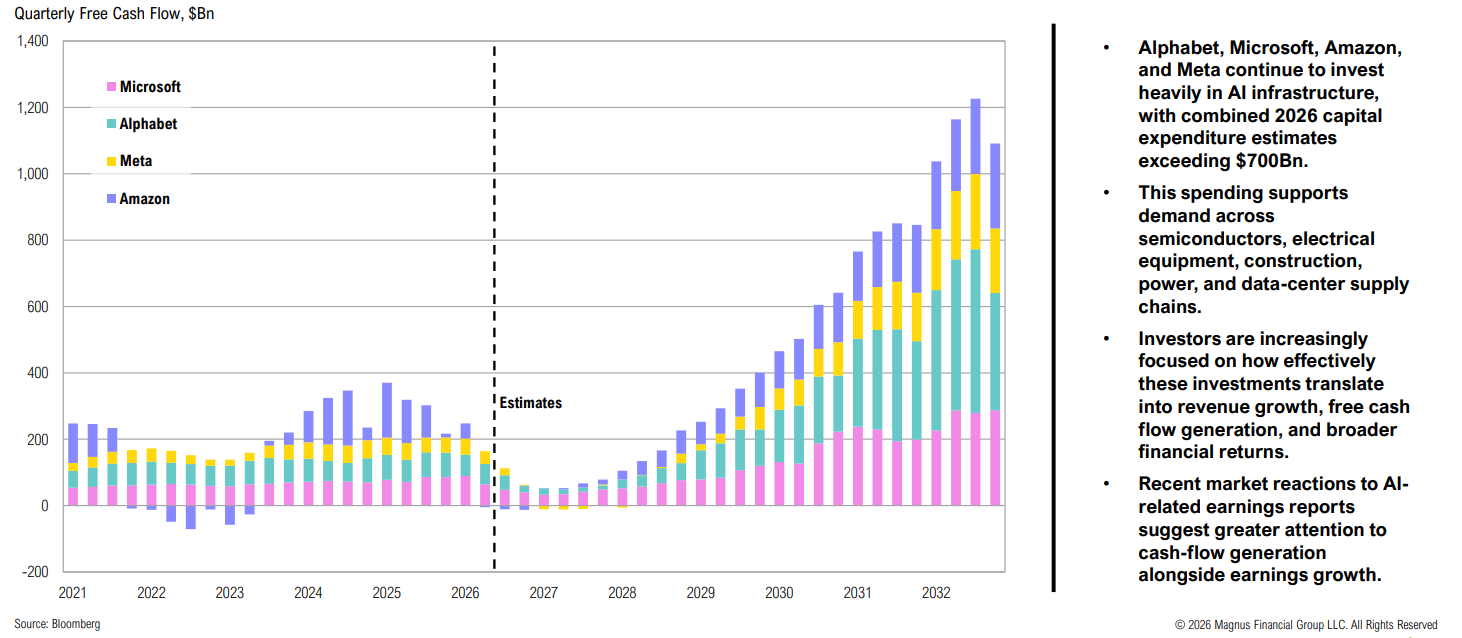
2027 hyperscaler capex is expected to exceed 2026 by nearly $200Bn; cumulative AI-related spend is expected to reach several trillion dollars over the next 5 years
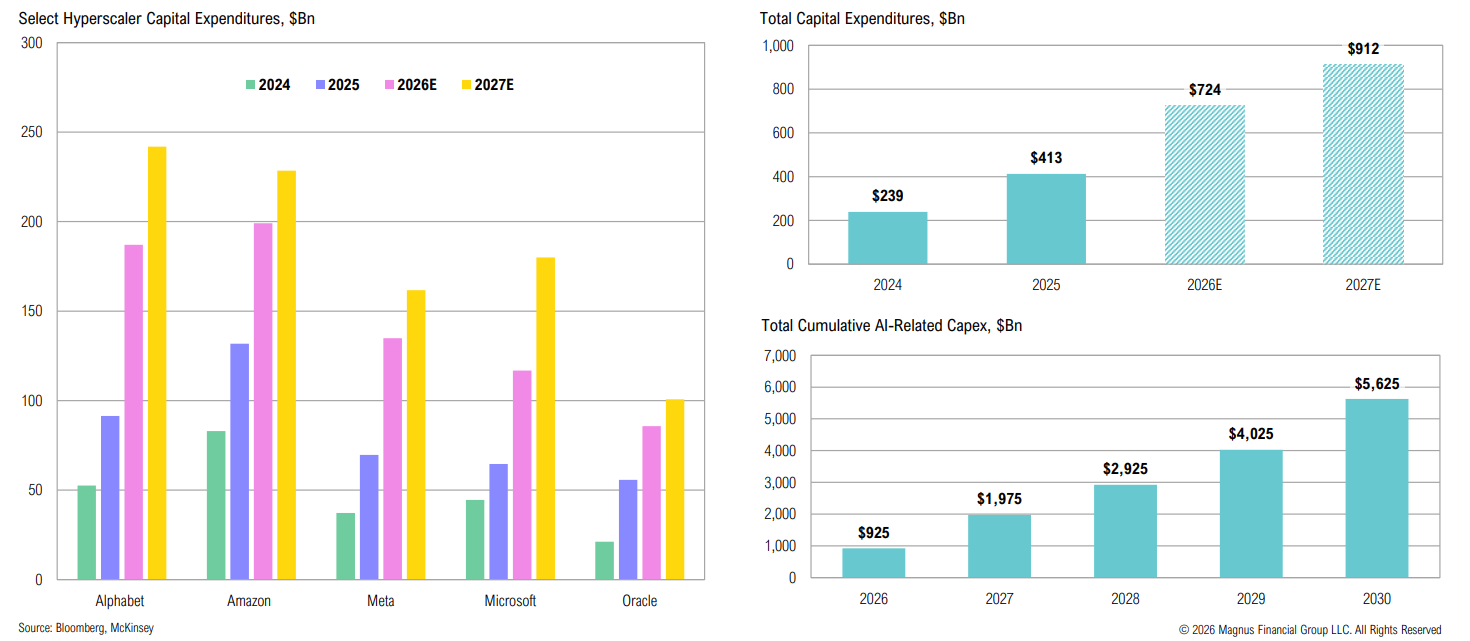
Free cash flow of several hyperscalers is expected to dwindle in the coming quarters as capex intensifies, before accelerating in 2029
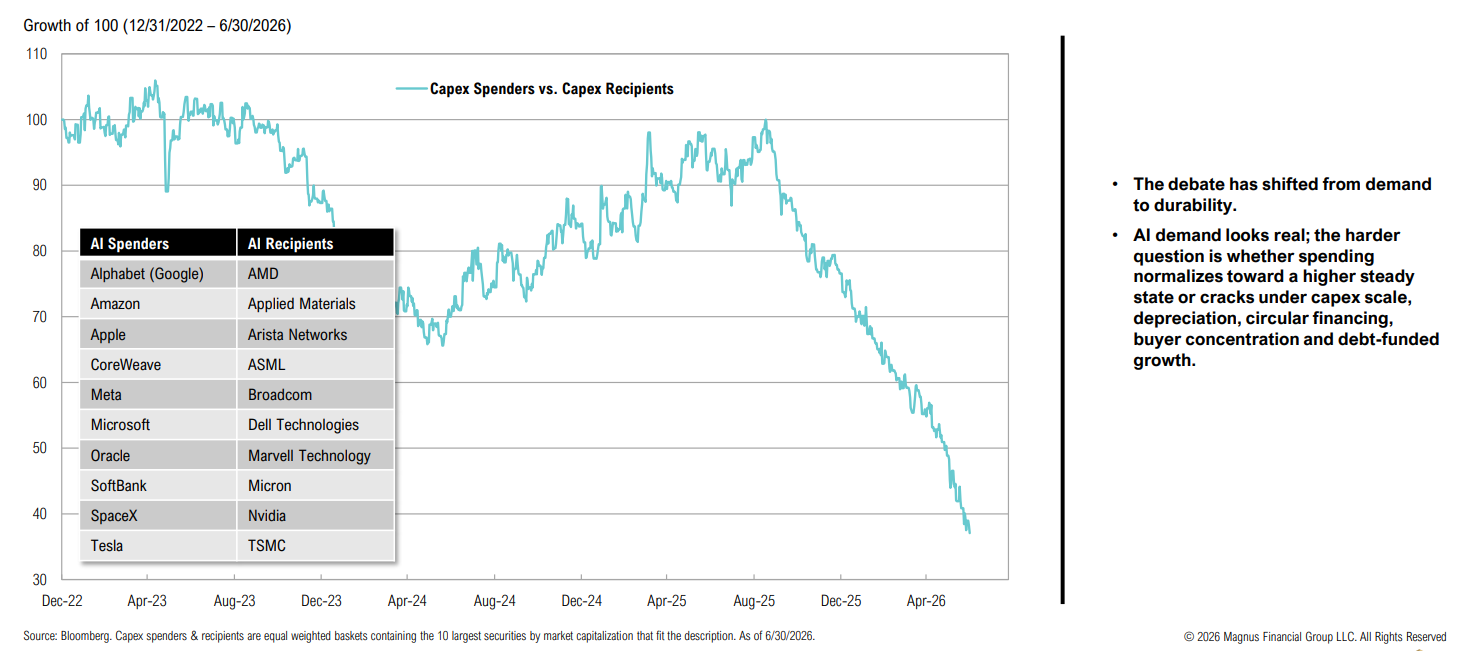
The recipients of AI capex have been outperforming capex spenders
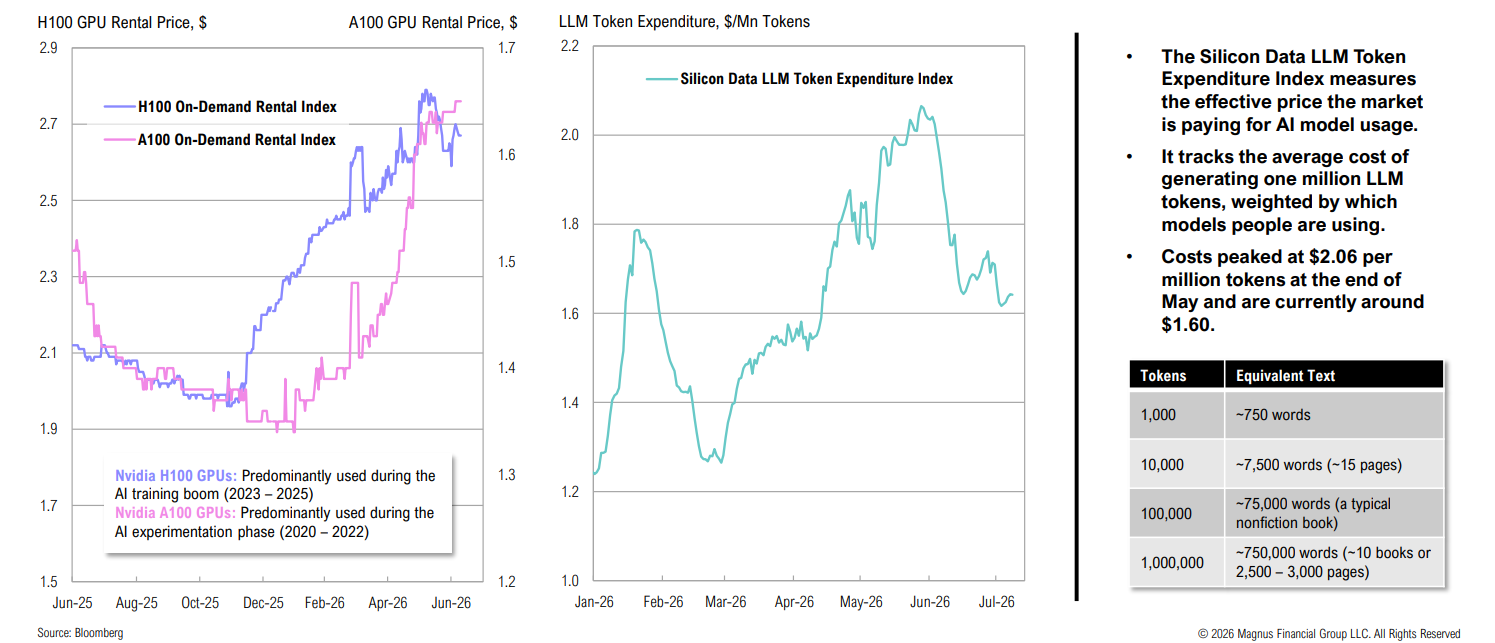
Elevated prices across older chips suggest AI compute demand remains supply-constrained, even as token costs decline
Case study: Micron v Cisco
U.S. small cap earnings and sales growth estimates are expected to stair-step higher and remain well above levels seen over the past two years through Q4’27
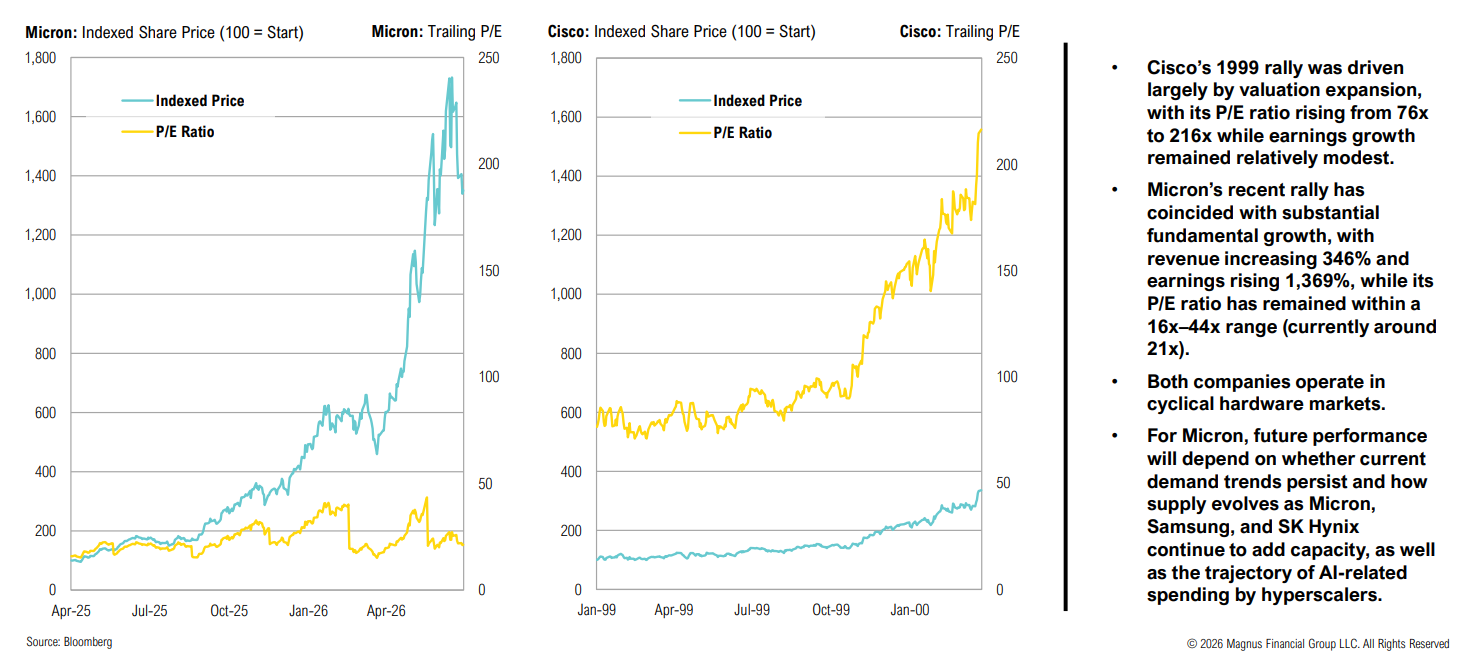
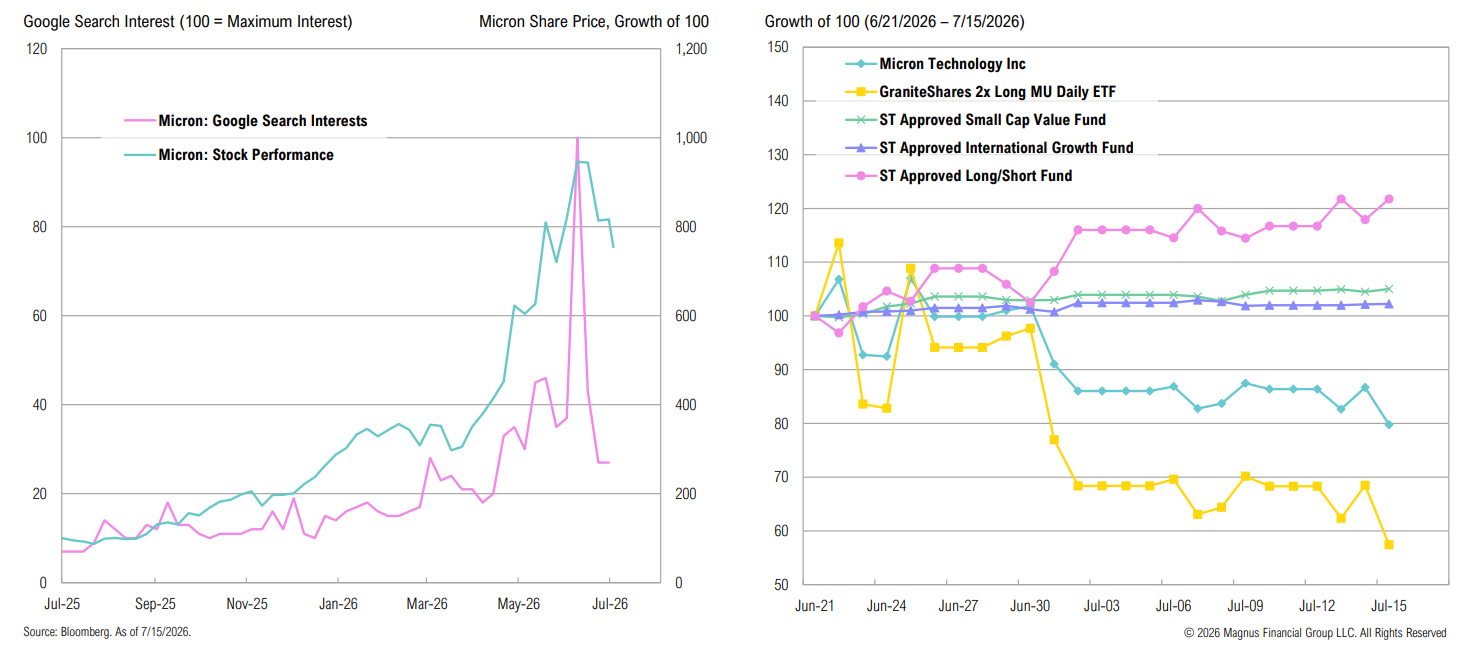
A reminder that by the time everyone is talking about it, it’s usually all priced in; rebalancing diversified portfolios is still the best way to play this in our view
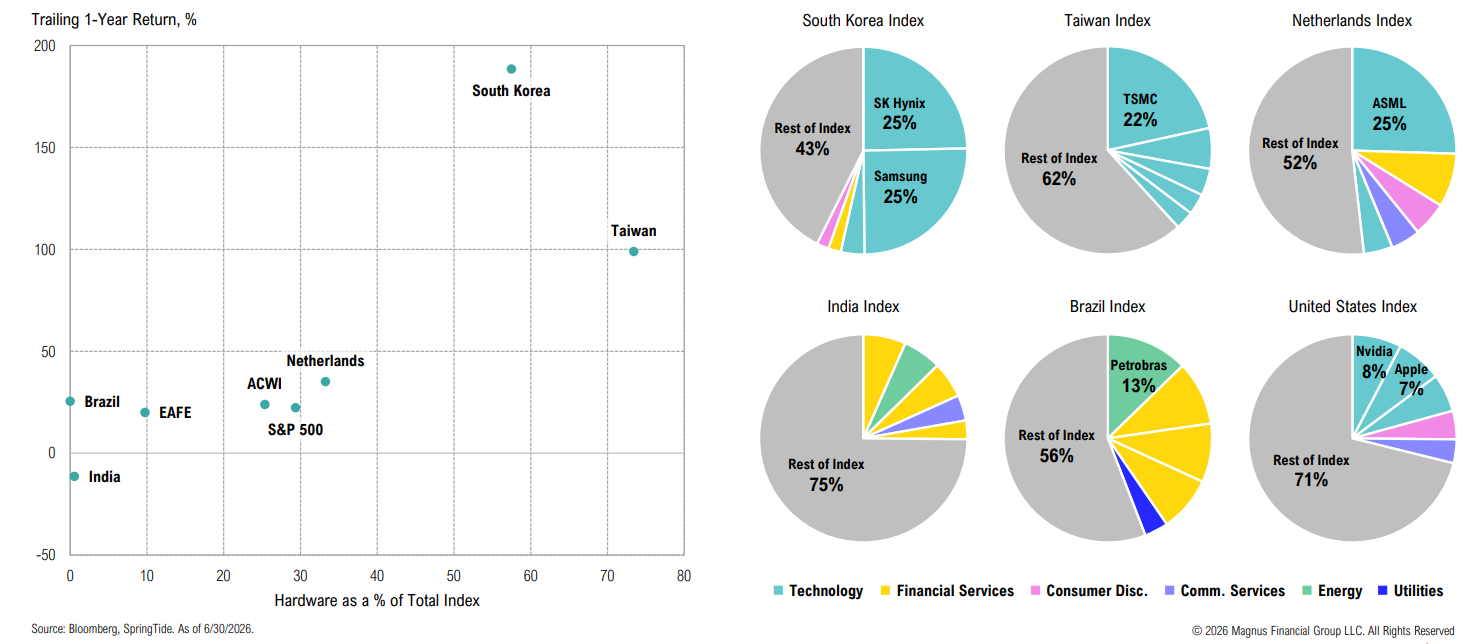
Hardware-driven outperformance in Korea and Taiwan is concentrated in just a handful of companies, unlike more diversified markets such as the U.S.
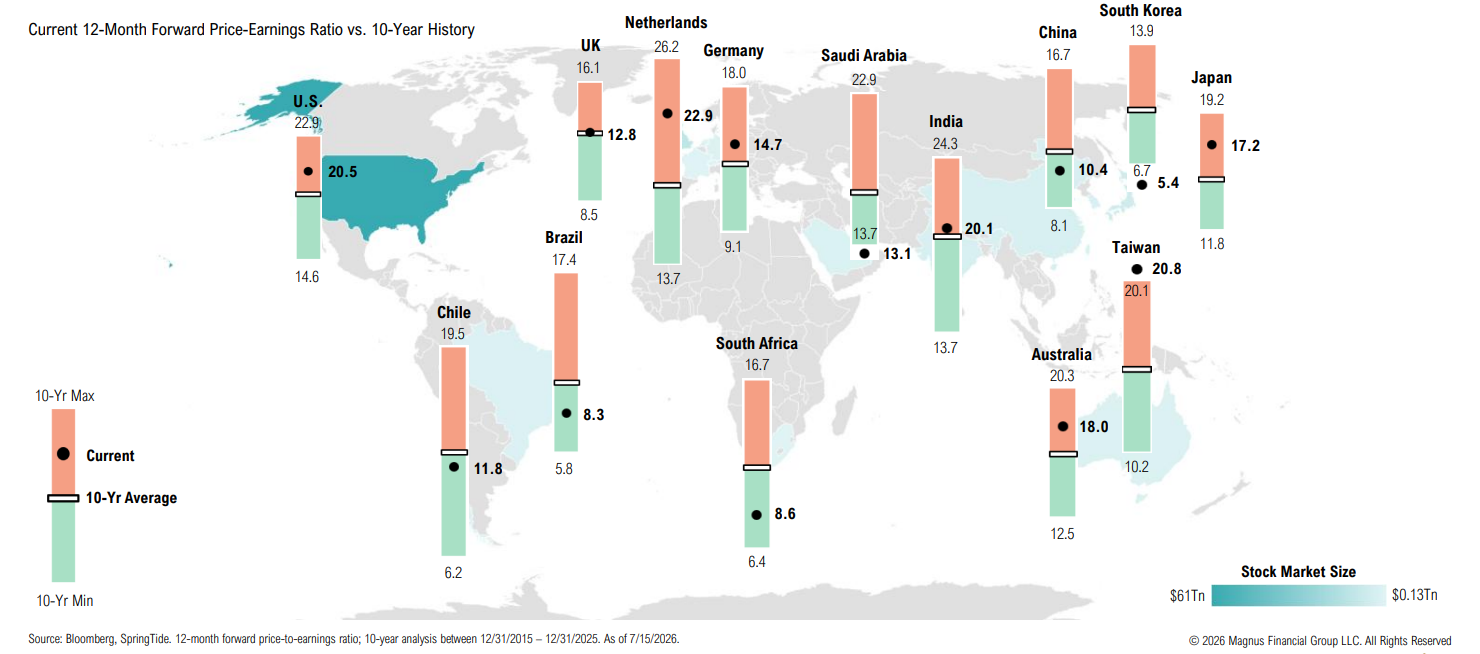
Global Valuations
While U.S. valuations remain elevated, parts of Europe, Asia and emerging markets show value
U.S. Large-Cap Valuation
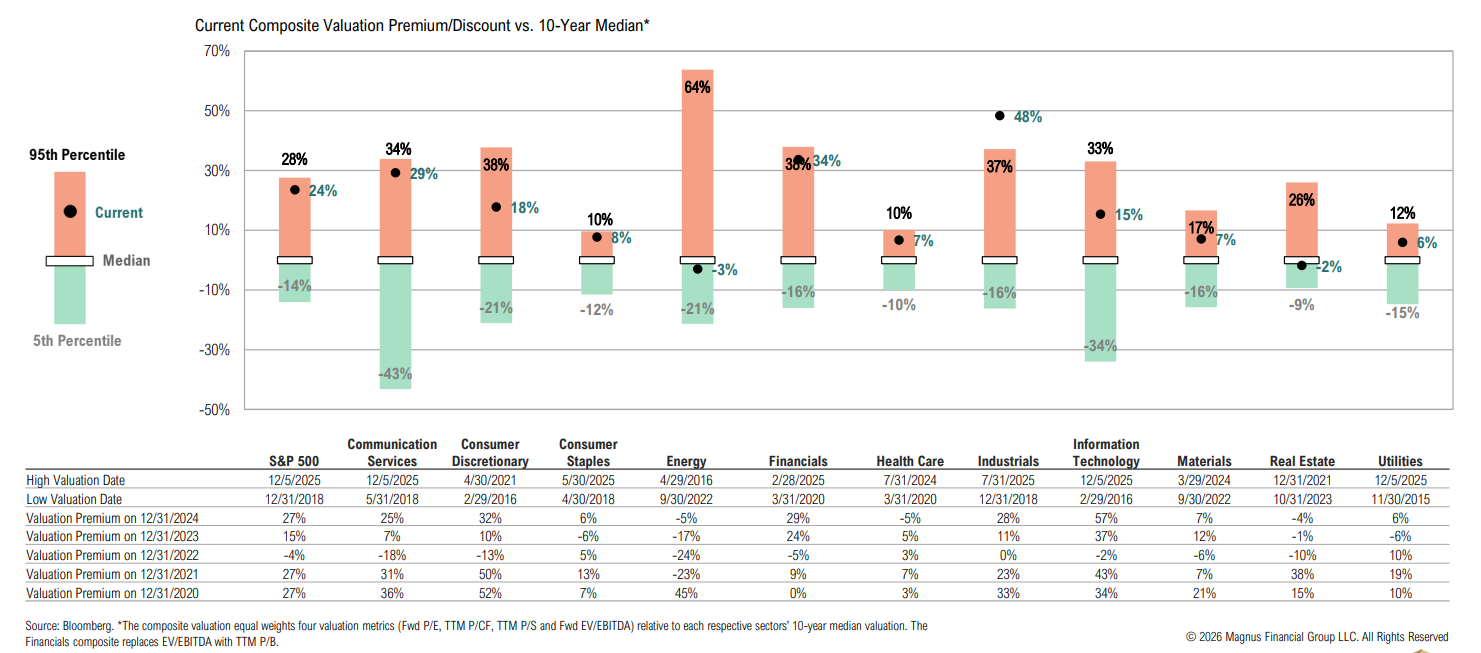
S&P 500 composite valuations are elevated but below extreme levels; energy and real estate are the only sectors showing some value
U.S. Large-Cap Earnings Growth
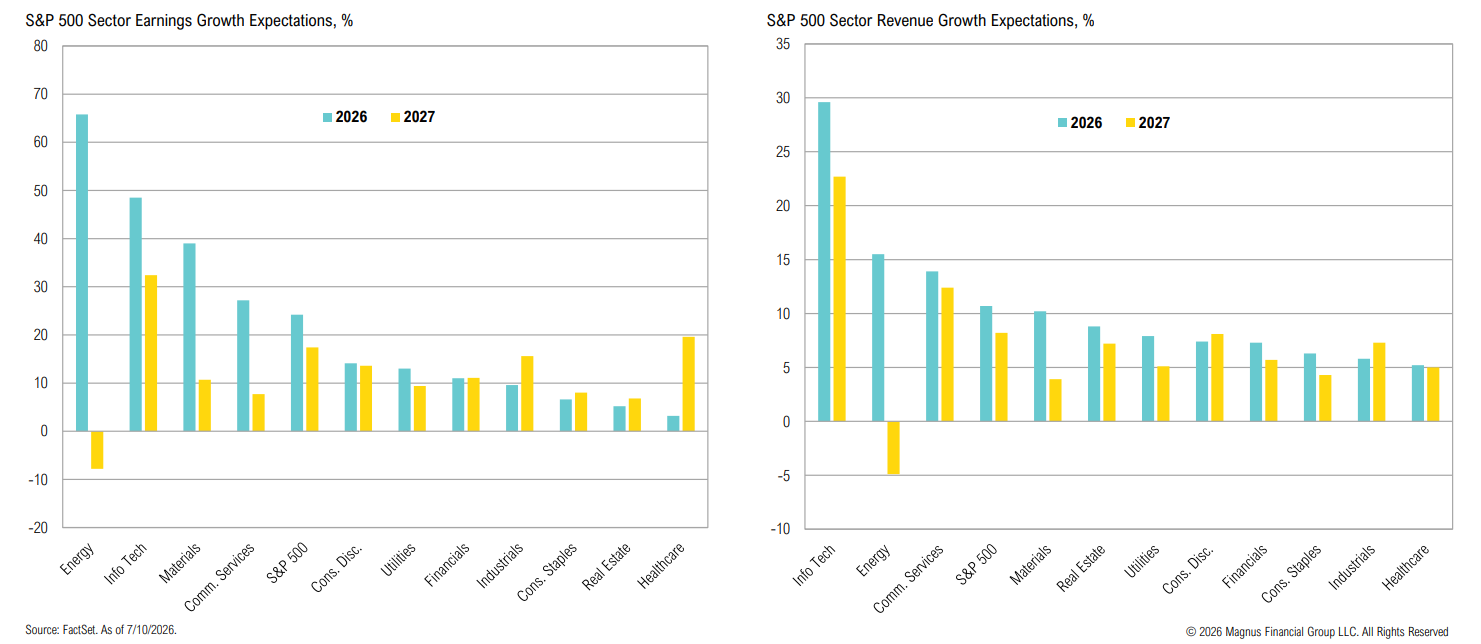
Earnings and revenue growth are expected to broaden in 2027, with leadership becoming less concentrated across sectors
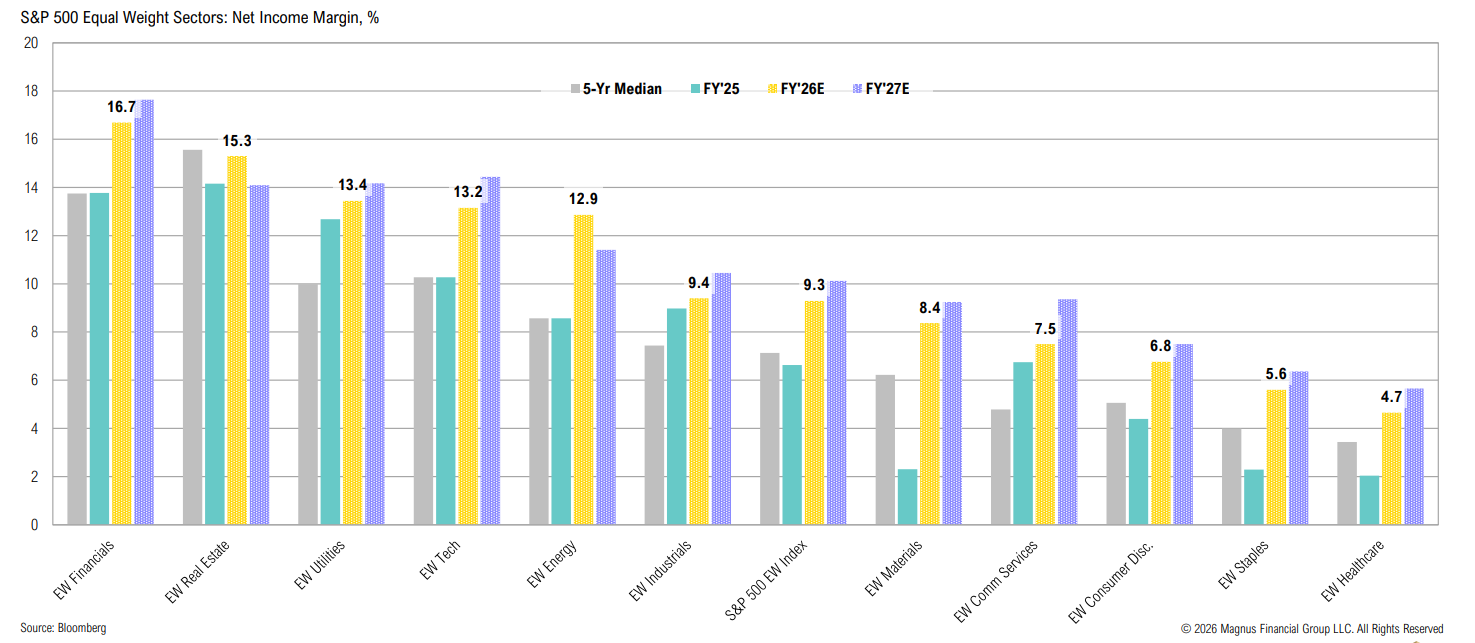
All equal-weighted S&P 500 sectors are expected to see margin expansion in 2026, suggesting a broadening earnings expansion that extends beyond mega-cap tech
IPO Activity
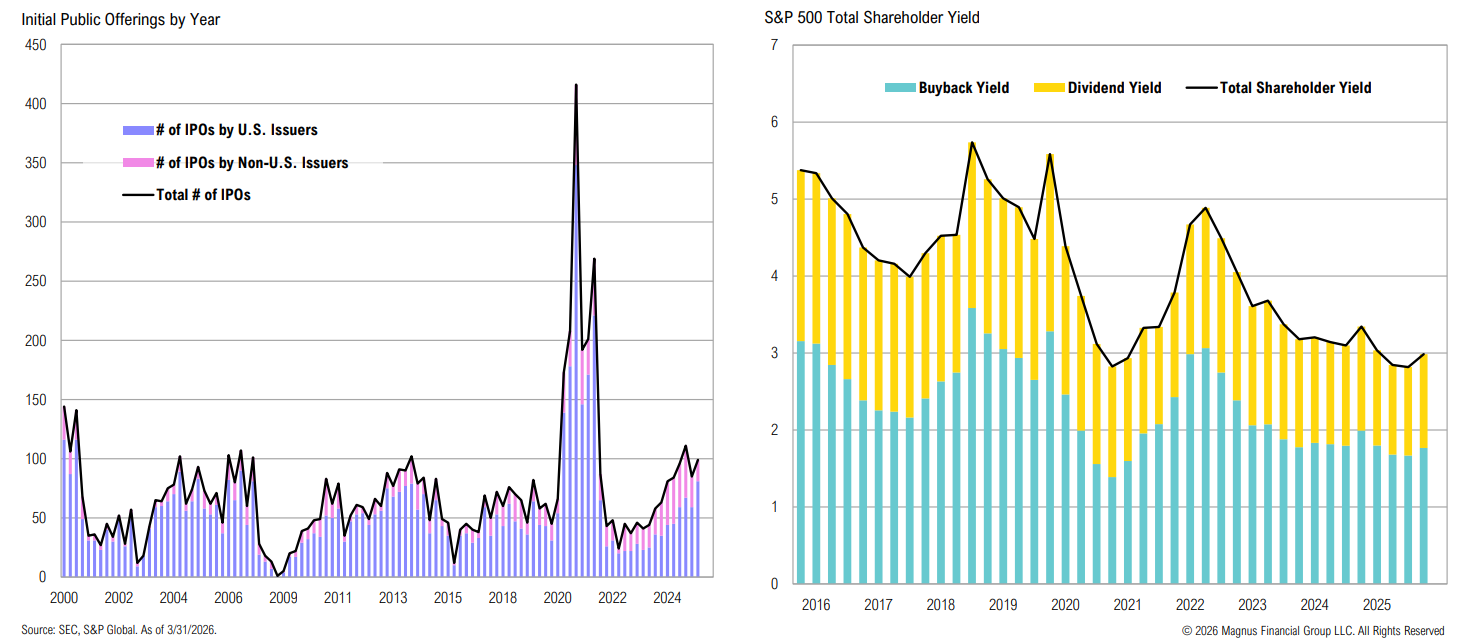
Liquidity drain: Rising IPO activity is absorbing stock market liquidity; the AI buildout is expected to drive dividend and buyback yields lower, reducing a key source of liquidity
Corporate Debt
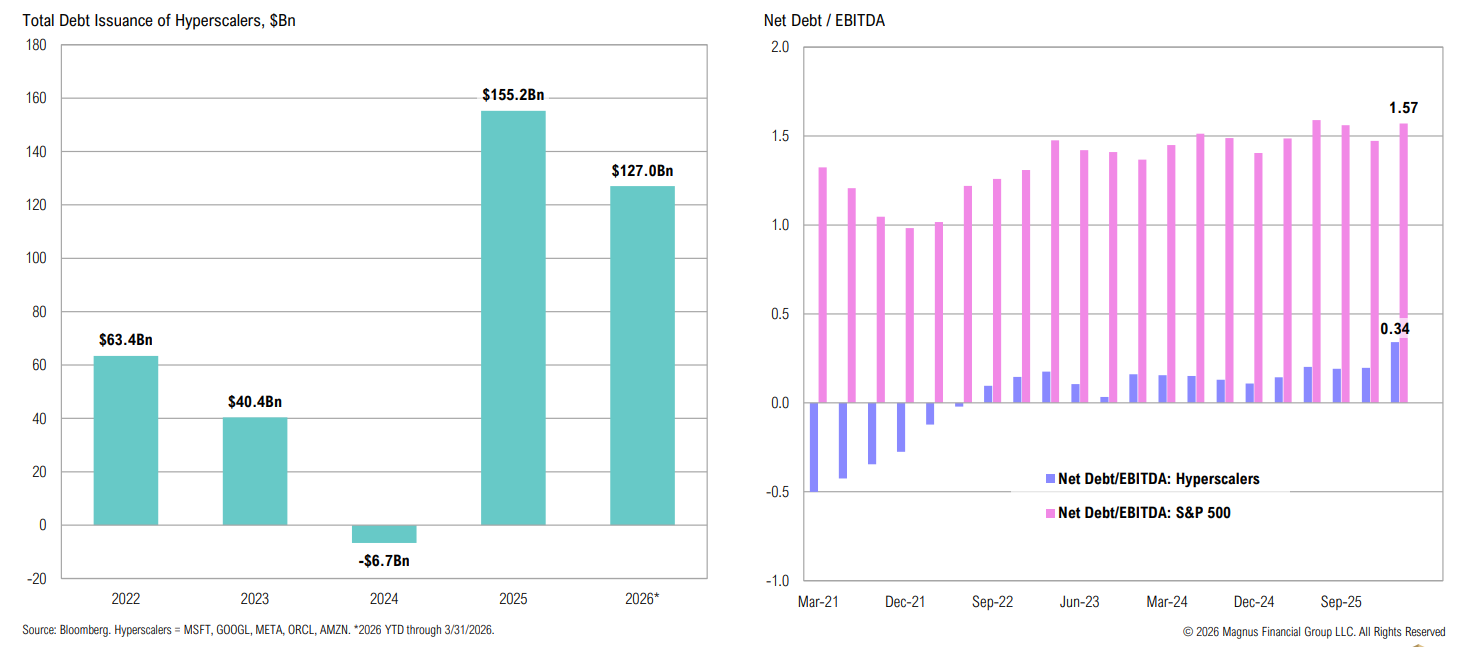
Hyperscalers raised $155Bn of debt in 2025 and a further $127Bn in Q126; despite the sharp increase in issuance, net debt/EBITDA remains ~80% below the S&P 500
Global Bonds
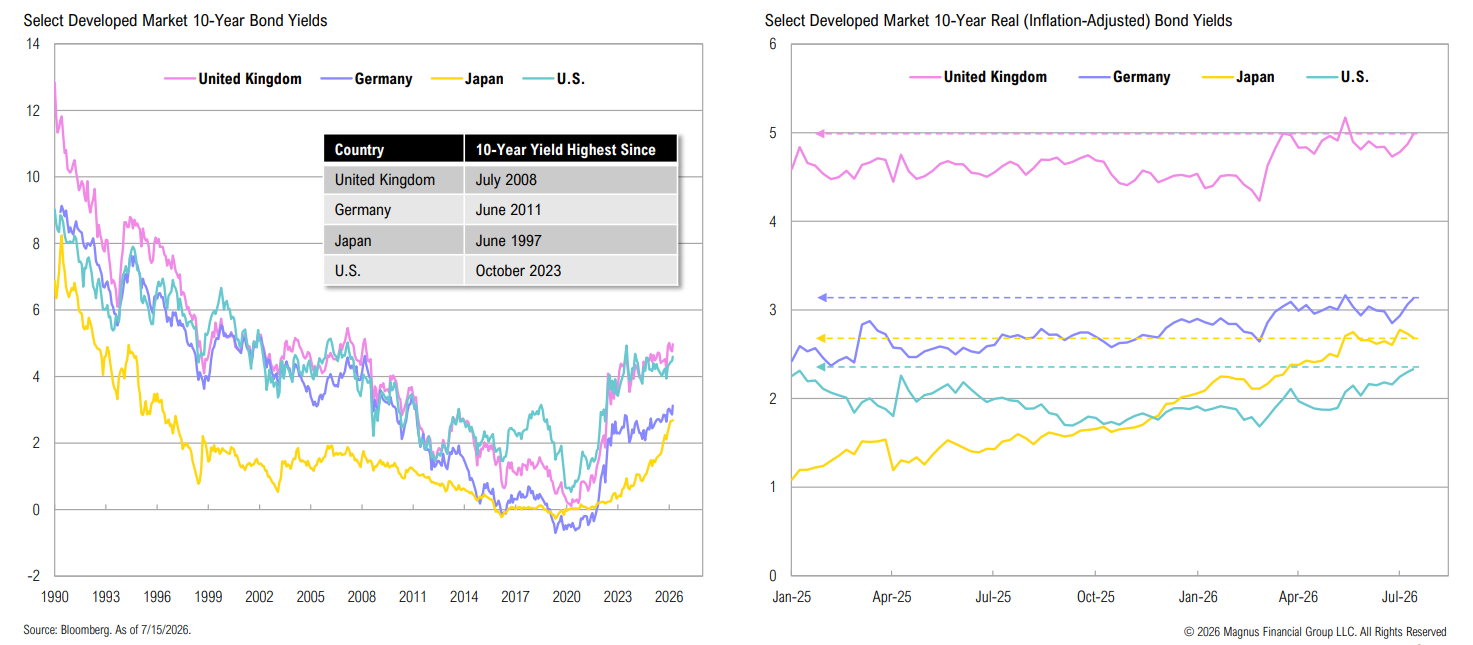
Most major DM bond yields are at the highest level since the late 1990s/mid-2000s; the 10-year Treasury yield is the only one at the same level today than at the start of 2025
U.S. Treasury Yields
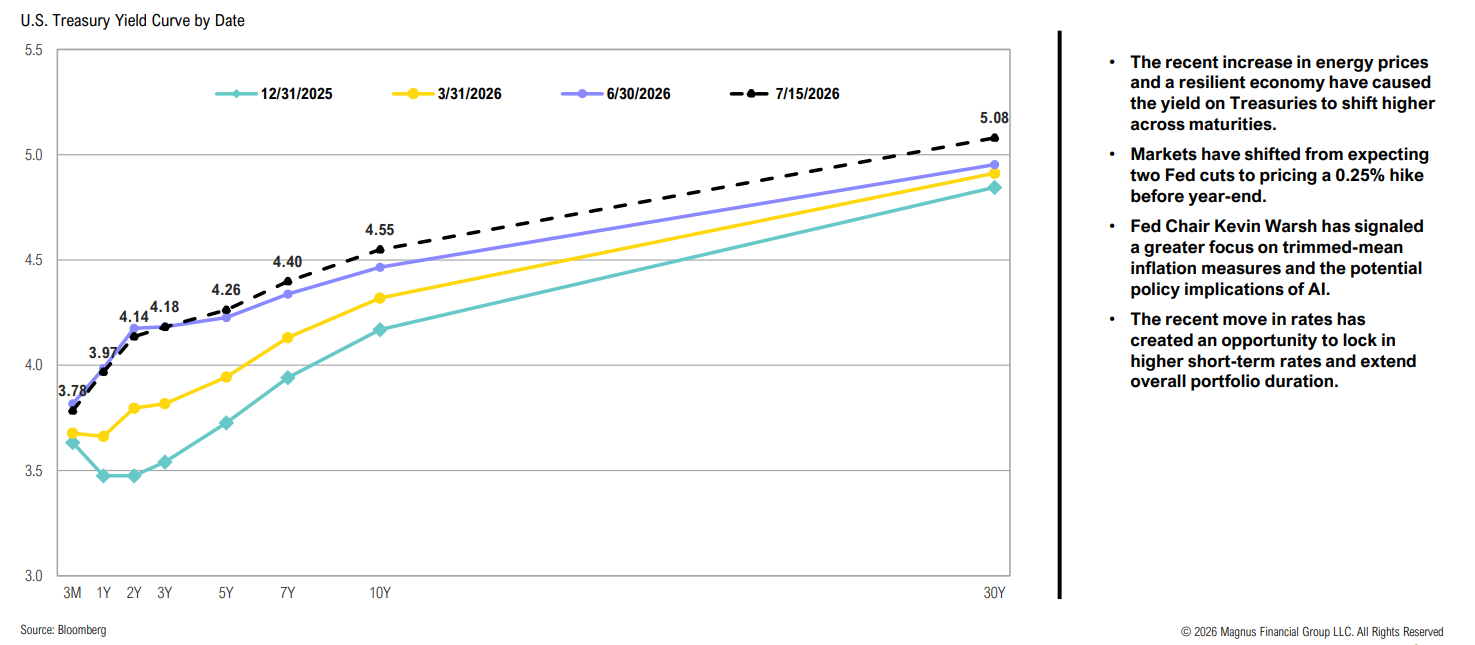
Treasury yields have shifted higher, especially at the short end
U.S. Treasury Return Matrix
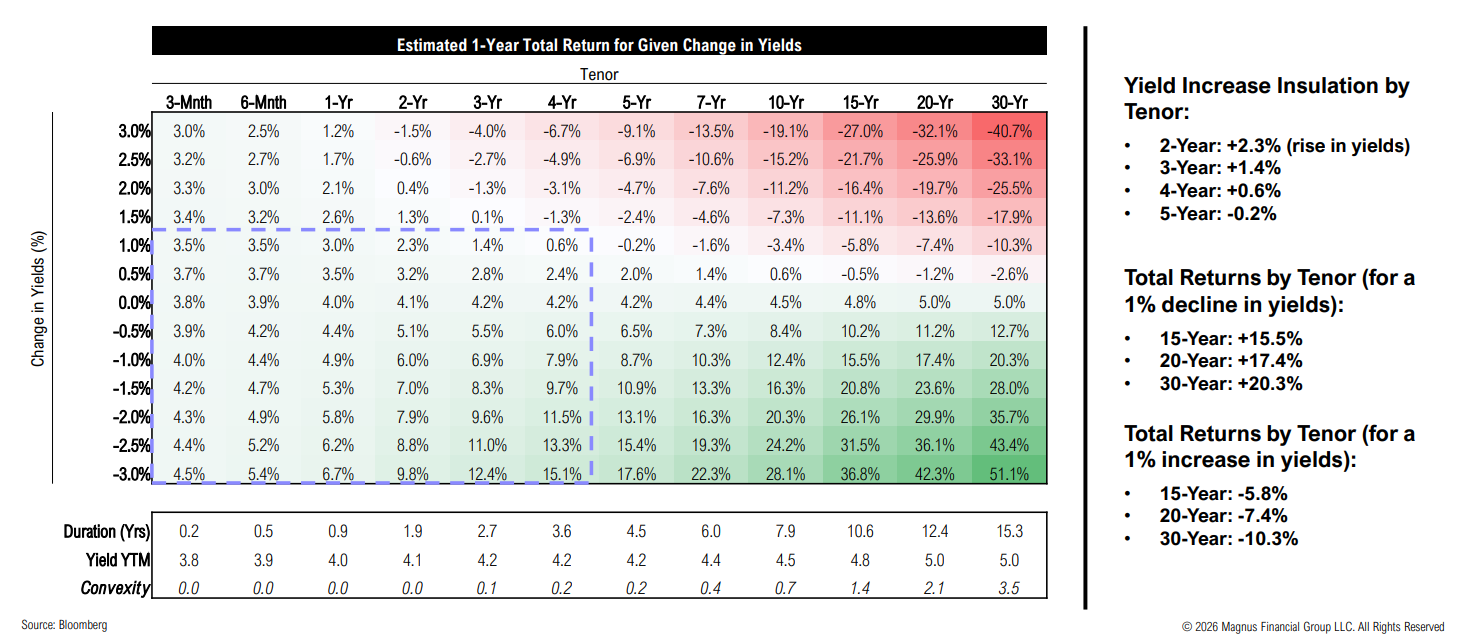
3-year Treasuries will generate positive returns even with yields rising over 1%,
while 30-year Treasuries would lose ~10% (but earn 20% if yields dropped 1%)
Fed Policy
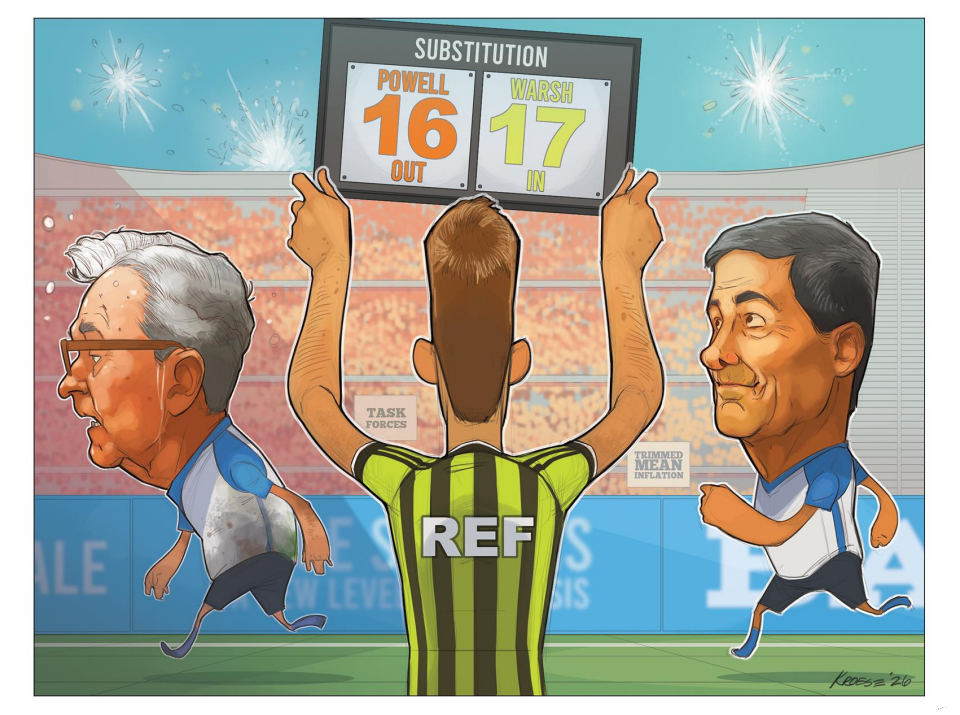
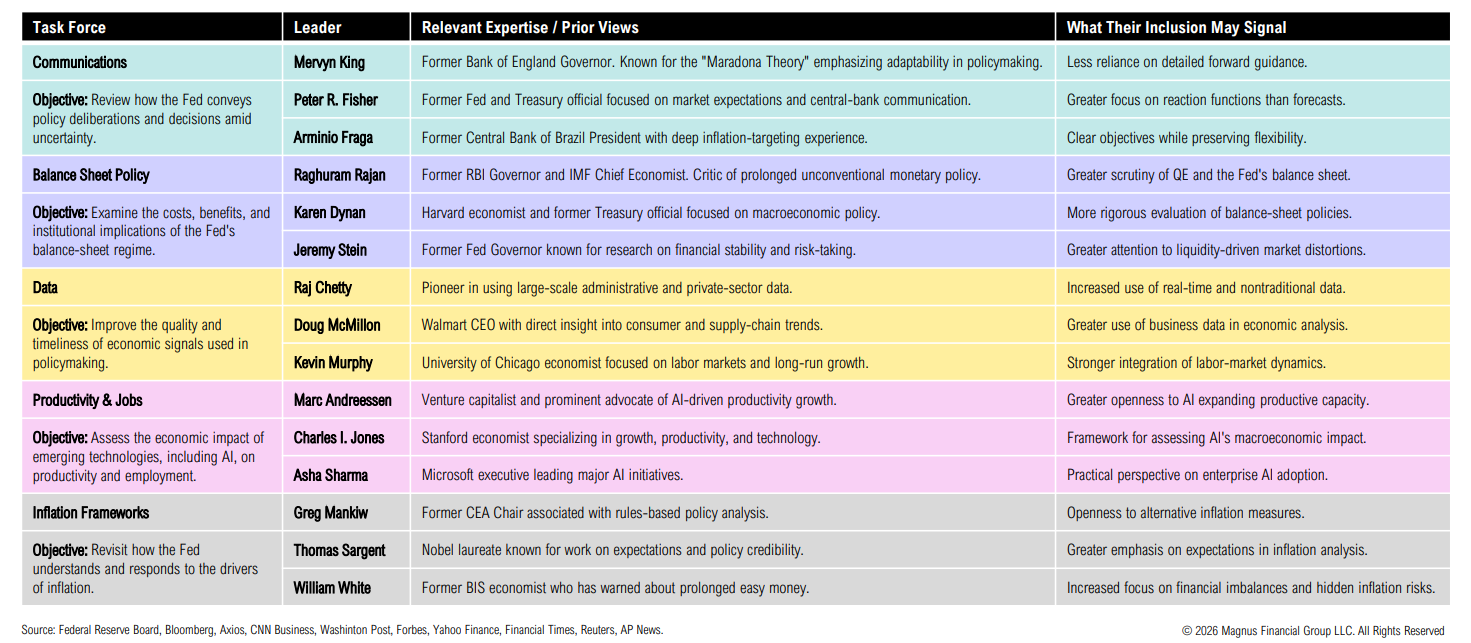
On July 9, Warsh announced the leaders of five task forces; most appointees are respected industry outsiders rather than current Fed insiders
Biotech
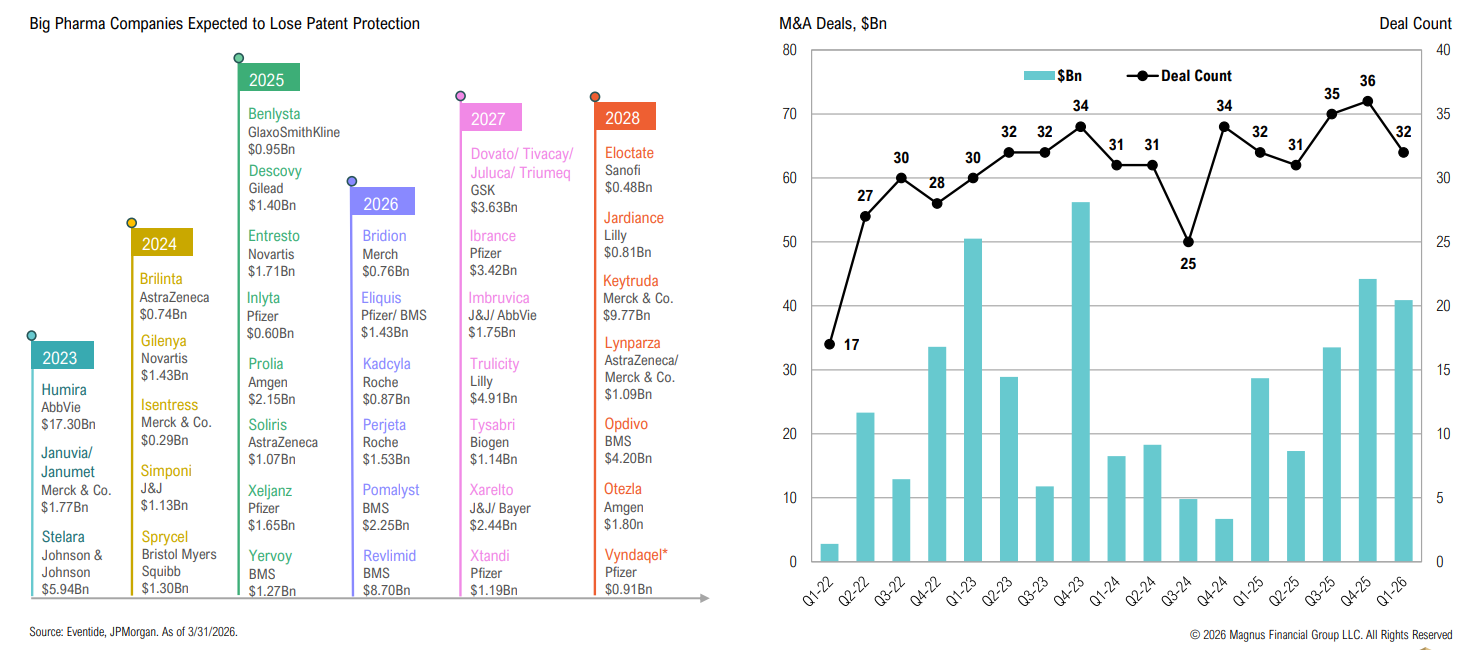
Big pharma’s patent cliff is accelerating, with roughly $200Bn in annual revenue at risk by 2030, supporting continued M&A activity that has reaccelerated in recent quarters
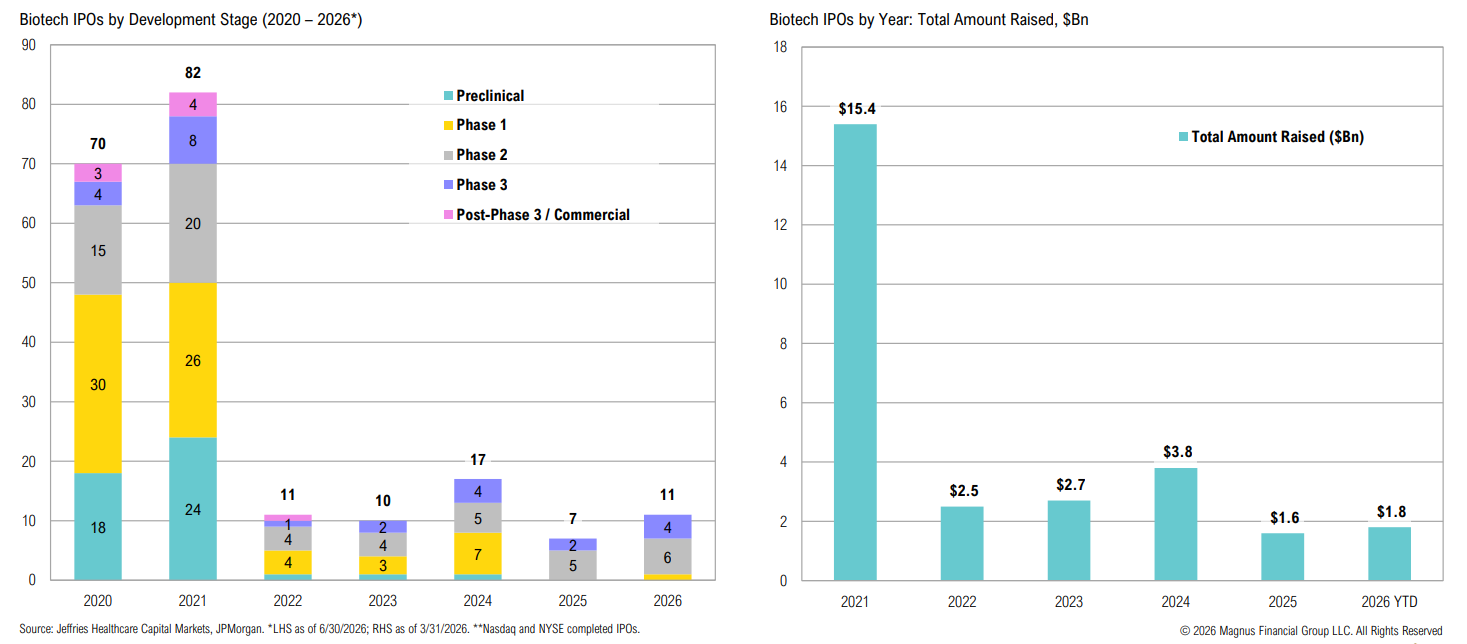
YTD, biopharma IPO listings are mostly comprised of later-stage assets (Phase 2/3); 2026 IPOs by dollar-value already exceed 2025 levels
Power Play
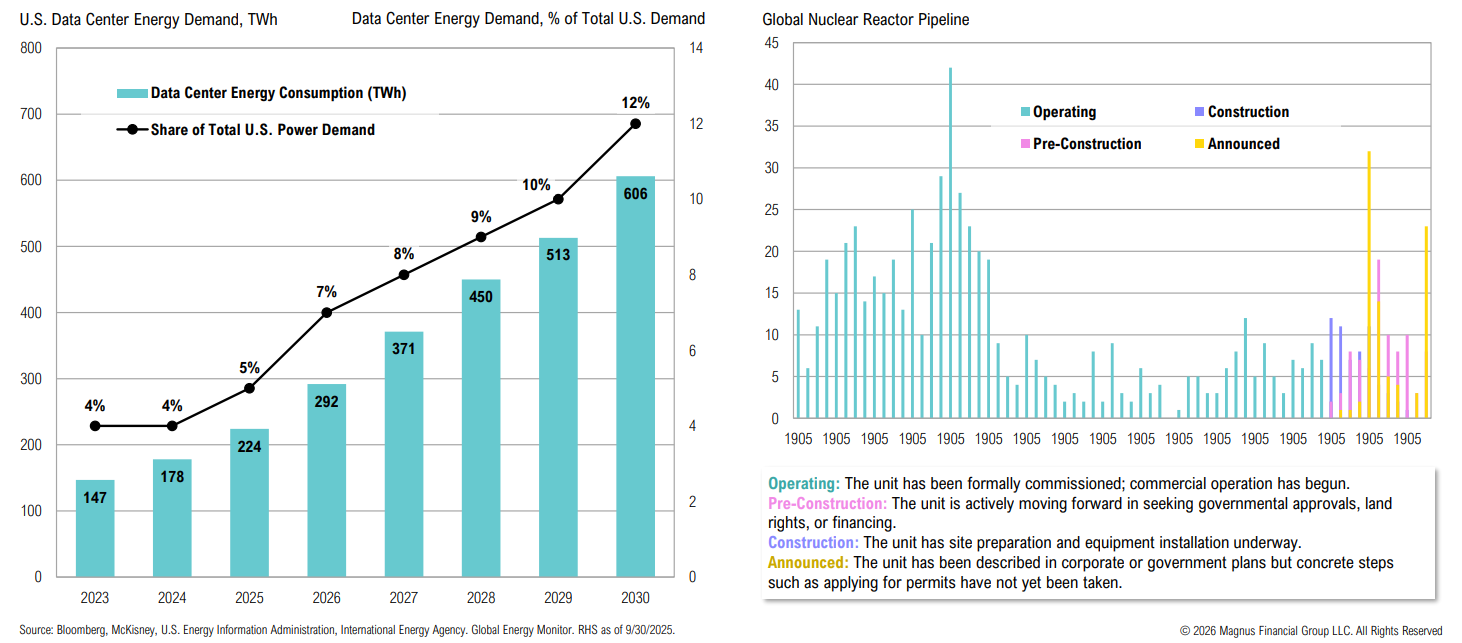
Data centers are expected to drive U.S. power demand; policy and rapidly rising demand for consistent energy output are leading to a nuclear renaissance
Real Estate
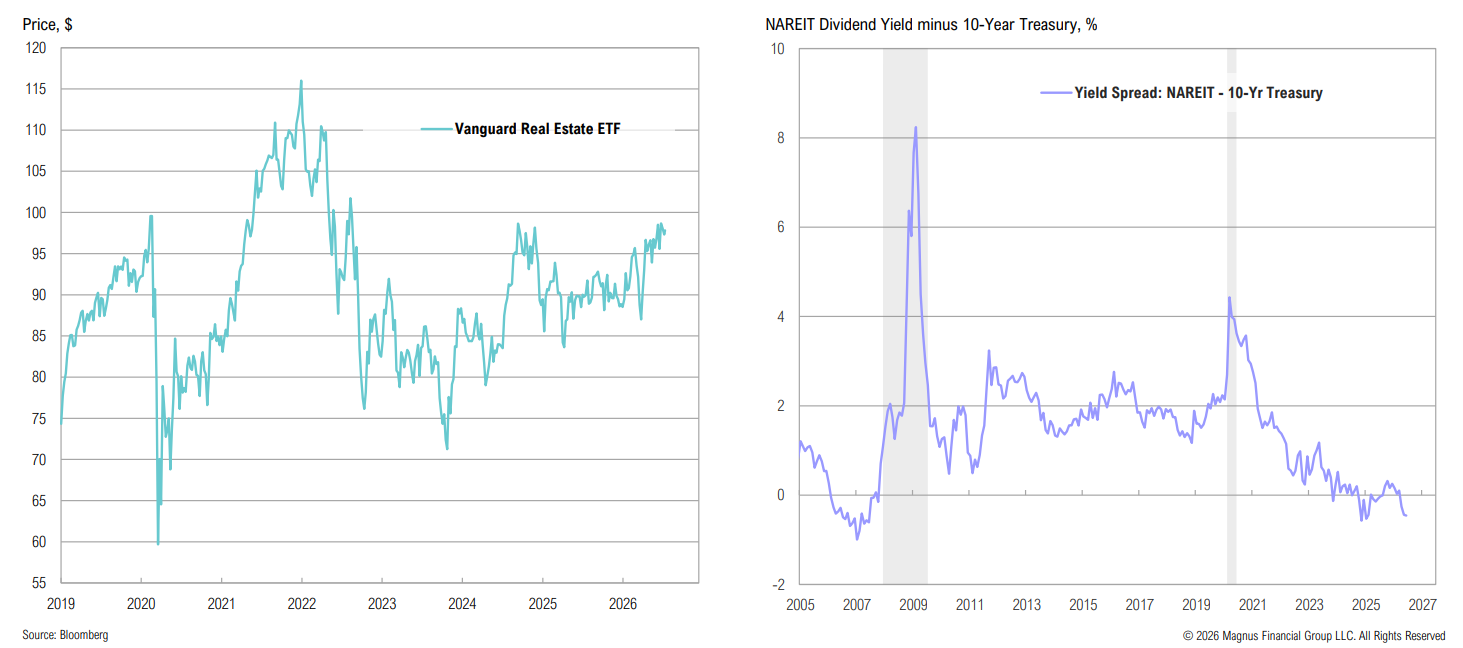
U.S.-listed real estate is still trading at pre-COVID price levels; despite this, REITs remain unattractive relative to Treasuries
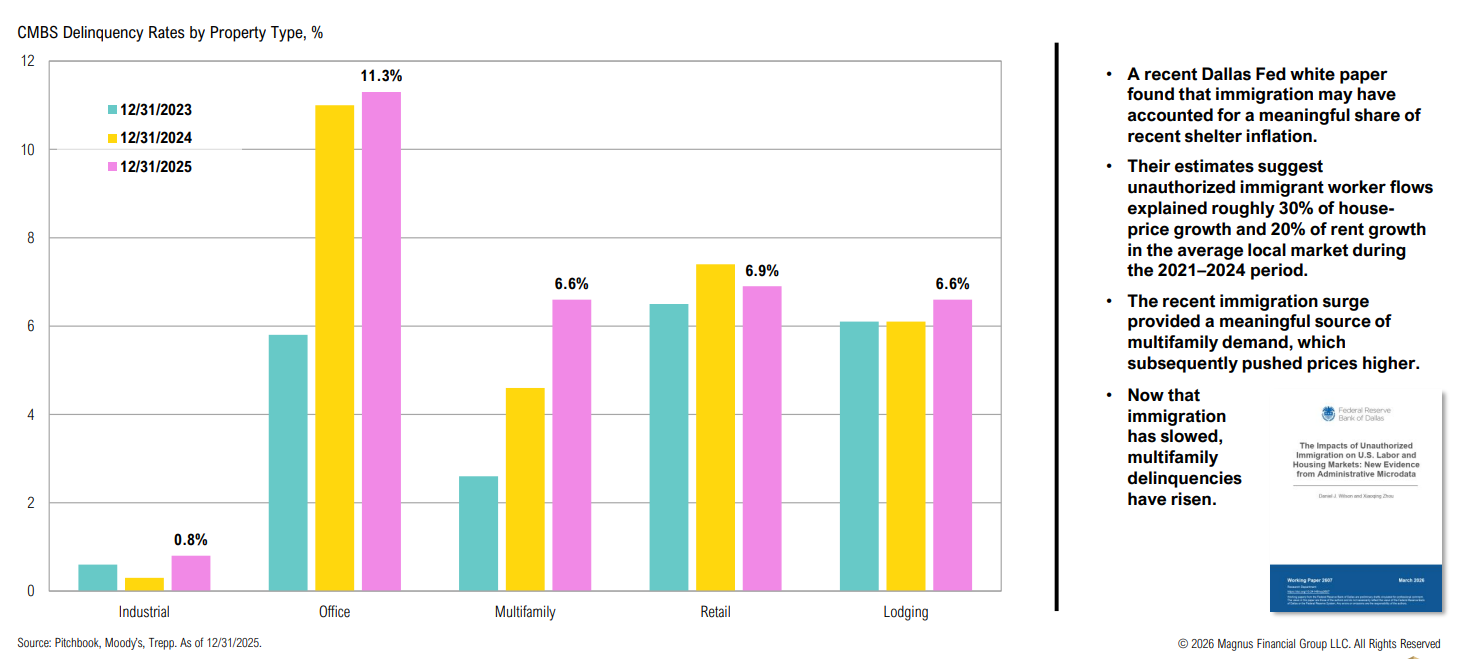
The immigration surge was a meaningful driver of housing demand and shelter inflation from 2021–2024; slower immigration could ease rent prices but increase multifamily stress
Energy
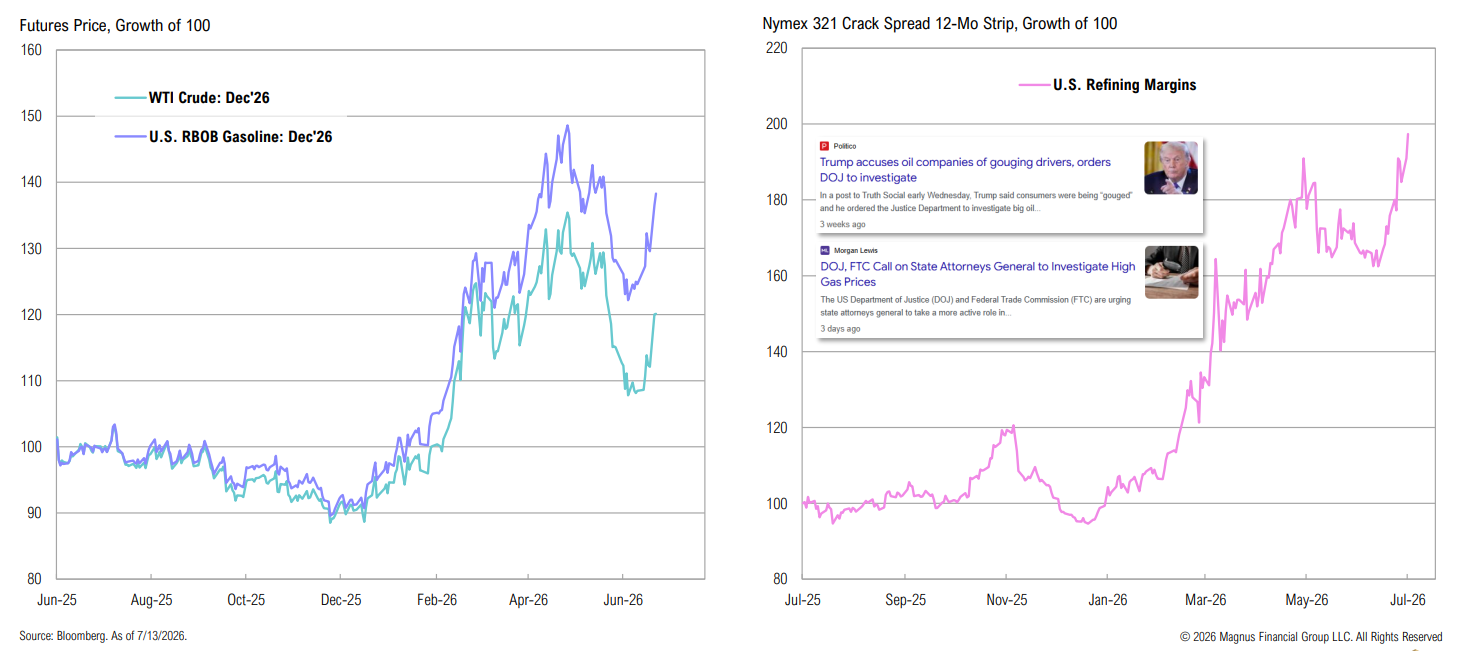
Gasoline prices remain higher than the increase in crude prices would suggest, driven by elevated refining margins; President Trump has ordered the DOJ to investigate potential price gouging
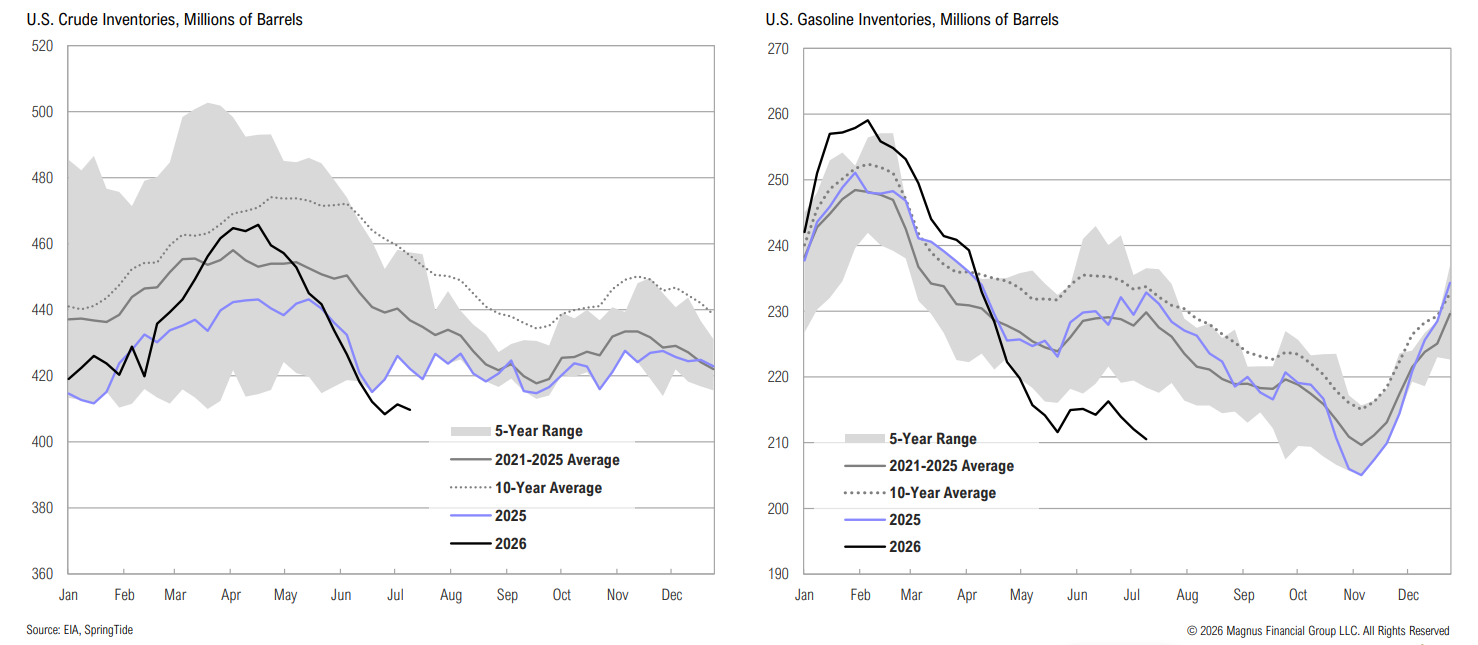
U.S. crude oil and gasoline inventories remain historically low; replenishment needs may keep prices above pre-conflict levels
Stablecoins
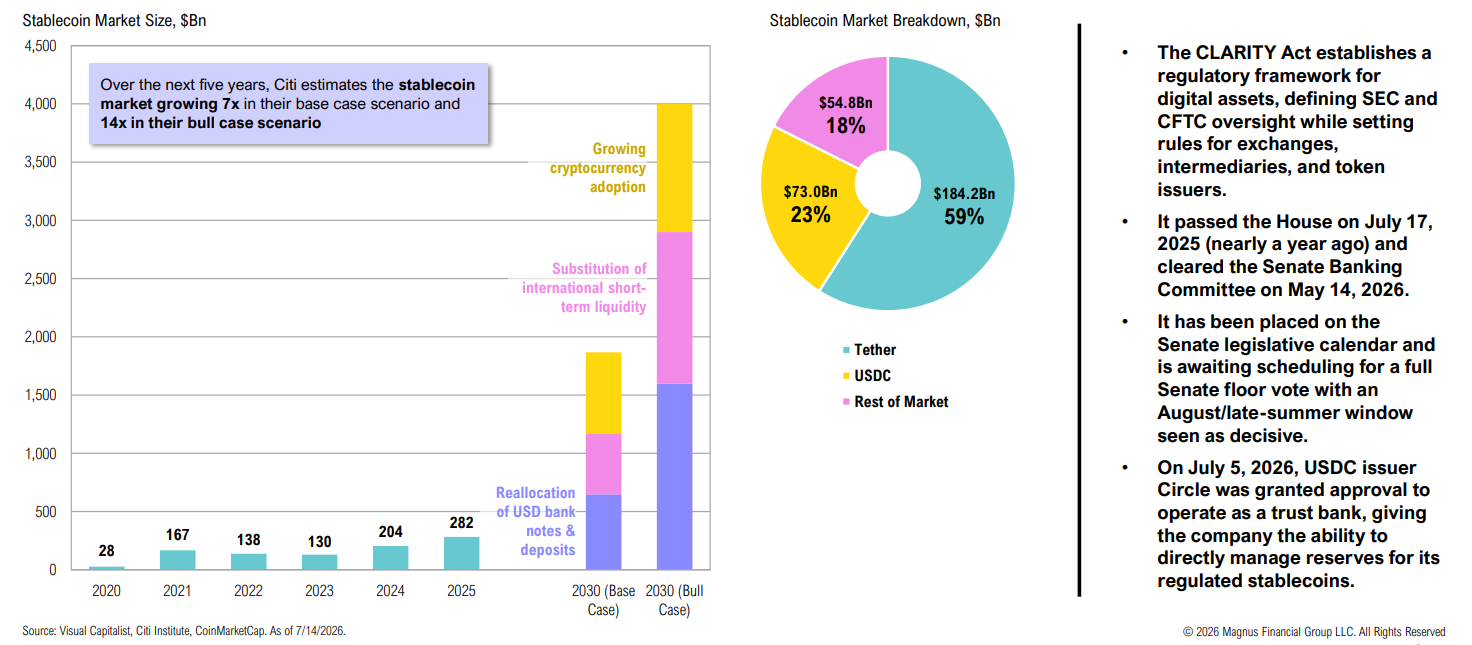
The CLARITY Act is awaiting scheduling for a full Senate floor vote, likely latesummer; on July 5, Circle was granted approval to operate as a trust bank
BDCs
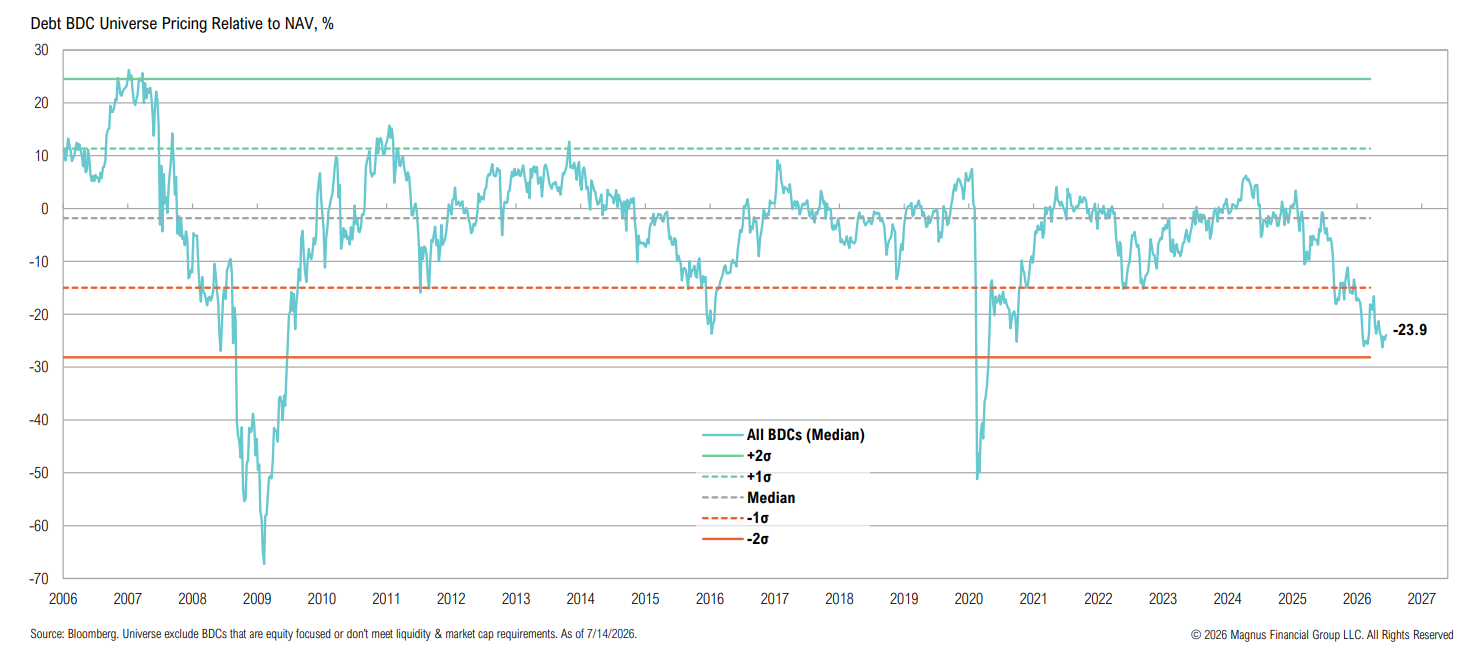
The broad BDC universe is currently trading near a 2 standard deviation discount
Quilt
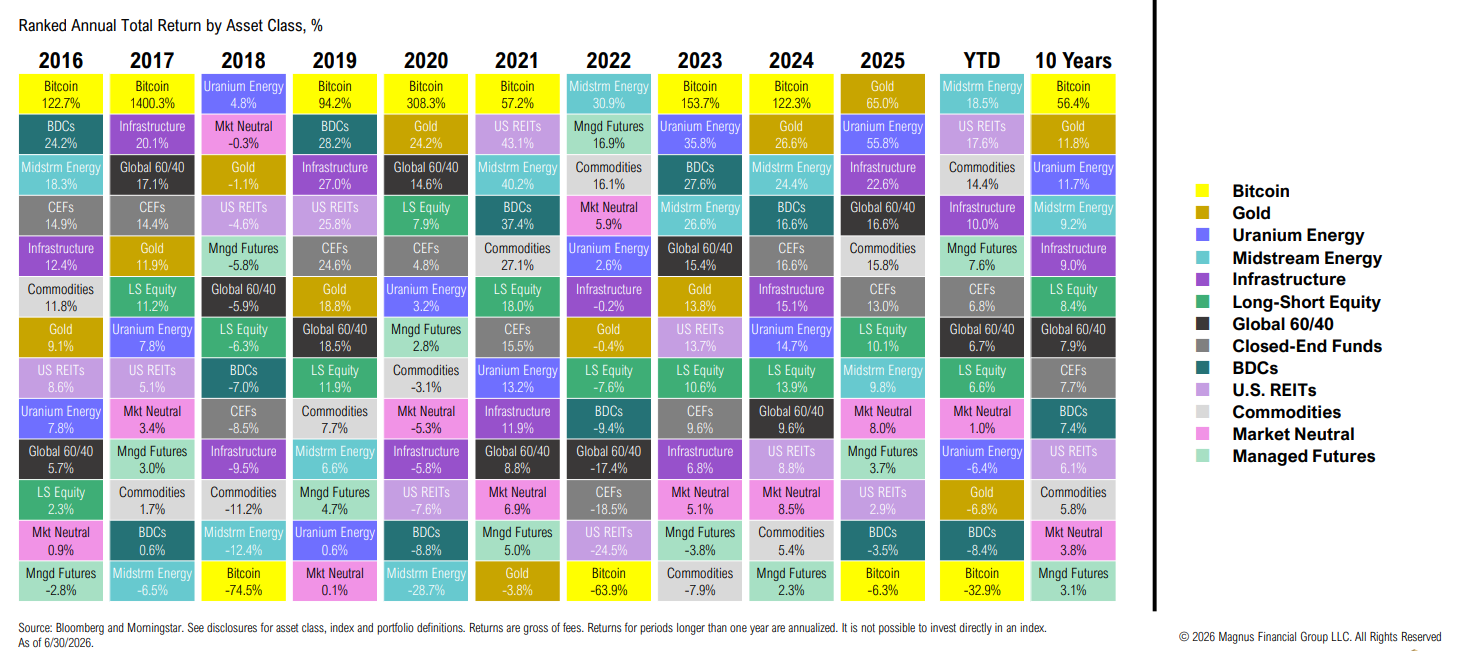
Perspective on diversifiers performance cycles
CMEs
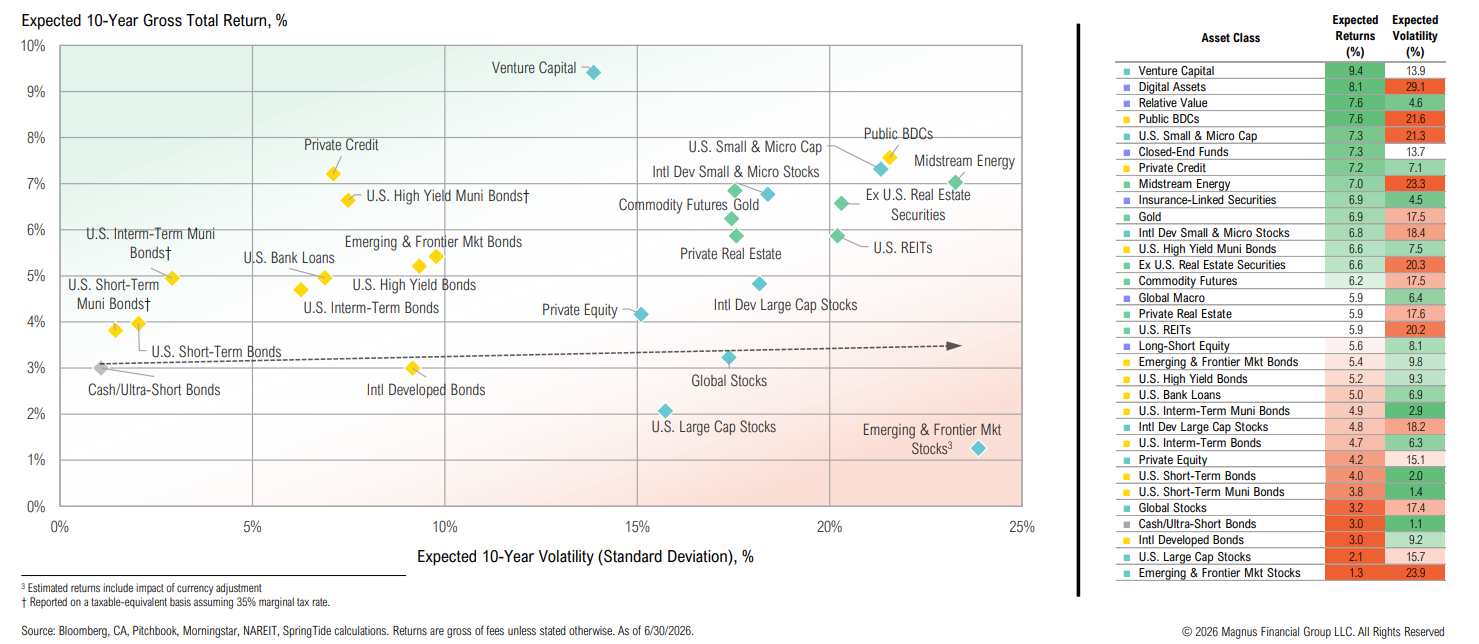
With global valuations broadly stretched across asset classes, longer-term return assumptions have declined