“I would start with the fact that I am probably more constructive on the consumer than what one would glean from reading the headlines of news publications. There are a lot of alarmist headlines about the impact can be on the consumer. But the consumer continues to be very resilient… I think the consumer has shown resiliency and probably is a little healthier than what one would glean just from kind of reading publications.”
John Rainey, Walmart CFO
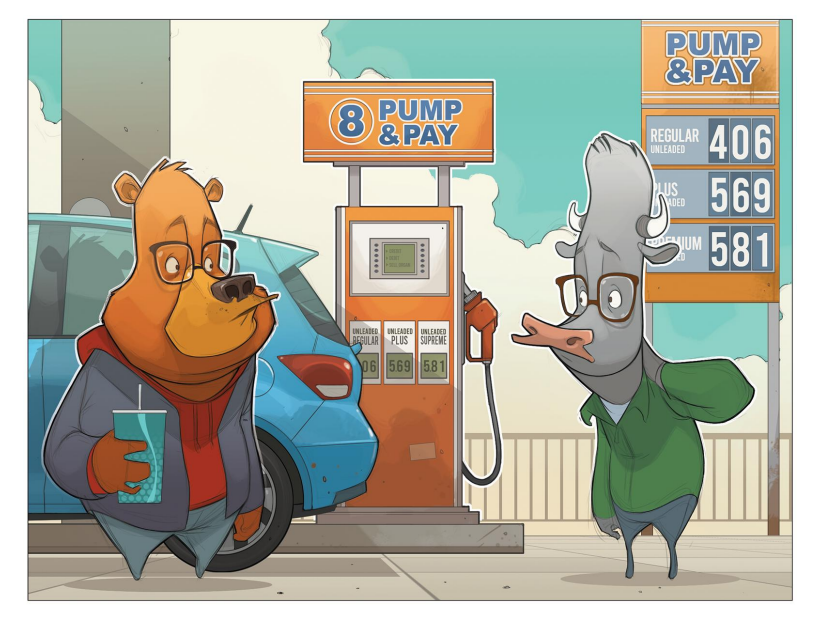
Cartoon
Dire Straits

Summary
A concise review of the prior quarter, portfolio positioning and rationale, and an outline of the key themes and asset allocation priorities for the quarter ahead.
Market Commentary

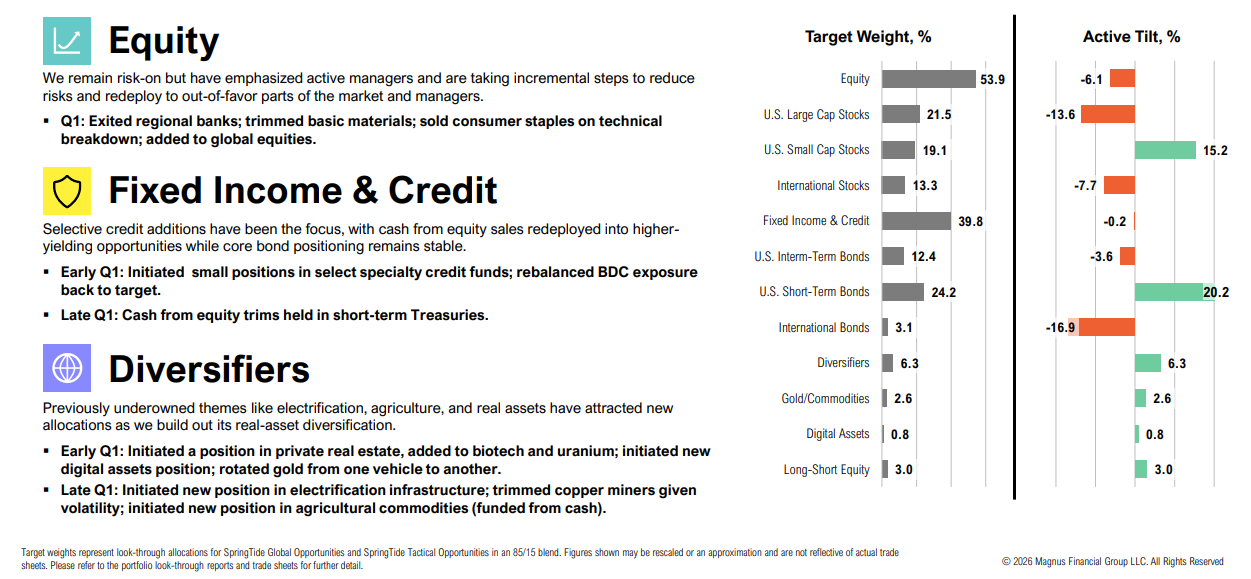
Positioning

“ I think the higher-end consumer, the premium consumer, is candidly immune or becoming more immune to the headlines and not delaying their investment in the experience economy.”
Ed Bastian, Delta Air Lines CEO


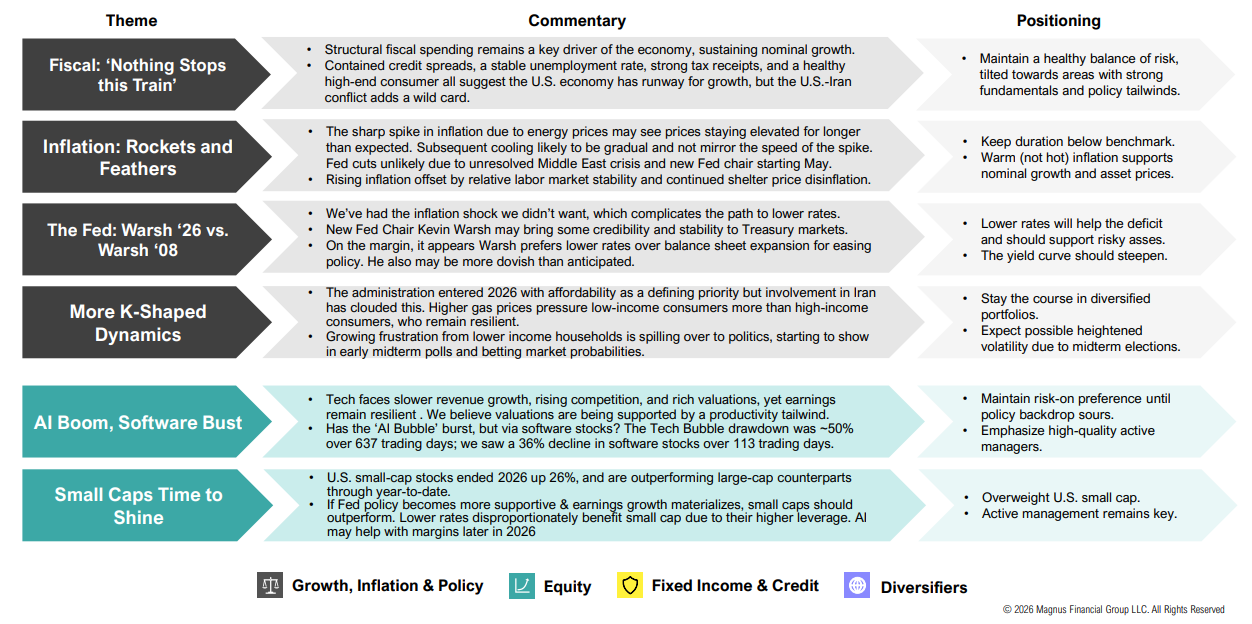
Growth, Inflation & Policy
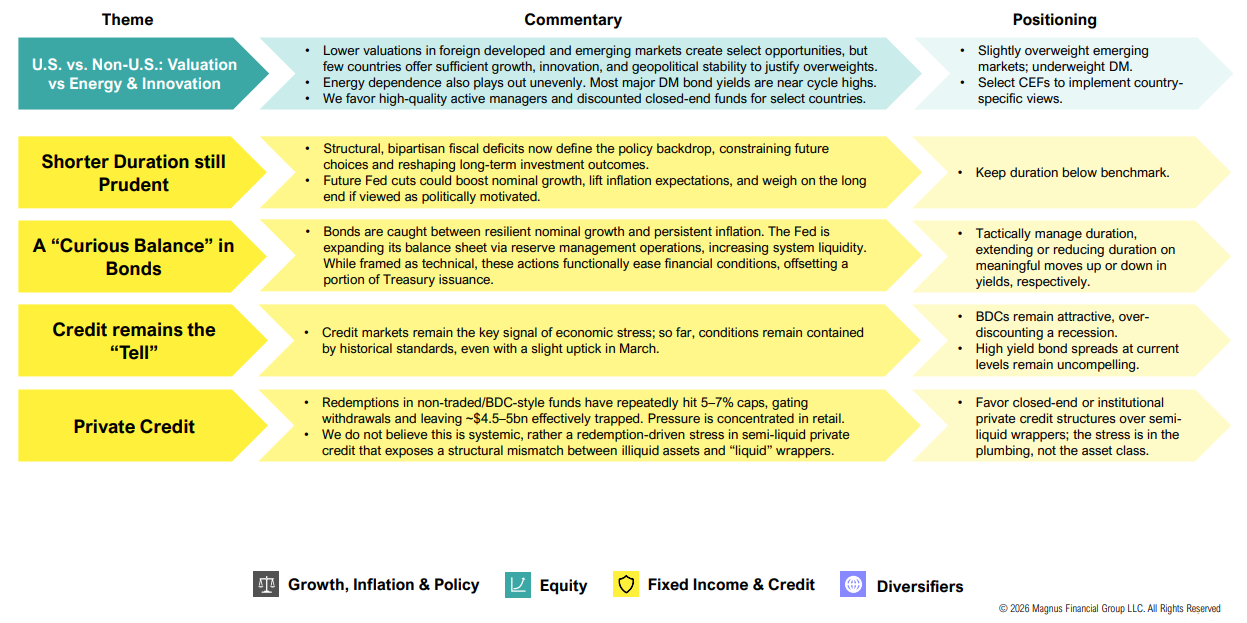
Structural fiscal spending remains a key support to the economy, sustaining nominal growth but now interacting with a more inflation-sensitive backdrop. Recent energy-driven inflation pressures point to slower and more uneven disinflation than previously expected. While inflation is unlikely to spiral given softening labor conditions and shelter disinflation, monetary policy is likely to remain restrictive for longer, with easing delayed and less aggressive than earlier 2026 expectations suggested.
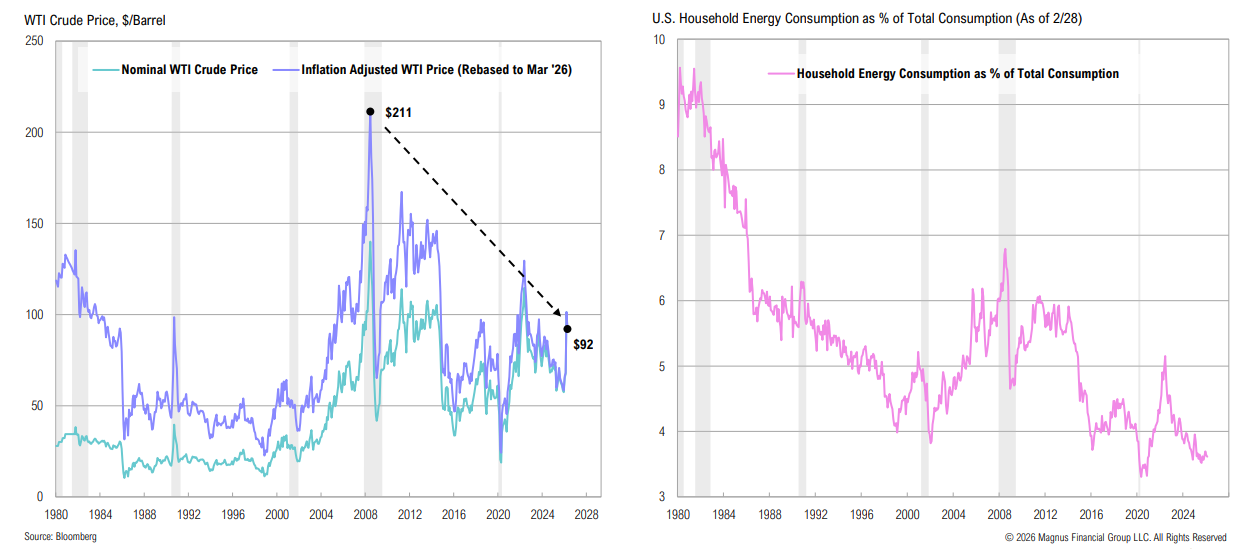
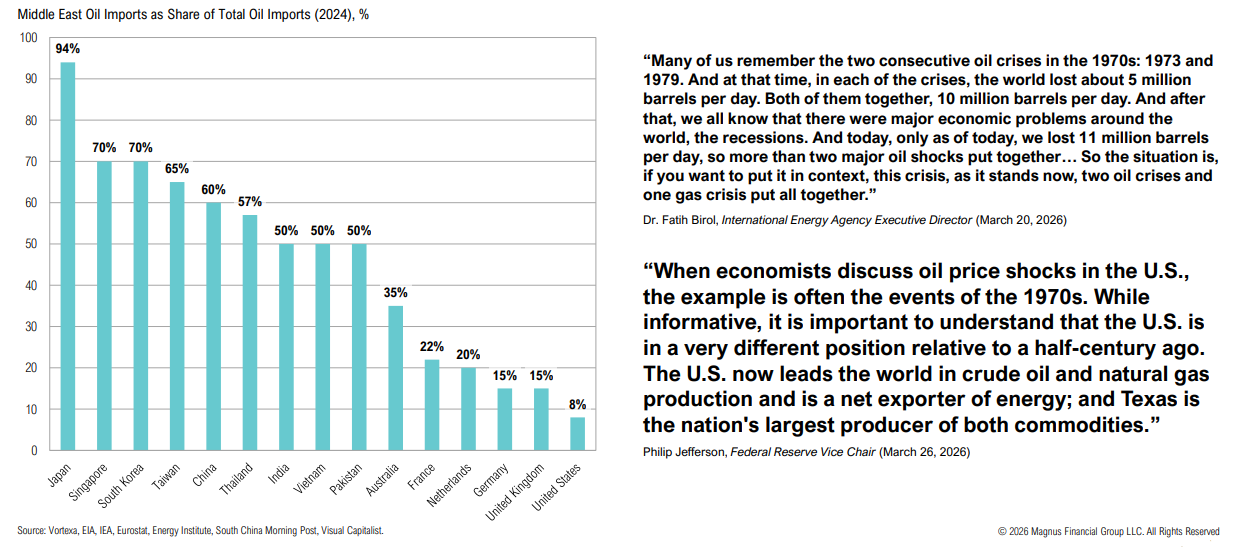
Economic Impact of Oil Shock
Adjusted for inflation, the recent spike in oil prices has been subdued relative to history; U.S. households are also more insulated from increases in energy prices than in the past

Oil-dependent countries (particularly those in Asia) are facing an oil shock; the U.S. is much more insulated to global shocks than it was in the 1970s

Inflation & Economic Growth
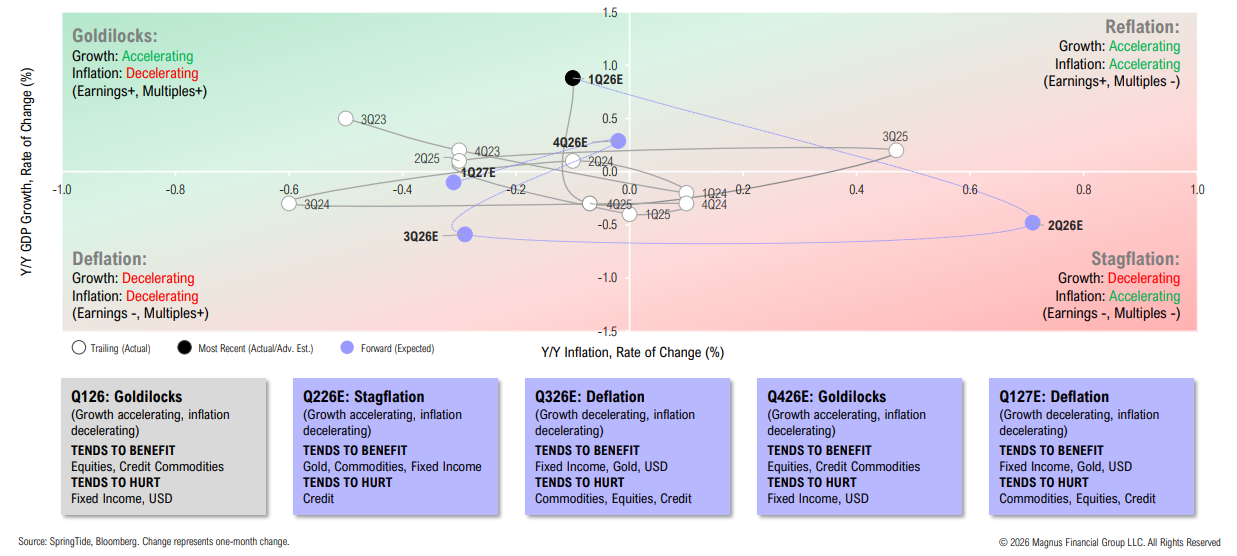
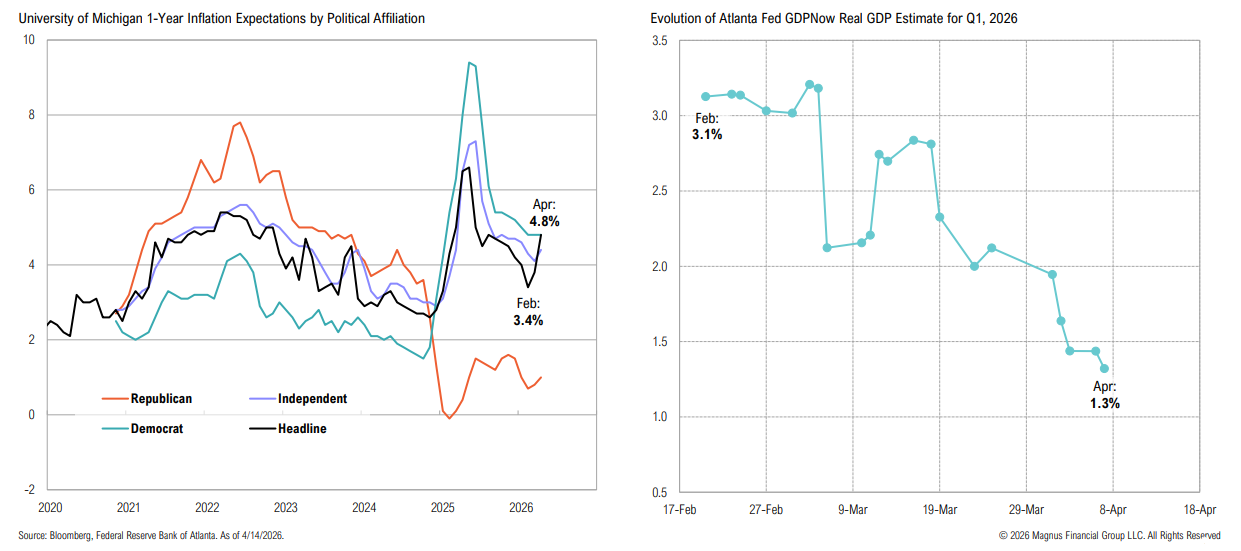
Driven by expectations of rising inflation and slowing growth, market estimates show a shift from “Goldilocks” conditions in Q126 to a stagflationary backdrop in Q226

Stagflationary signals: rising inflation expectations alongside declining economic growth expectations

U.S. Consumers
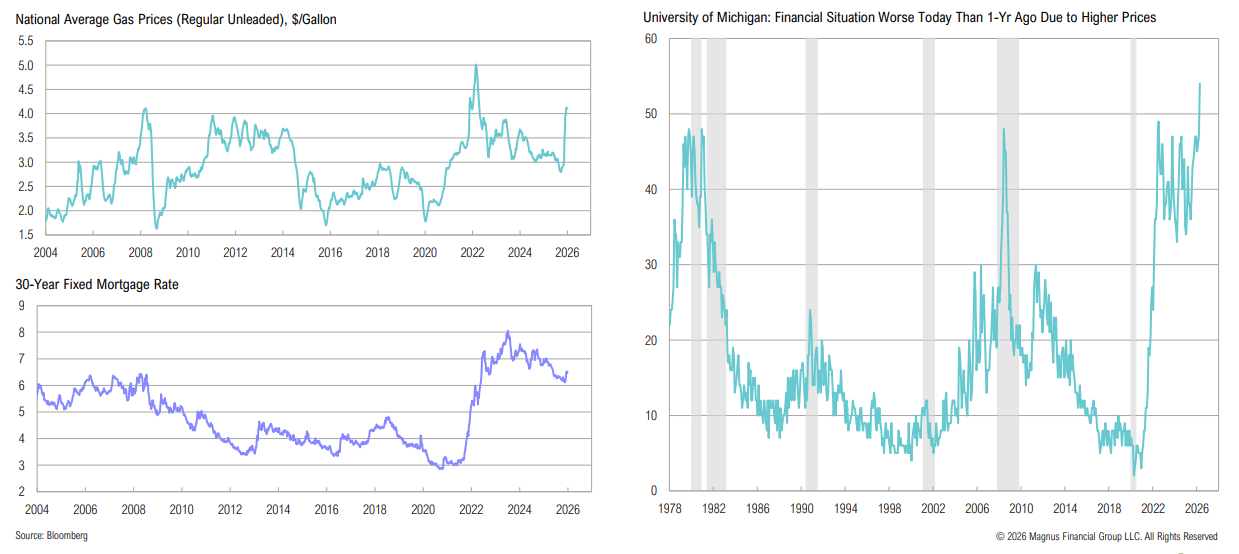
A record 54% of U.S. consumers report being worse off financially today than a year ago due to higher prices; gas prices and mortgage rates are back at 2022 levels

Tax Refunds
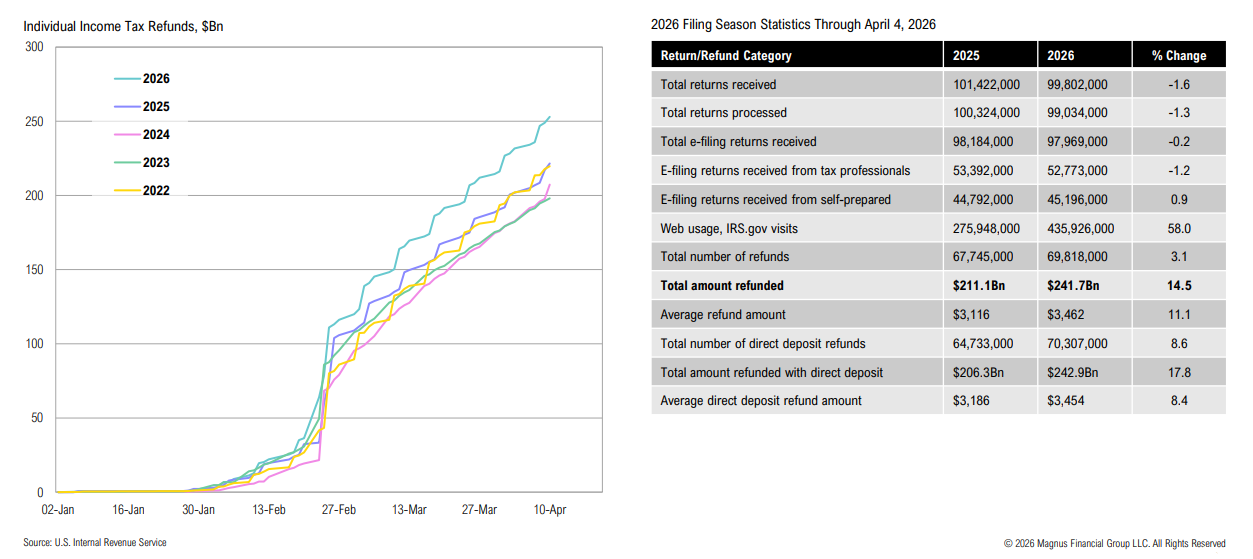
Year-to-date, income tax refunds are 14.5% higher relative to 2025

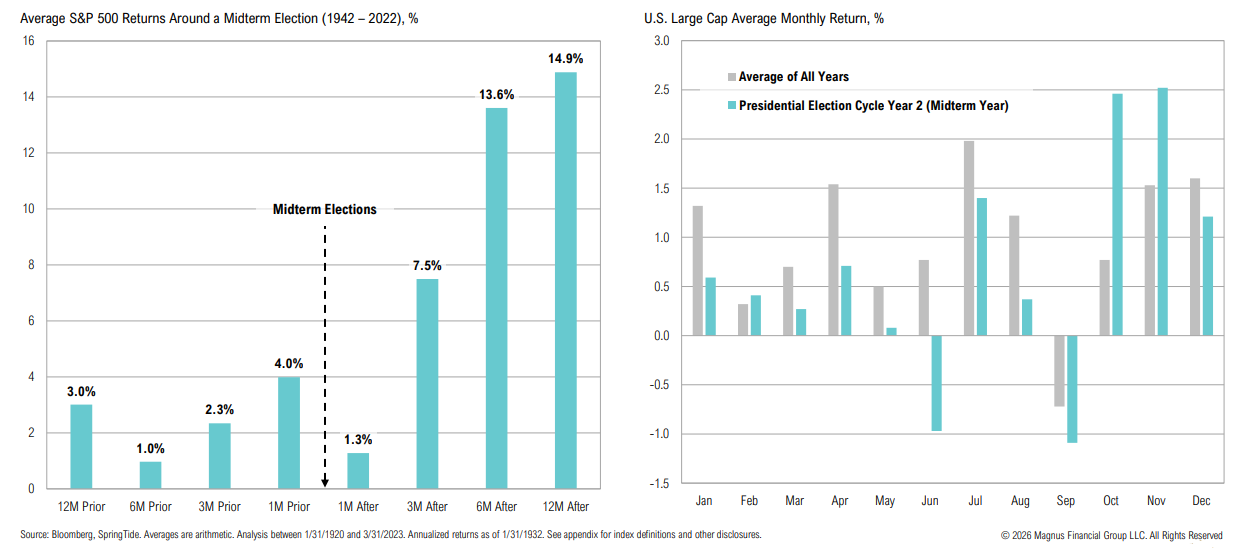
Midterms
No matter the outcome (a unified or divided government), election-related uncertainty quickly clears after midterms

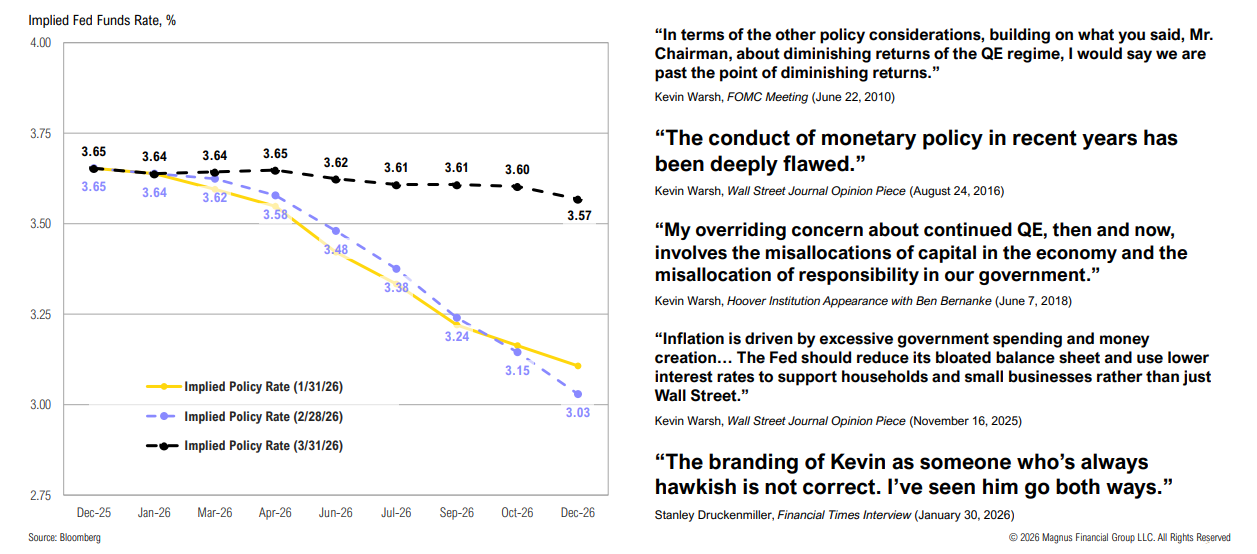
Fed Policy
Markets are now pricing in no change in interest rates for 2026; we do not expect any major policy changes in the first few months of Warsh’s term as Fed Chair

Equity
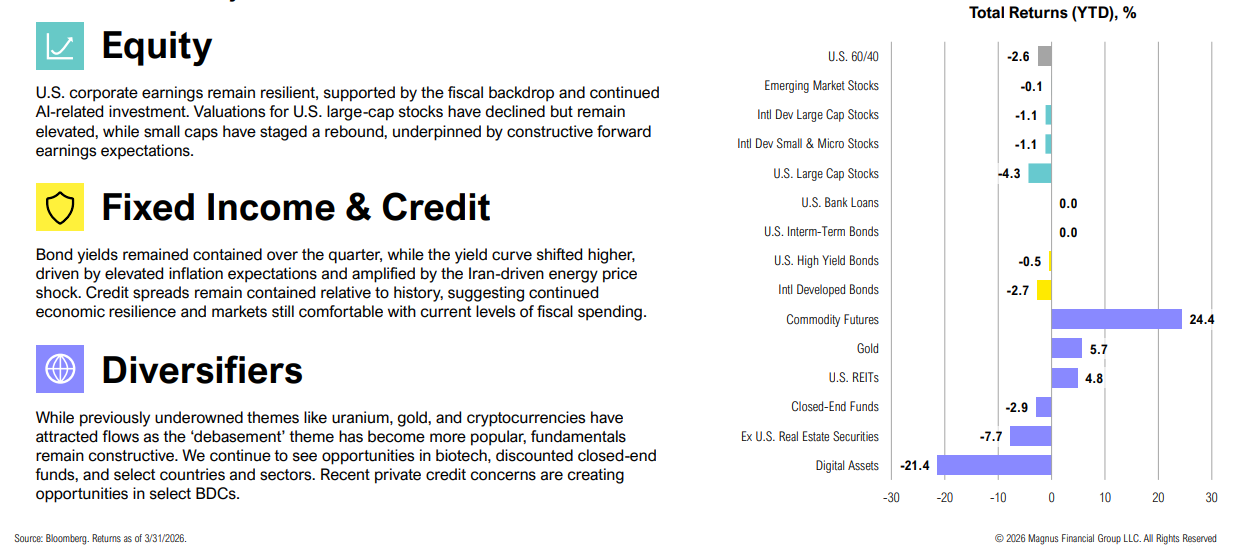
U.S. corporate earnings remain resilient, supported by continued AI-related investment. Valuations for U.S. large-cap stocks have declined but remain elevated, while small caps have staged a rebound, underpinned by constructive forward earnings expectations.
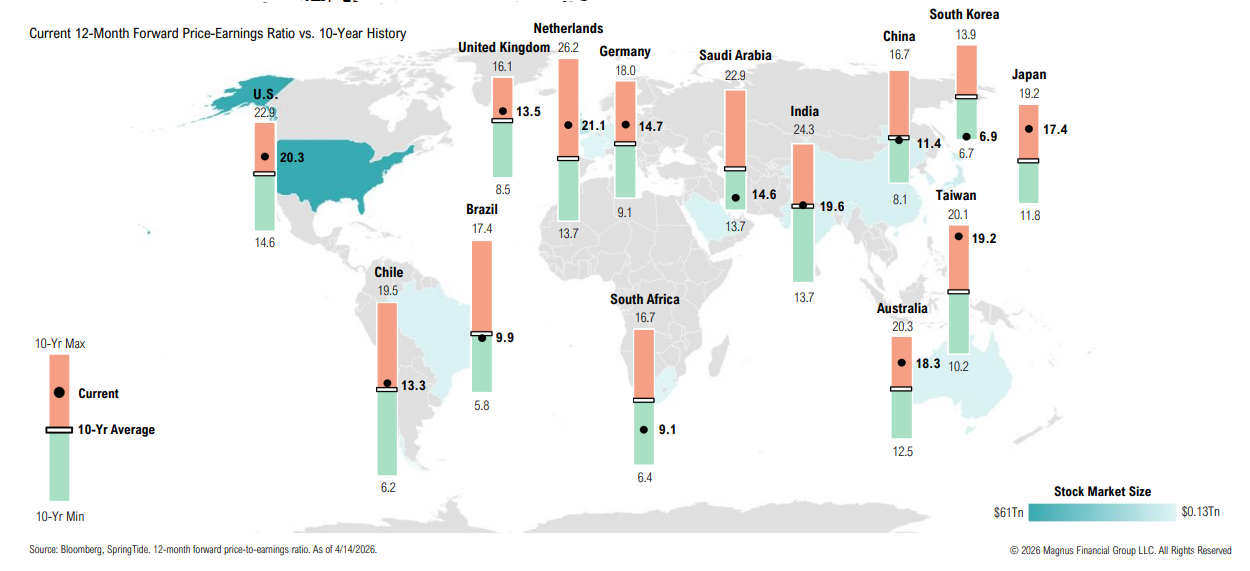
Global Valuations
While U.S. valuations remain elevated, parts of Europe, Asia and emerging markets are starting to show value

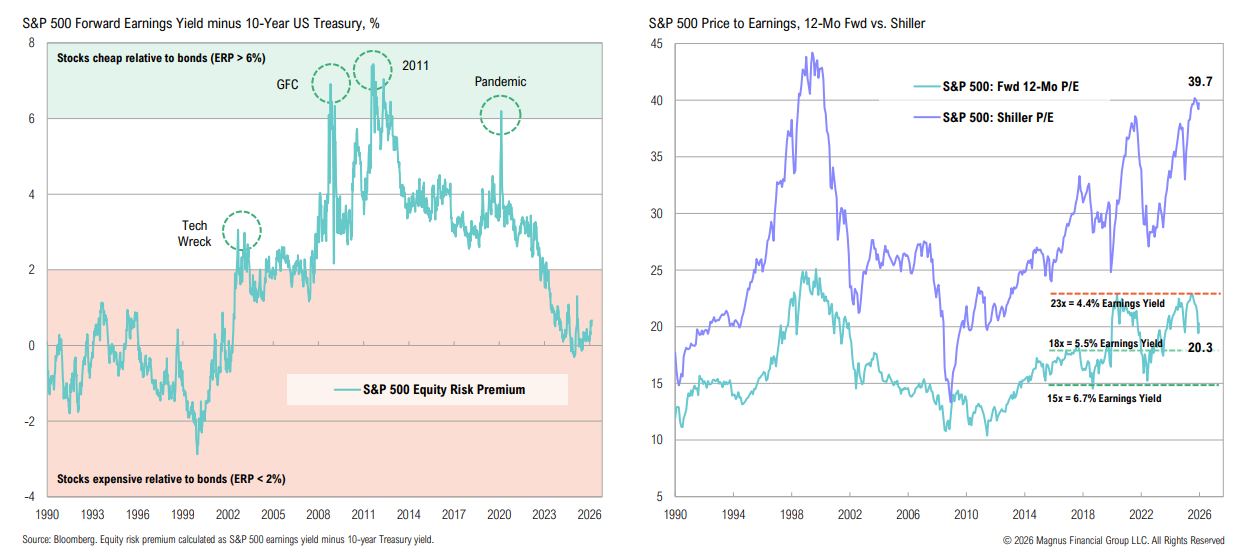
U.S. Large Cap Stocks
Using a simple yield-to-earnings yield comparison (ERP), U.S. stocks are less attractively priced visà-vis bonds than at any point since the early 2000s; U.S. large cap valuations remain near extremes
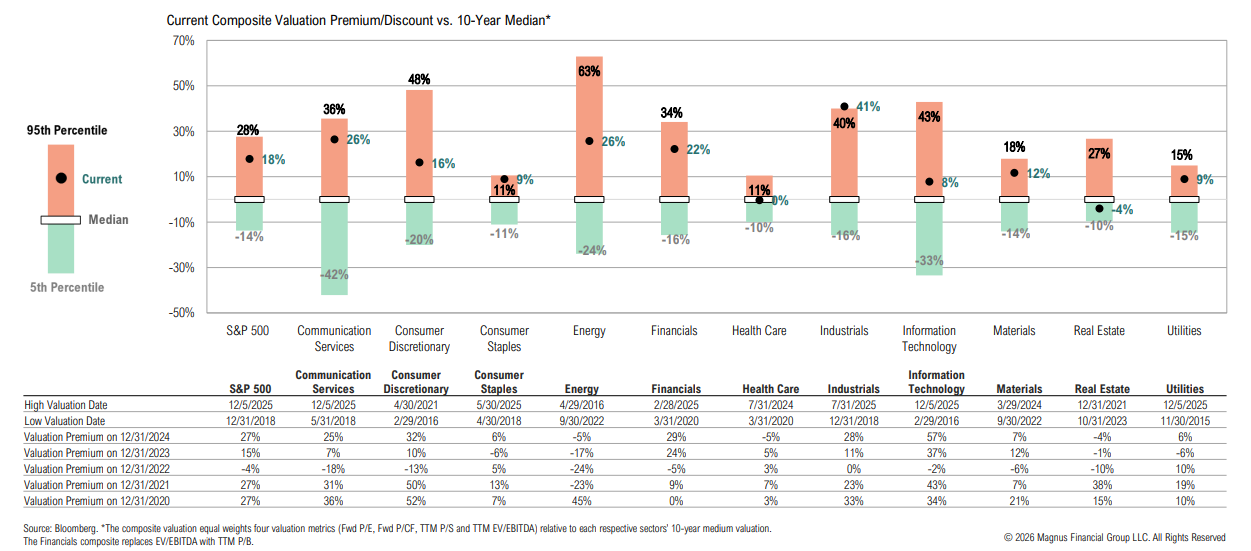
Despite some easing, S&P 500 composite valuations remain elevated; healthcare, real estate, and tech (due to the recent software selloff) are the only sectors showing some value

Tech
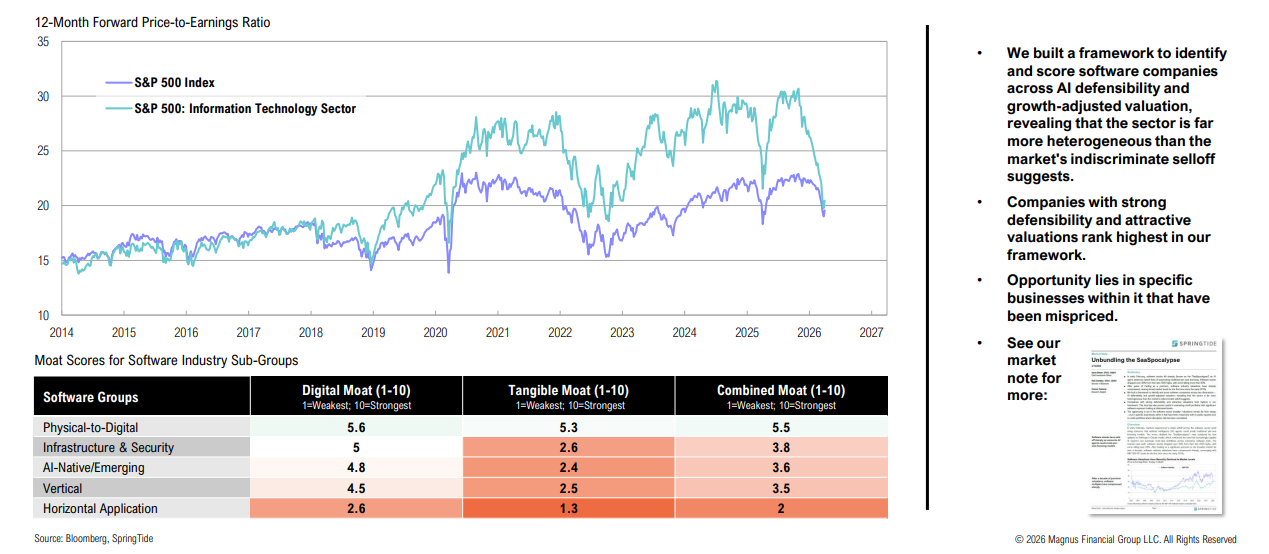
After trading at a premium for over five years, tech sector valuations have recently declined to market levels due to the software selloff (SaaSpocalypse)

Market Rebound
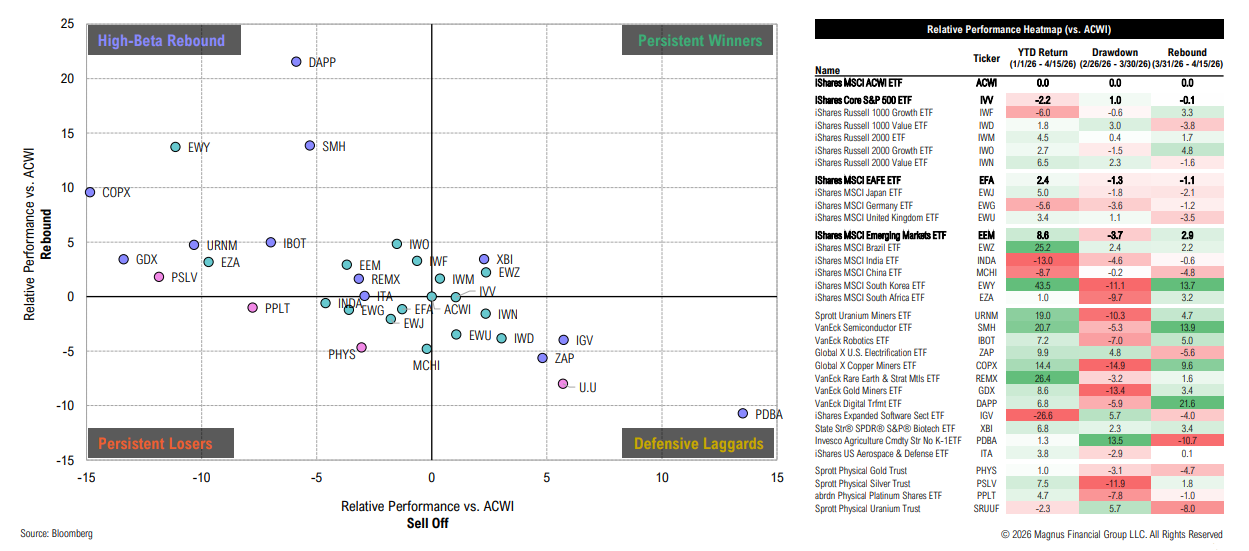
Markets that find a floor quickly and lead the rebound tend to signal strength; those that struggle to bottom and lag the recovery often reflect fragility

Earnings Growth
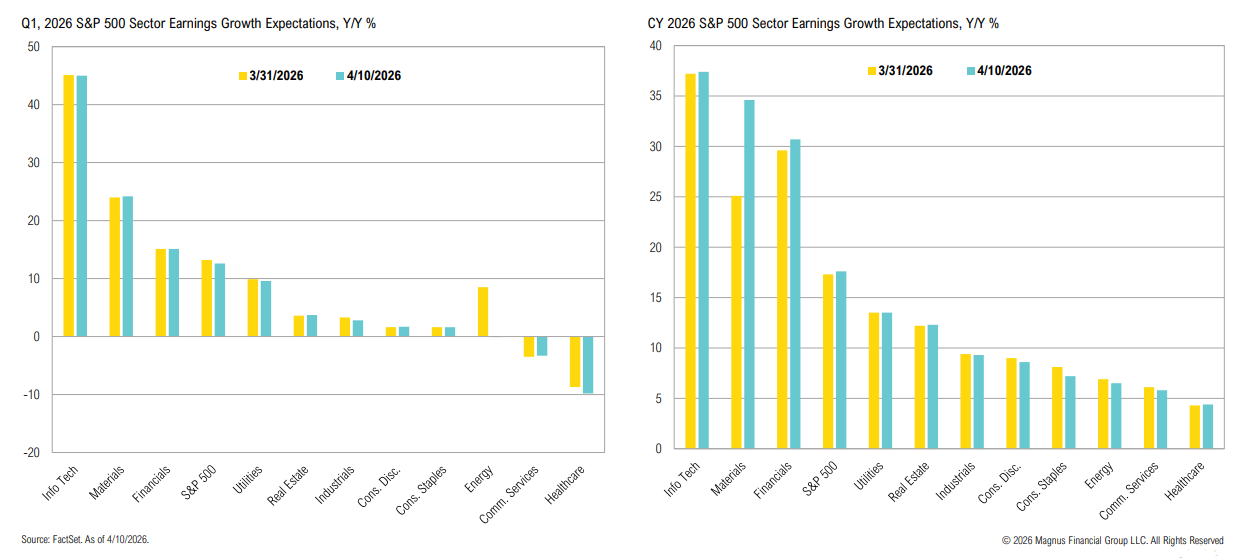
At the S&P 500 sector level, earnings growth for Q1 is expected to be concentrated in tech, followed by materials and financials (this trend is expected to continue through CY’26)

International Developed & Emerging Markets
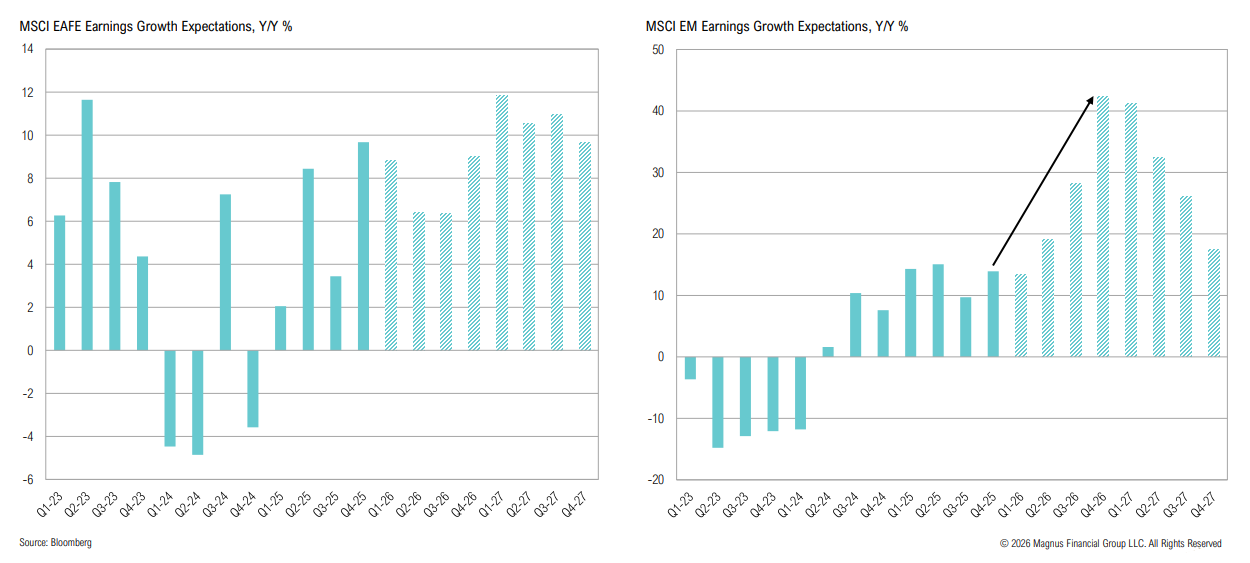
International ex-U.S. equities are expected to see strong earnings growth through Q4’27 while emerging markets are expected to see a similar trend, peaking in Q4’26

Earnings Growth
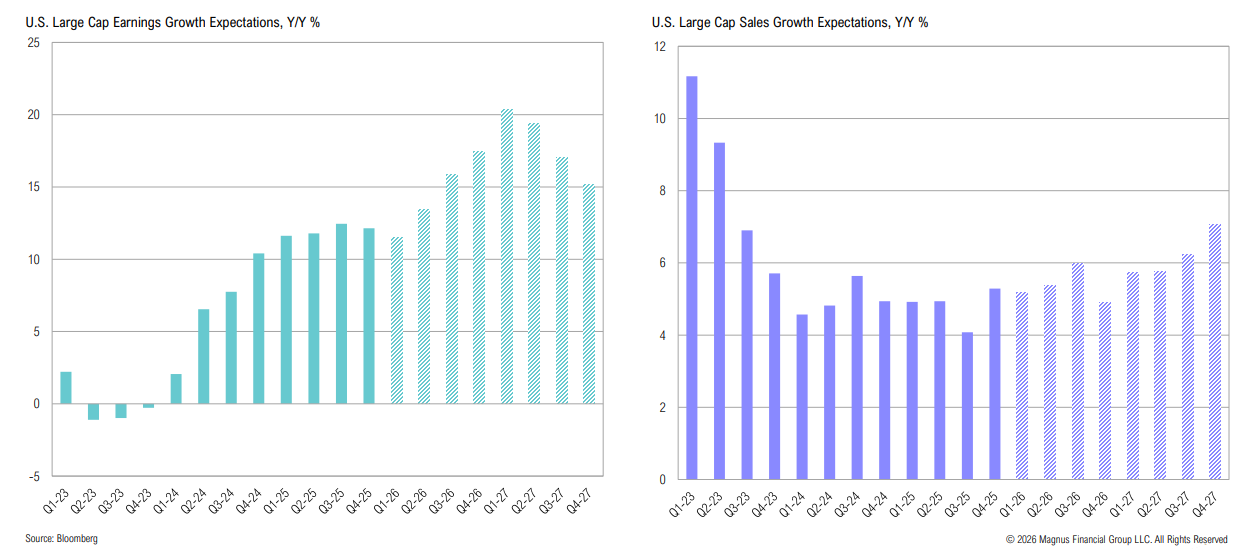
U.S. large cap earnings are expected to remain comfortably in double-digit growth through Q4’27 while sales growth is also anticipated to remain robust

U.S. Small Cap Stocks
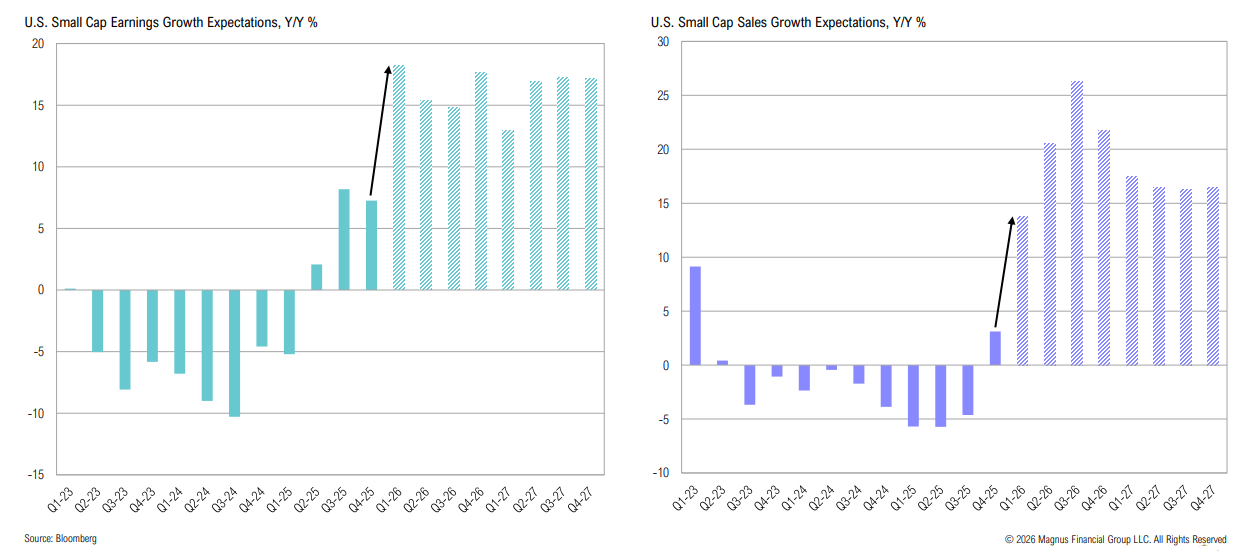
U.S. small cap earnings and sales growth estimates are expected to stair-step higher and remain well above levels seen over the past two years through Q4’27

U.S. Small Cap Stocks
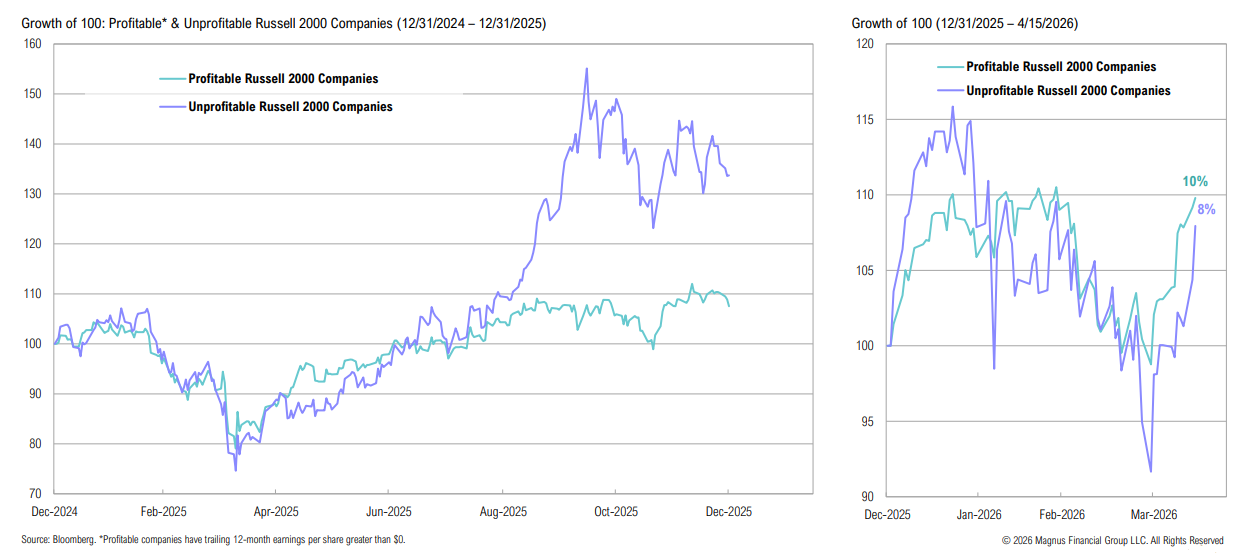
Last year, non-profitable Russell 2000 stocks (+20%) outperformed profitable ones (+10%); year-to-date, this trend has reversed, but unprofitable small caps are fast catching up

Fixed Income & Credit
Bond yields remained contained over the quarter, while the yield curve shifted higher, driven by elevated inflation expectations and amplified by the Iran-driven energy price shock. Credit spreads remain contained relative to history, suggesting continued economic resilience and markets still comfortable with current levels of fiscal spending.
Global Bonds
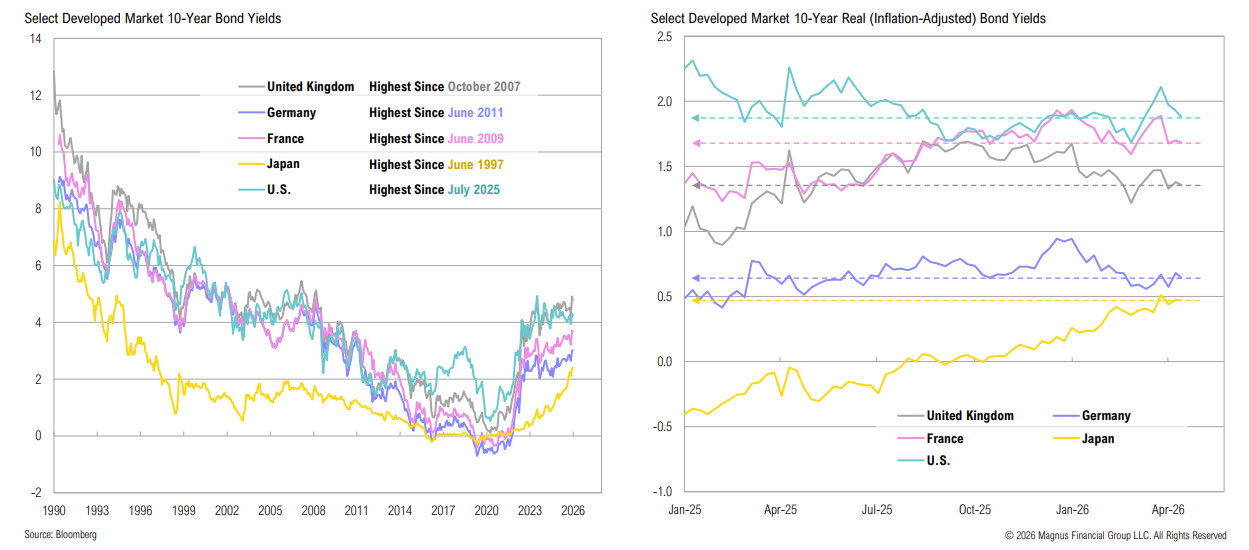
Most major developed market bond yields are at the highest level since the late 1990s/mid200s; the 10-year Treasury yield is the only one that is lower today than at the start of 2025

Yield Curve
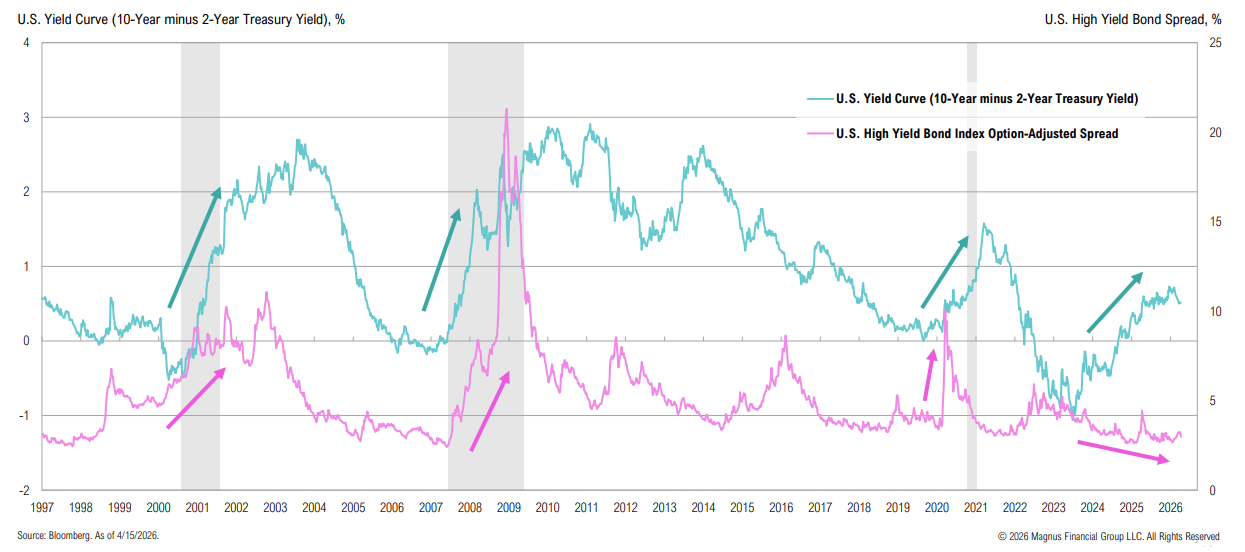
An unusual divergence: While the yield curve remains steep, credit spreads remain low by any long-term standard

Credit Spreads
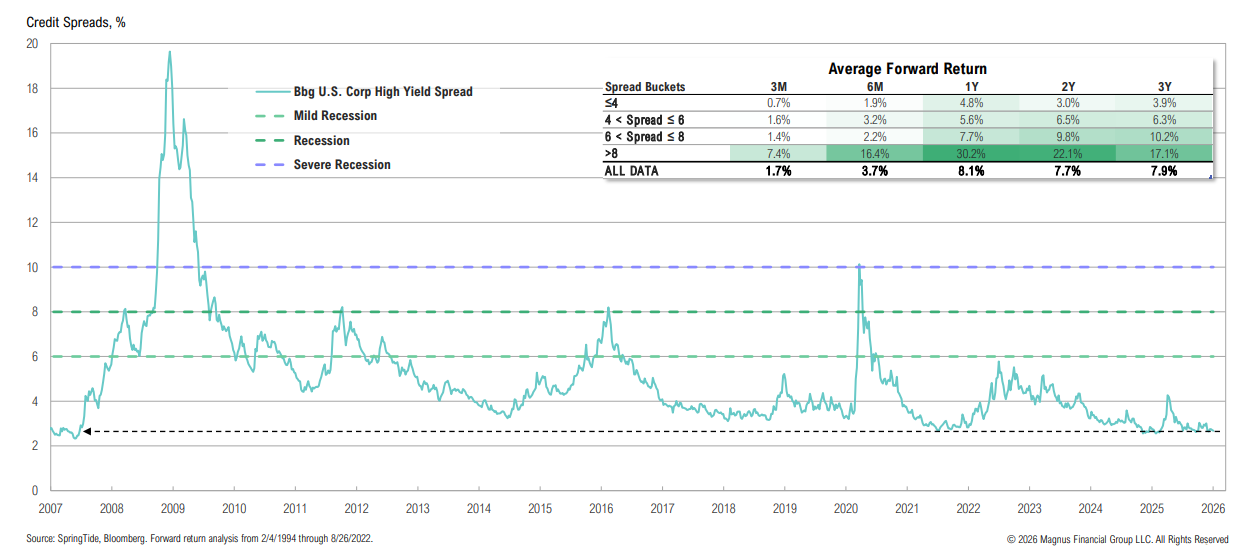
Credit spreads remain tight relative to history, ending 2025 at 2.7%; forward returns from these spreads have historically been lackluster

Private Markets
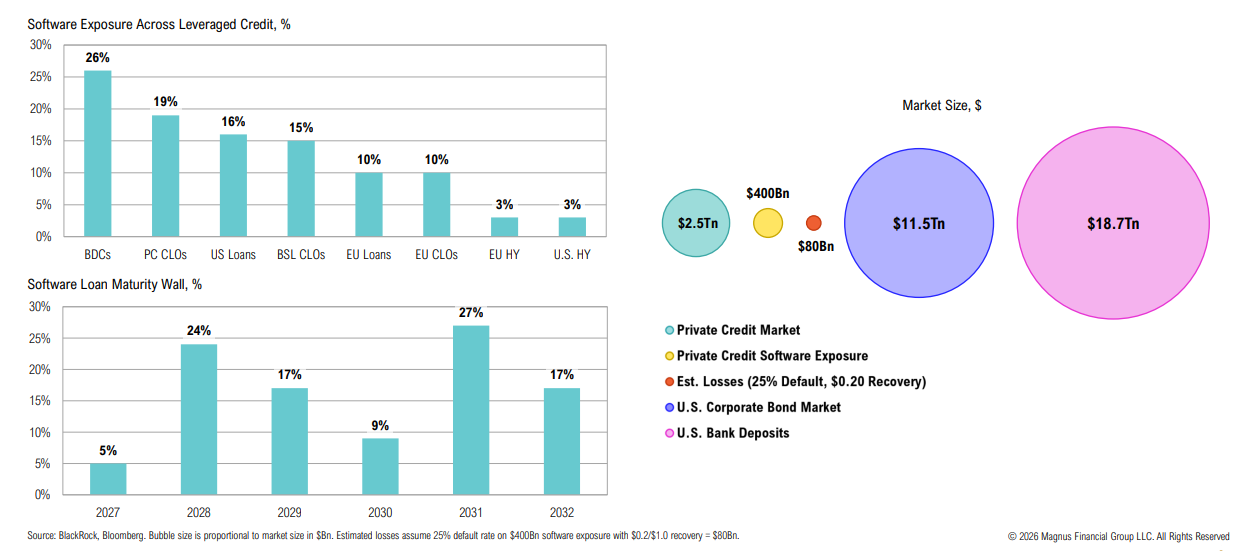
Theoretically, even under stress, estimated potential losses from software exposure in private credit represent only around 0.03% of the total value of the U.S. private credit sector

BDCs
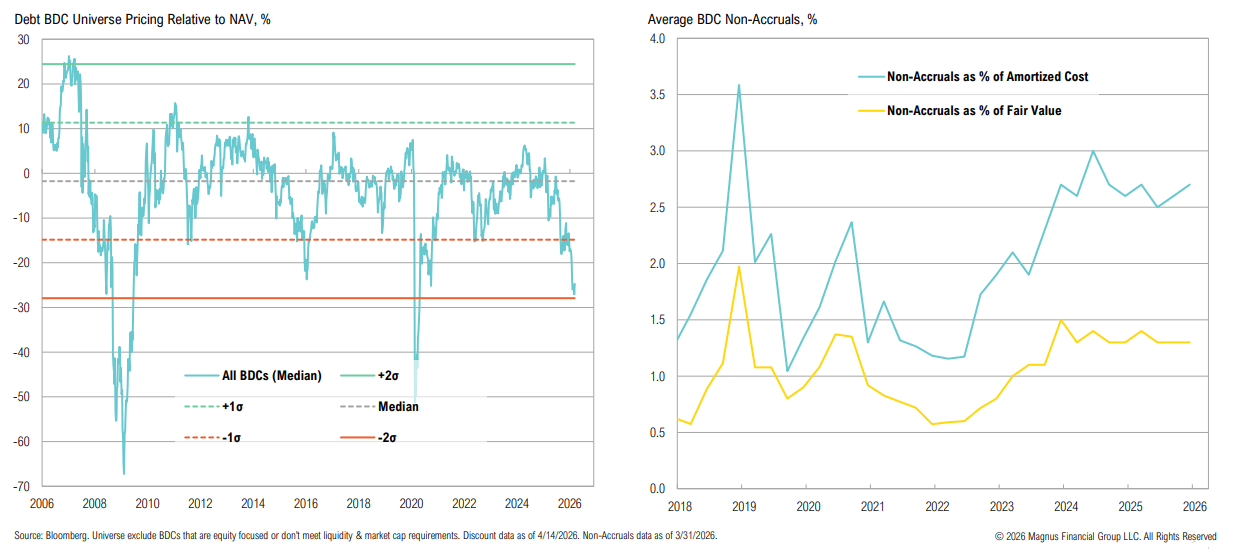
The broad BDC universe is currently trading near a 2 standard deviation discount, a level generally associated with broad economic distress; however, non-accruals as a percentage of portfolio fair value remain contained

Private Markets
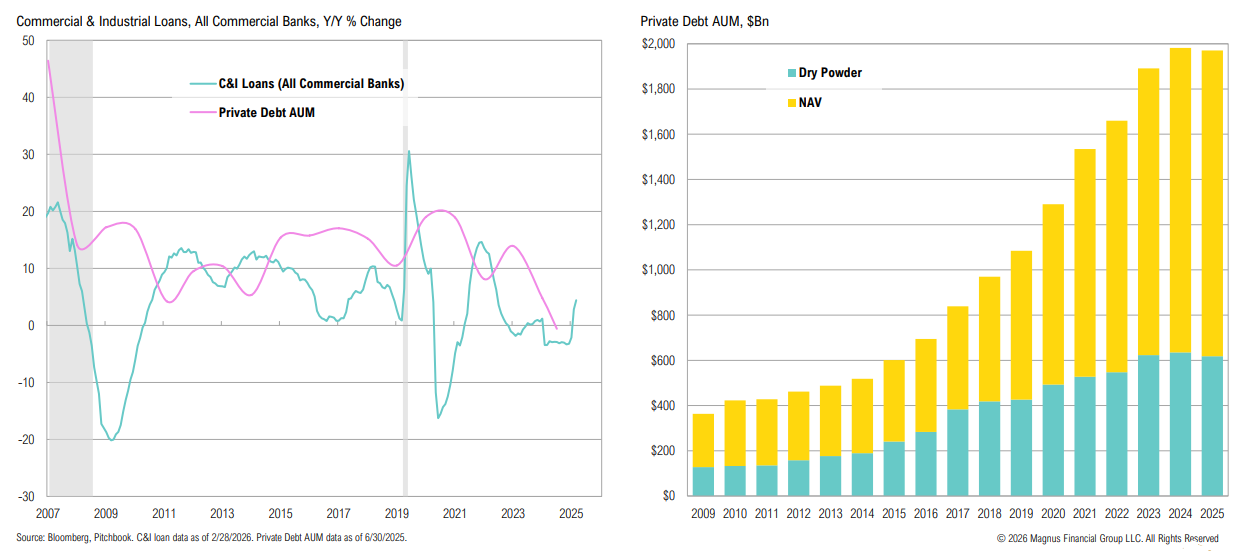
Private credit assets under management saw a year-over-year decrease for the first time, at the same time C&I loans saw a pickup

Diversifiers
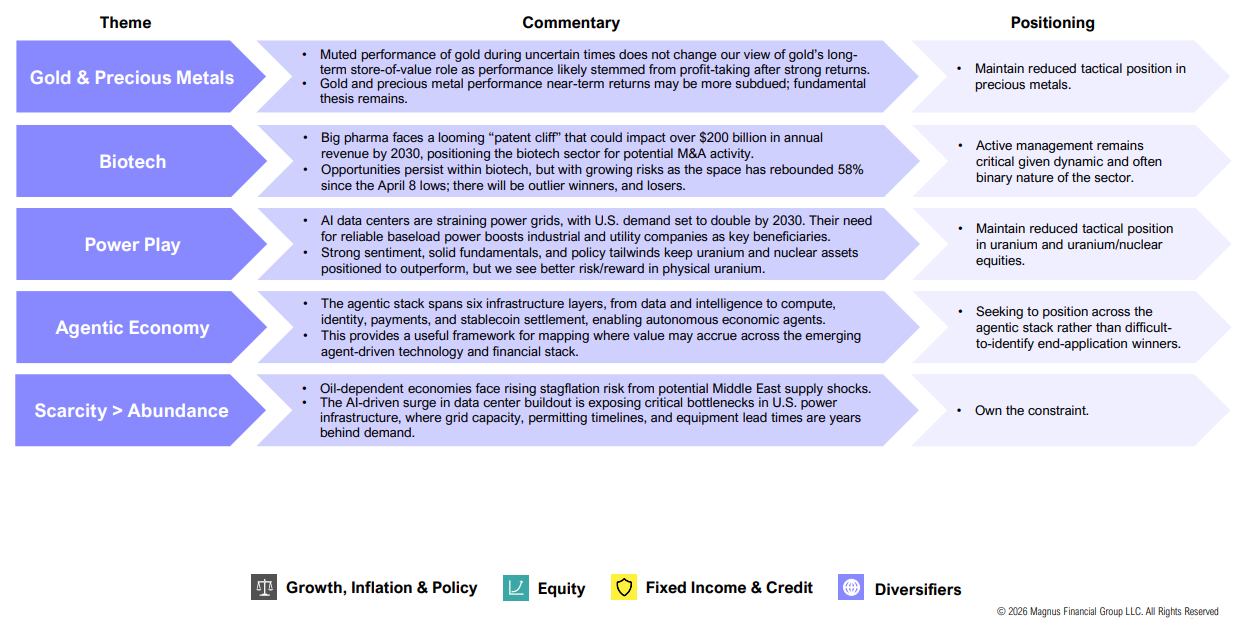
With stock and bond correlations remaining elevated, opportunity remains to improve the riskreturn profile of a portfolio by finding investment opportunities that have distinct return sources—such as gold, uranium, utilities, and more.
“The next mega trend is higher power prices, and as you saw some of the data there, perhaps that was not a trend up until maybe five years ago. We started to see power prices rise up 32% in the last five years. Projection for the next five years is at 40%.”
Aaron Jagdfeld, Generac Holdings CEO
Power Play
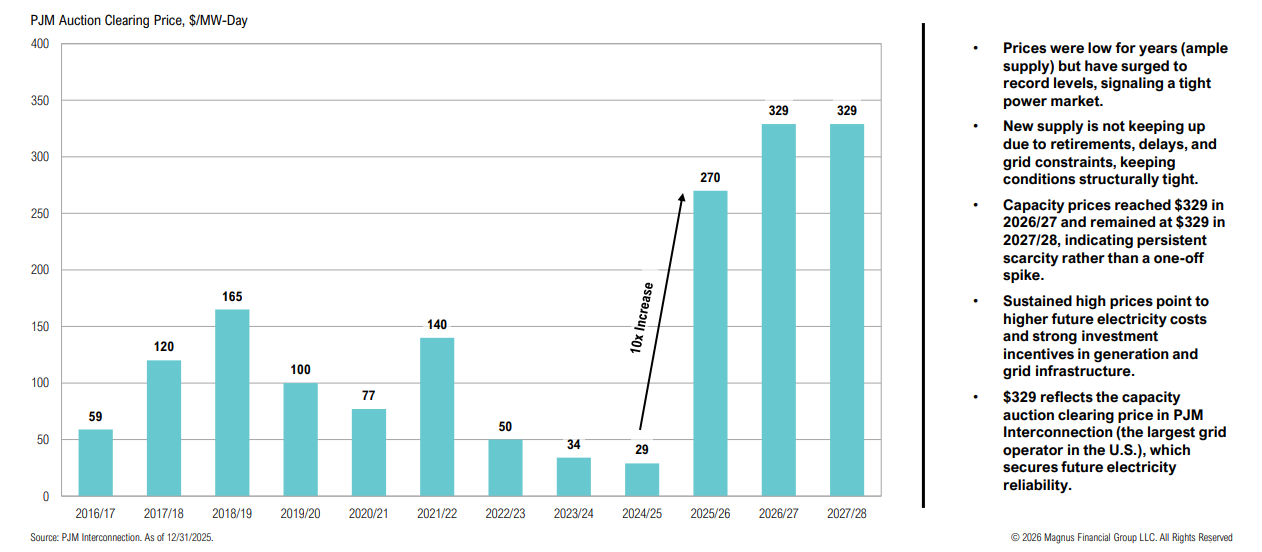
PJM capacity prices have surged to record highs, signaling a rapid shift from power surplus to sustained scarcity in U.S. electricity markets

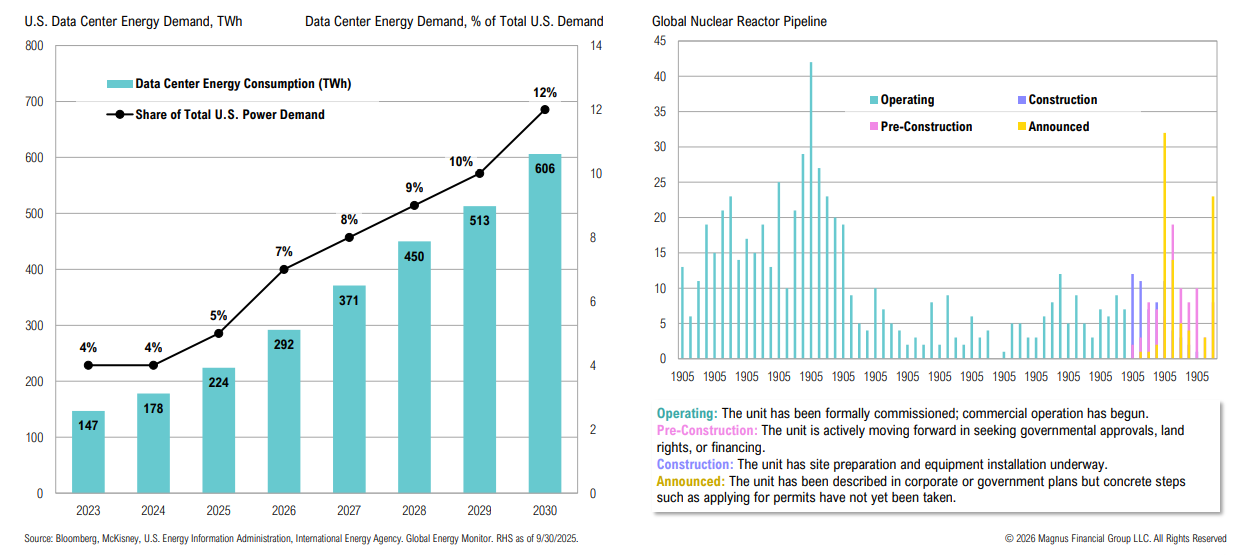
Data centers are expected to drive U.S. power demand; policy and rapidly rising demand for consistent energy output are leading to a nuclear renaissance

“There’s companies that have said, wow, this stuff [AI] is a total game-changer, and we better do this, or we’re going to have a big problem if our competitors do it and we don’t. And then there’s other companies or organizations that say, well, okay, this is our budget, and it doesn’t really matter what’s happening in the outside world. We’re sticking with our budget, okay?”
Michael Dell, Dell Technologies CEO
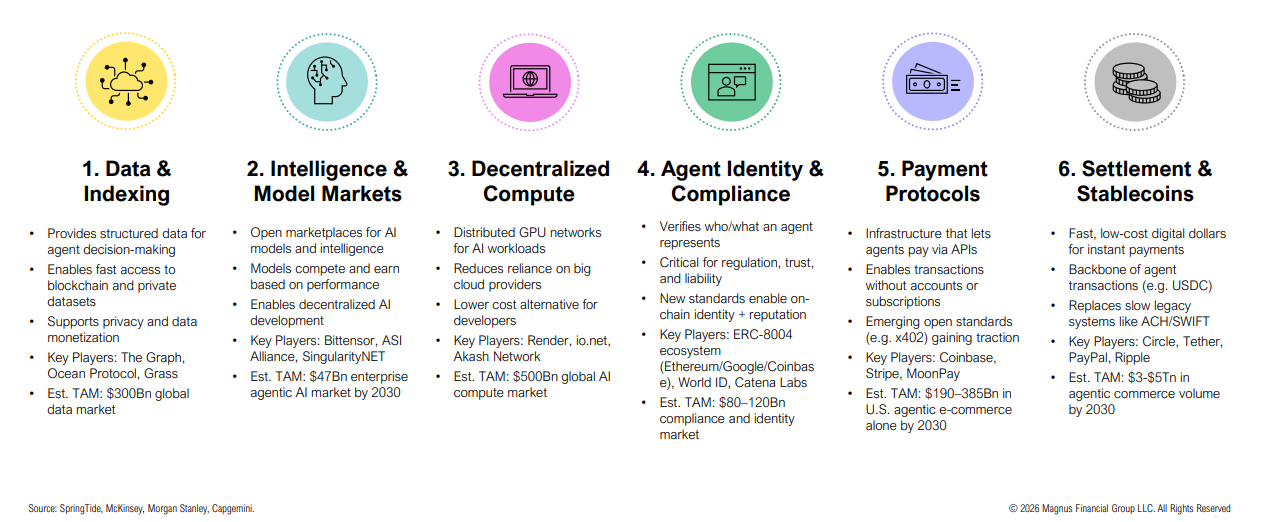
Agentic Stack
The agentic stack spans data and indexing, intelligence, decentralized compute, agent identity, payment protocols and stablecoins

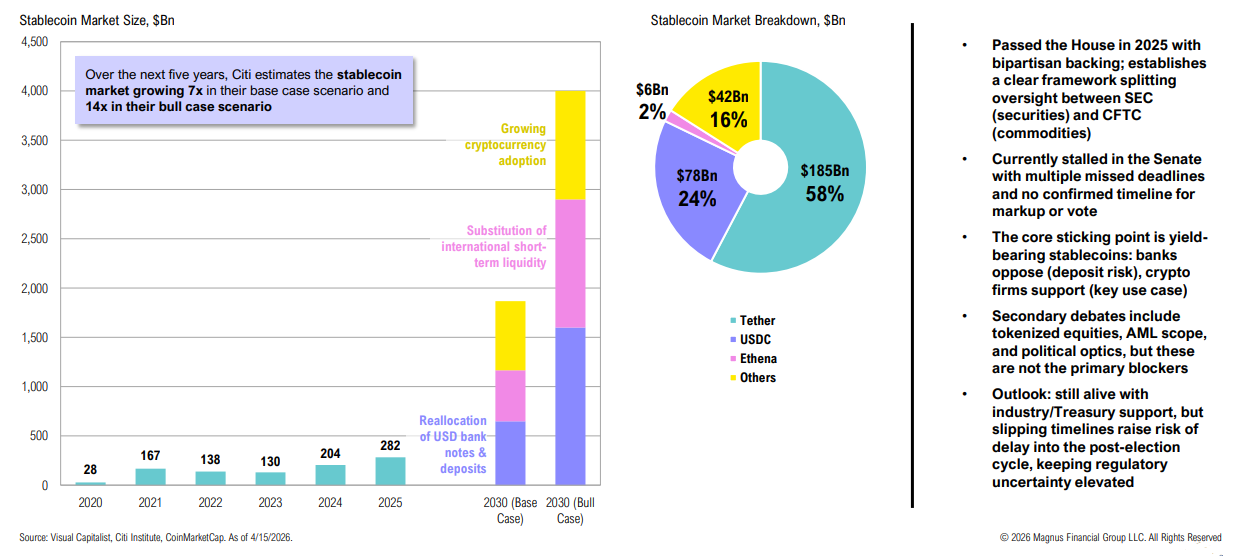
Stablecoins
Stablecoins could benefit from growing crypto adoption and substitution of international short-term liquidity; the CLARITY Act is currently stuck in the Senate

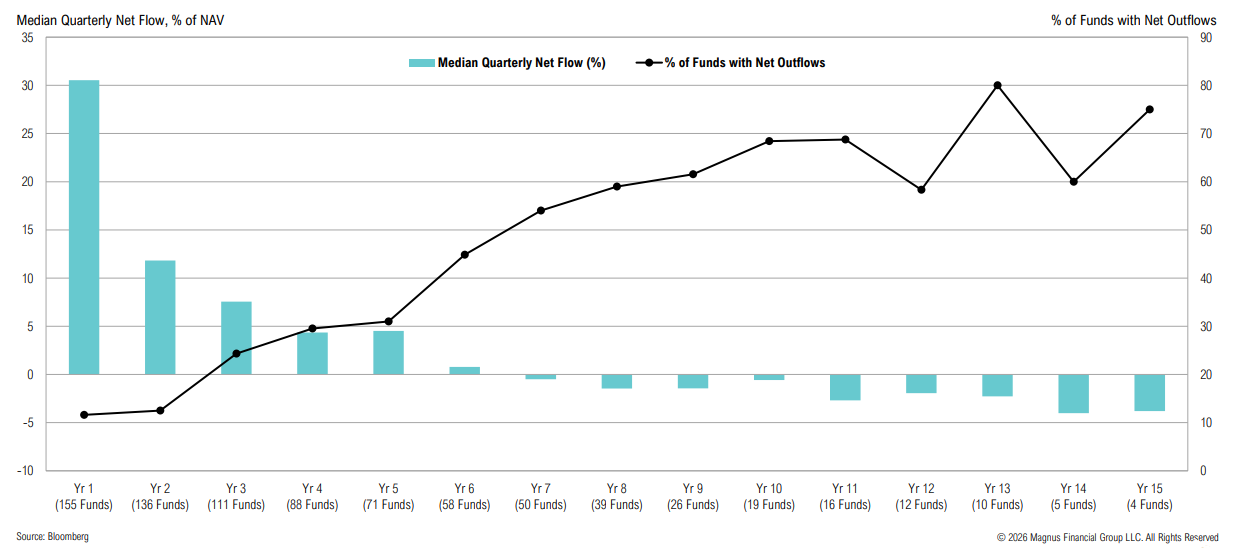
Interval Funds
Interval fund life cycle: interval funds typically experience strong early inflows that taper over time, with median net outflows beginning in Year 7

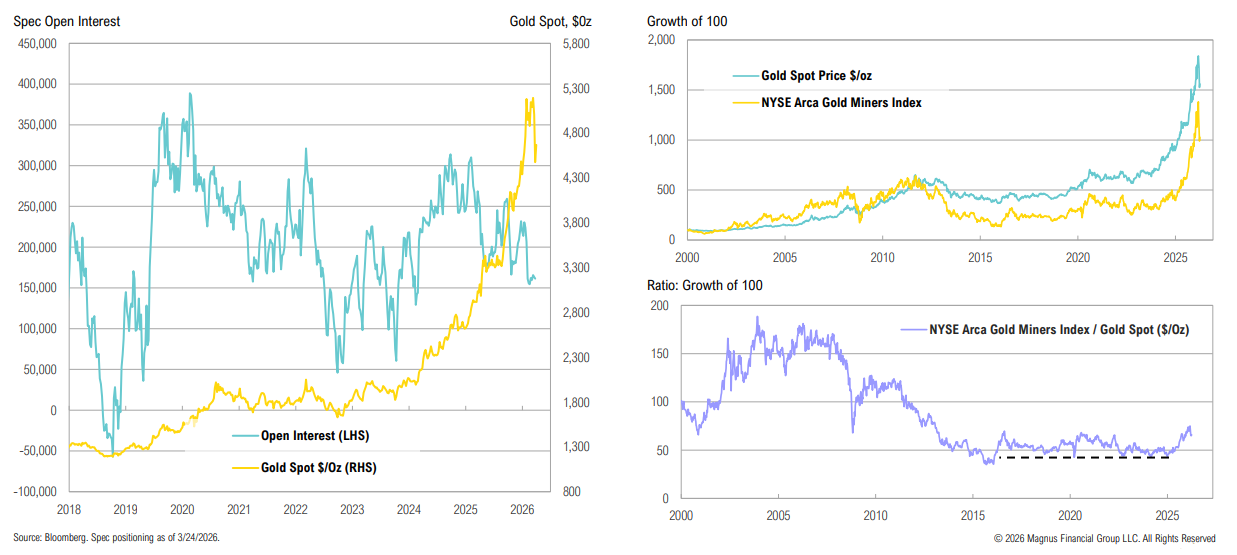
Precious Metals & Gold
After the initial safe-haven spike in the early days of the Middle East conflict, gold prices declined by 11% over the month; spec positioning dropped to the lowest level since Feb 2024

Nat Gas
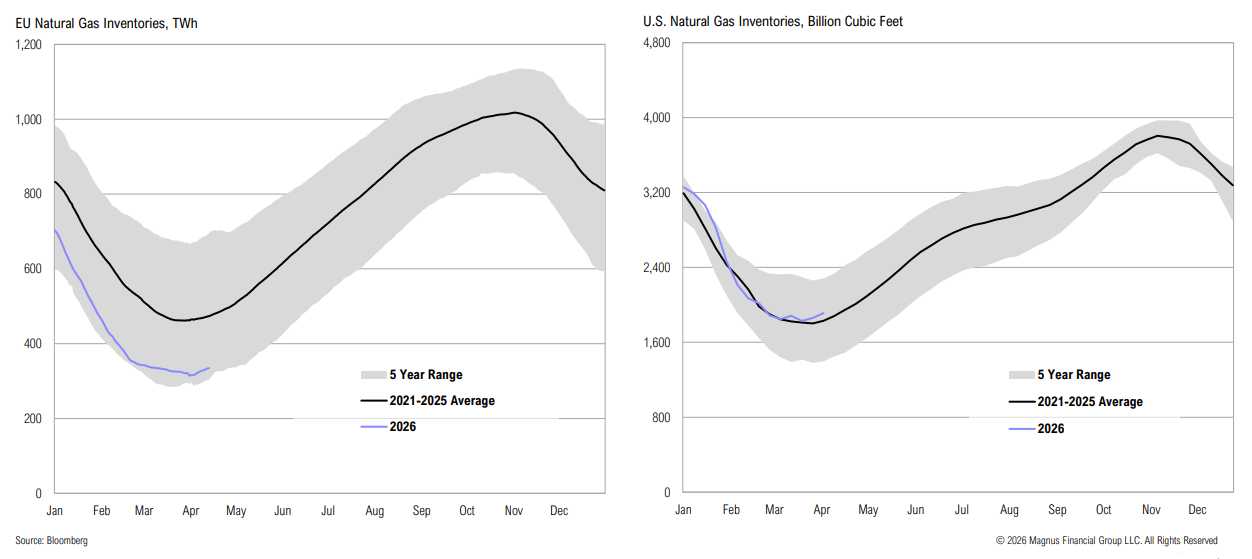
Similarly to 2022, Europe entered the current energy disruption with low natural gas inventories and limited selfsufficiency; by contrast, the U.S. entered with healthy inventories and strong domestic production capacity

Agriculture
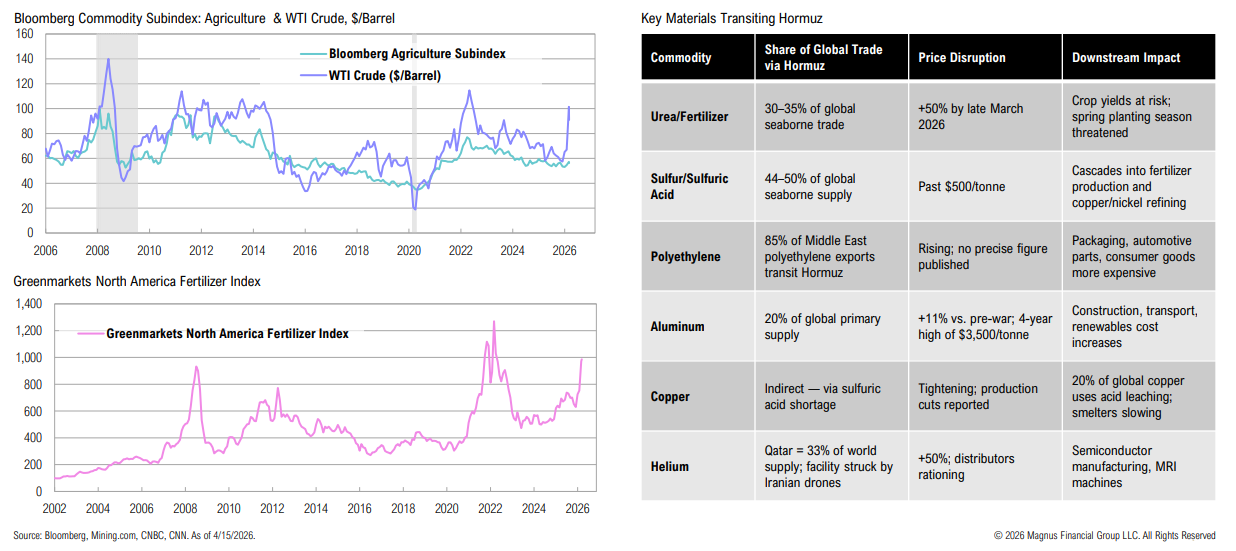
Rising oil prices often lead to rising agricultural commodity prices; alongside crude, fertilizers, polyethylene and sulfur are transported via the Strait of Hormuz

Appendix
Supporting materials, including Capital Market Expectations and additional research referenced throughout the Market Outlook.
CMEs
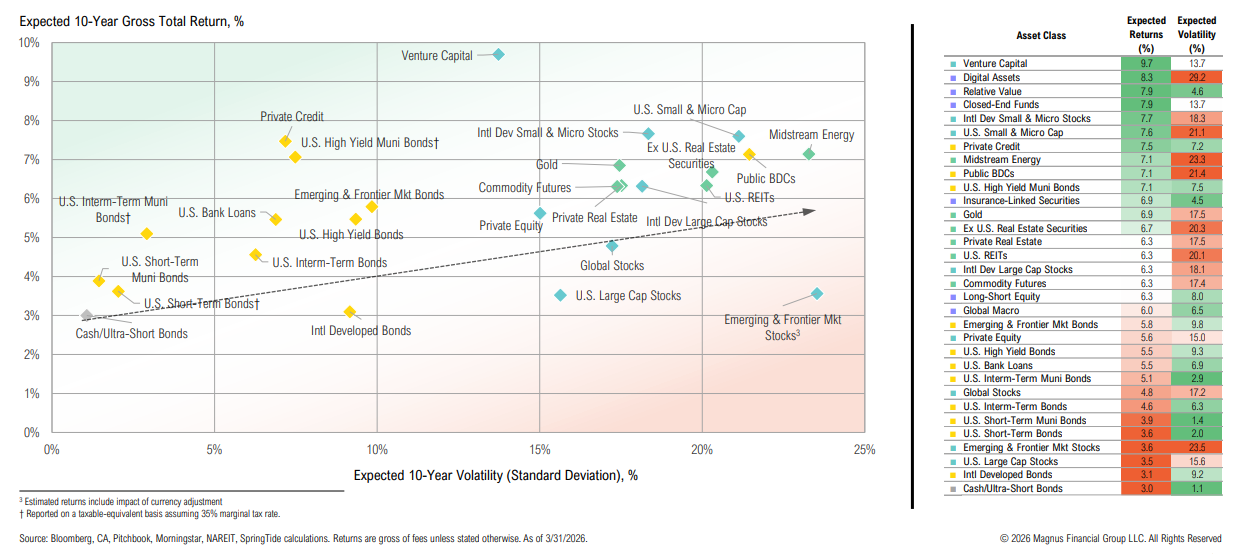
With global valuations broadly stretched across asset classes, longer-term return assumptions have declined

“Now, because of the war in Iran, we additionally face the potential for significant ongoing oil and commodity price shocks, along with the reshaping of global supply chains, which may lead to stickier inflation and ultimately higher interest rates than markets currently expect.”
Jamie Dimon, JPMorgan Chase CEO